Perspective: Five myths about criminal justice

By: Laurie Garduque

COVID Crime Racial and Ethnic Disparities June 24, 2021

Being “tough” on crime doesn’t always make sense.


Originally published on washingtonpost.com on November 25, 2020 at 5:55 p.m. EST

The movement to end police violence against Black communities has brought heightened attention to criminal justice issues amid a global pandemic. The FBI recently released the 2019 “Crime in the United States” report, which looks at last year’s trends. The data is easily cherry-picked to push false narratives around what works — and what doesn’t — to fight crime. Here are some dangerous misconceptions to look out for.

Myth No. 1

Responses to the pandemic are driving crime rates up.

Since March, the coronavirus has created a public health crisis in jails, where social distancing is extremely challenging for people awaiting their trials. Many jurisdictions have released people who do not pose a threat to the community and have shifted their arrest strategies to keep people out of jail in the first place. Critics say the releases are leading to a rise in crime. For example, William Johnson, executive director of the National Association of Police Organizations, argues that “releasing individuals, who by definition are not safe to be among the public, in the name of improving public welfare is nonsensical.” Similarly, Kent Scheidegger, legal director of a victims rights advocacy group, the Criminal Justice Legal Foundation, warns that “as the country reopens, the effect of releases will show in statistics as well.”

But the decrease in jail populations due to the coronavirus is not causing an increase in crime. Overall, crime has been steadily declining in recent years, and pandemic-related jail policies haven’t affected it. A new report from the JFA Institute looking at the impact of the outbreak on crime, arrests and jail populations suggests that reform strategies that have been in place over the past six months have reduced jail populations while not affecting crime. In places like San Francisco and Charleston County, S.C., the report showed that crime rates overall have not been influenced significantly by local justice systems’ responses to the coronavirus and that some crimes have fallen since the beginning of the pandemic. Studies have found that unnecessarily jailing people endangers the health and safety of individuals held in jails, those who work in jails and the broader community. Research has also shown that over-punishing people at low risk of committing more crimes turns them into people at high risk of committing more crimes — so we are paying huge amounts of money to create a public safety problem through mass incarceration.

Myth No. 2

Protests for racial justice are causing an increase in crime.

Demonstrations against the deaths of Black people at the hands of police have continued nationwide since the killing of George Floyd in May. Conservative media outlets argue that these protests are leading to an increase in crime. “What we have witnessed these past few tumultuous nights is not America. It is an anarchist’s dream,” a Washington Examiner columnist thundered in June. In the Wall Street Journal, Paul Cassell wrote: “What changed in late May? The antipolice protests that began across the country around May 27 appear to have resulted in a decline in policing directed at gun violence, producing — perhaps unsurprisingly — an increase in shootings.”

But contrary to the claims of some leaders that cities are “plagued by violent crime,” a new Center for American Progress analysis shows that violent crime rates decreased from 2019 to 2020 in more than half of the 25 largest U.S. cities, including New York and Seattle, and in some smaller metros such as Portland, Ore. The data also show that while homicide is up from 2019 to 2020 in five of the largest U.S. cities, those increases began before the protests started in June.

The protests are not causing an increase in crime — they are causing cities and counties across the country to have conversations about transformational change in their criminal justice systems, such as alternatives to police, corrections and courts.

Myth No. 3

We must remain ‘tough on crime.’

Some leaders say the only way to keep communities safe is to be “tough on crime” and lock up criminals. Attorney General William Barr has said that reform efforts are “pushing a number of America’s cities back toward a more dangerous past.” And in an opinion piece in the National Review, former deputy attorney general George J. Terwillenger III claimed, “Perhaps someone will figure out a way to neutralize chronic violent offenders without incarceration, but until they do the choice is simply to either put the repeat violent offender away or leave him on the street to make more victims.”

But research has shown that “tough” methods are a waste of resources. Tactics such as stop-and-frisk and the misuse and overuse of jails are discriminatory and do not keep communities safe. Someone who spends time in jail is statistically more likely to reoffend and end up back in the system. And a study from the Pretrial Justice Institute shows that as few as three days spent unnecessarily in jail can have collateral consequences for a person’s life, such as the loss of a job and health benefits and time away from family obligations. Cities and counties have been able to safely release people pretrial without seeing an increase in rates of rearrest or failure to appear. Rather than being “tough on crime,” investing in the needs of the community (and the people most affected by crime) is the most effective way to keep communities safe.

Myth No. 4

One year of crime data can show a trend.

Headlines — such as the New York Times‘ “In Emptier Subways, Violent Crime Is Rising” or the Crime Report’s “‘Steep Increase’ in Violent Crime Reported This Year” — suggest a record year for crime and that communities are unsafe as a result. This narrative is furthered by reports that cherry-pick data to undermine reform efforts.

In reality, analyzing crime rates is complicated. As we review the analysis of annual crime trends in the FBI’s report on 2019, we must keep in mind that historical context is key to ensuring a true “apples to apples” comparison. Year-to-year crime stats do not paint the most accurate picture; trends over decades do. Pointing to a current, or even seasonal, spike in certain crimes — for example, the recent jump in homicides in cities across the country — ignores that overall crime, including violent crime and homicides, is significantly lower now than in the 1980s and ’90s.

Many factors influence fluctuations in crime rates, such as the tendency for crime to rise in the spring and summer and decline in the fall and winter, or changes in policing tactics. An uptick or downturn in any one year doesn’t necessarily signal a larger trend.

Myth No. 5

Criminal justice reform means more crime.

We’ve seen leaders hesitate to engage in criminal justice reform strategies because they seem too new, nuanced or radical. Law enforcement officials and prosecutors across the country have been outspoken critics of policies to reduce or eliminate cash bail. Georgetown University law professor Bill Otis, nominated to the U.S. Sentencing Commission by President Trump, called efforts toward sentencing reform “more-crime-faster proposals.”

But cities and counties have been working for years to implement tested, data-driven reform strategies that keep communities safe while reducing the misuse and overuse of jails. This includes bail reform, which, despite the naysayers, has not been found to increase crime. In research released this month by Loyola University Chicago, scholars found the 2017 order by Chief Judge of the Circuit Court of Cook County Timothy
Evans to reevaluate the use of monetary bail in Cook County, Ill., increased the percent and number of people released pretrial without any associated significant change in new criminal activity, violent or otherwise,
nor any change in the amount of crime in Chicago after 2017. Though critics insist we need to choose between reform and safety, cities and counties are proving that this is a false choice — the system can be made more
fair, and all communities can be kept safe.

Five myths is a weekly feature challenging everything you think you know. You can check out previous myths, read more from Outlook or follow our updates on Facebook and Twitter.


Jail Decarceration and Public Safety: Preliminary Findings from the Safety and Justice Challenge

By: Reagan Daly

Community Engagement Diversion Jail Costs June 22, 2021

America’s over-incarceration problem begins in our local jails. Each year, there are close to 11 million jail admissions in the United States, nearly 18 times the number of yearly admissions to state and federal prisons. In many regions, jail populations have reached crisis levels.

The primary purpose of jails is to detain people who are awaiting court proceedings and are considered a flight risk or public safety threat. Many people admitted to jail cannot afford to post bail and may remain behind bars for weeks, months, or even years awaiting trial or case resolution. Our over-reliance on jails has negative consequences for people who are incarcerated, their families, and communities. Burdens of jail fall disproportionately on communities of color. Black Americans, for example, are jailed at five times the rate of white Americans and comprise a proportion of the jail population that is three times their representation in the general population.

In response, the MacArthur Foundation launched the Safety and Justice Challenge (SJC) in 2015, and has so far invested $252 million in the effort. Its aim is to help create fairer, more effective justice systems on a large scale.

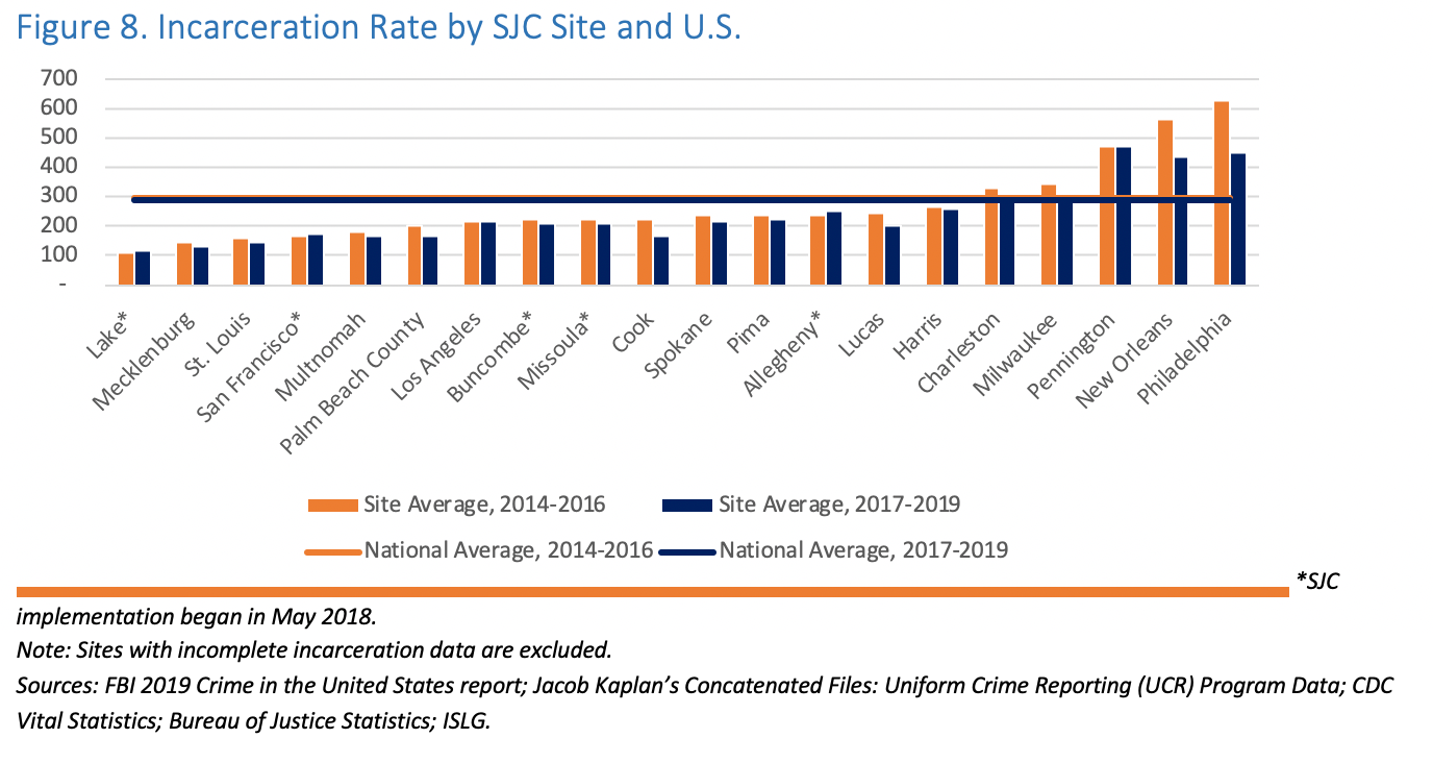
The goal of the SJC is not just to reduce jail populations, but to do it safely – this has been a pillar of the initiative since its inception. Our previous research has highlighted the substantial reductions made in jail populations across SJC sites since 2015. But our new report provides an initial look at those decarceration strategies through a safety lens. More specifically, it explores how both aggregate crime rates and returns to custody among people released from jail changed after the launch of the SJC and the implementation of decarceration strategies in sites through 2019.

Reducing Jail Populations Without Compromising Public Safety  

Our latest analysis runs through 2019 and explores how crime rates changed after the launch of the SJC. It also analyzes returns to custody among people released from jail. We will explore COVID-19’s impact in future briefs.

Our analysis should be viewed as a first step towards assessing decarceration and public safety. Our measures rely on administrative data from criminal justice agencies, and as a result are reflective of the justice system’s responses. Future stages of our work will aim to explore public safety in a much more nuanced manner. For now, our goal is to lay a broad foundation of understanding about the trends we are seeing.

Findings suggest it is possible to craft decarceration strategies without compromising public safety. In fact, our measures of public safety across SJC sites remained about the same before and after reforms were implemented to reduce local jail populations.

Local Crime Trends Remained Stable or Decreased in Most SJC Sites

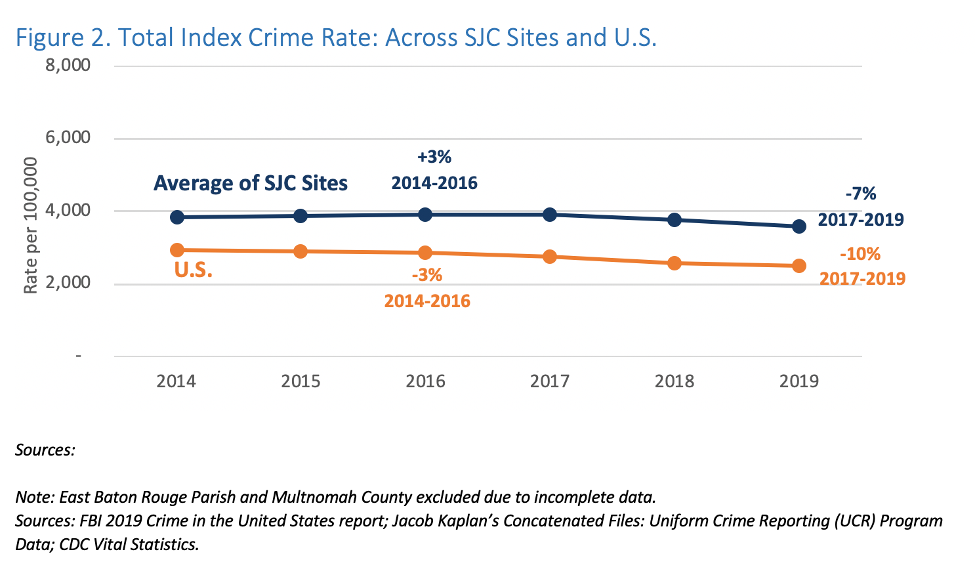
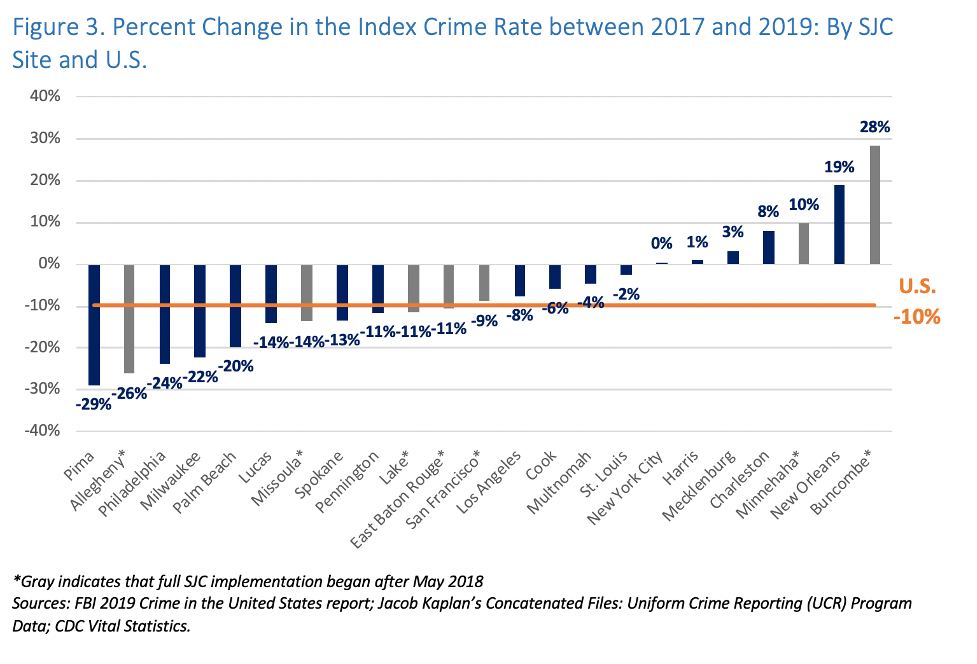
During the first few years of SJC implementation, 11 sites experienced a reduction in index crimes greater than 10 percent. The majority (19) either experienced some decrease or remained the same.

The Rate of Returning to Jail Custody Was About the Same

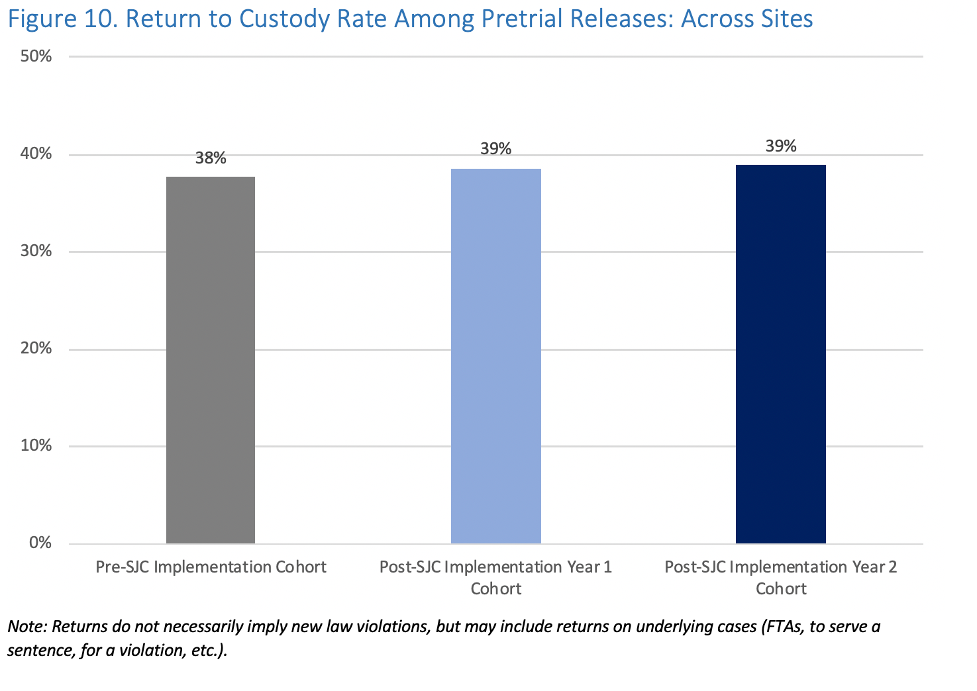
Among individuals released from jail pretrial, return to custody rates for felonies, misdemeanors, property crimes, and violent crimes within a year remained about the same.

Being returned to custody on a violent charge was rare before and after SJC implementation; being returned on a homicide was very rare. Most individuals who returned to custody within a year did not return on a more serious charge.

Regardless of the specific charge type, return to custody rates among those released pretrial did not change after the implementation of decarceration reforms began.

Prior to the implementation of SJC jail population reduction strategies, 38 percent of people released on pretrial status were returned to custody within 12 months of their release. (Note that our return to custody measure includes returns for reasons other than a new criminal charge—future work will focus more narrowly on returns that involve new charges.) This remained true in the years following SJC implementation – of those released pretrial in the second year of the SJC implementation, 39 percent returned to custody within a year. The vast majority of sites did not experience an increase in the return to custody rate after SJC implementation began.

Conclusions

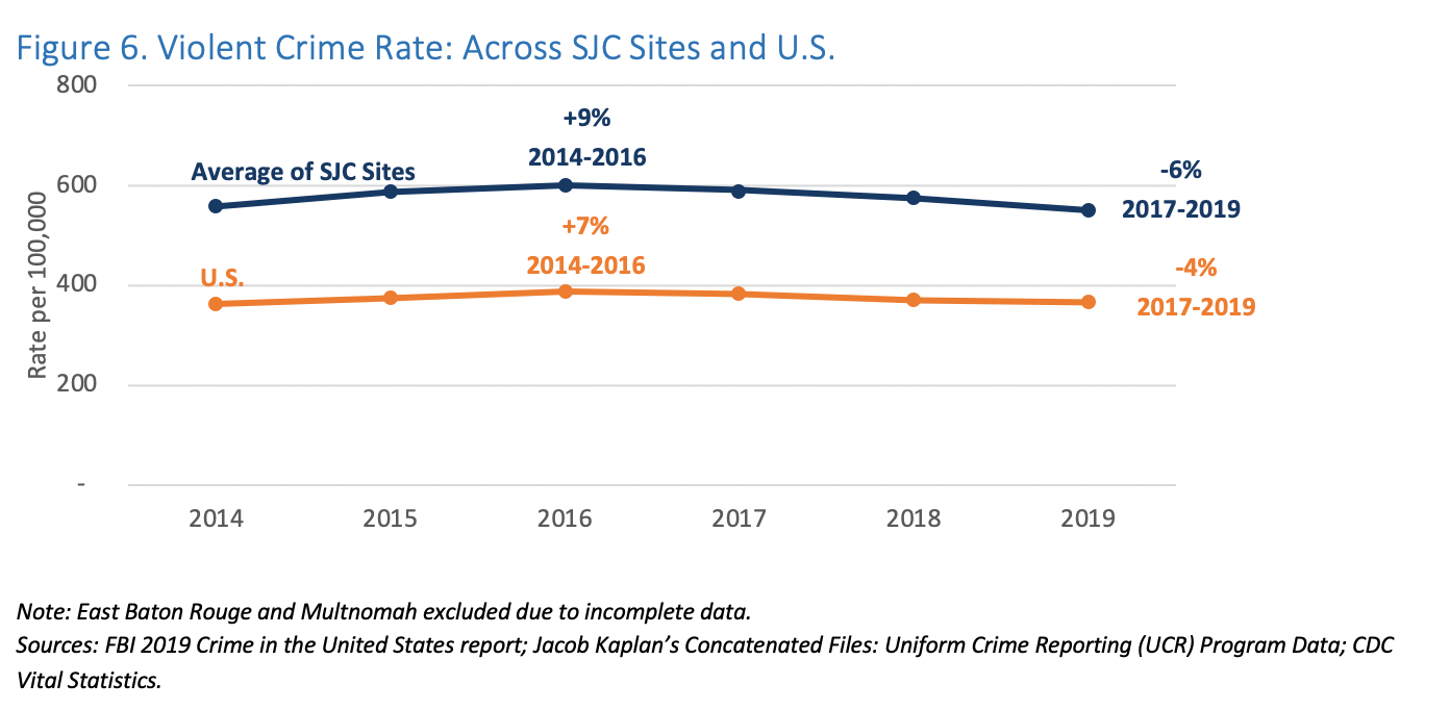
The findings of this analysis suggest that decarceration efforts in SJC sites did not endanger public safety as measured by crime rates and returns to custody. As incarceration rates declined during the SJC, crime and violent crime rates also dropped or remained the same in most sites, mirroring national crime rate trends. When examining individuals who were returned to jail custody within a year of release, the rates of return were about the same before and after the SJC – suggesting that decarceration efforts, especially among the pretrial population, do not lead to a higher rate of returns. Importantly, returns to custody for violent crime charges and homicide charges were rare before and after the SJC. Of course, our measures are not inclusive of all definitions of public safety. Future work will examine the public safety implications of the SJC more comprehensively.

More on the Data

SJC sites share jail population data once a month with the Institute for State and Local Governance (ISLG) at the City University of New York (CUNY). A subset of sites submit detailed case-level jail data to ISLG once a year. We sourced crime data from the FBI 2019 Crime in the United States report.

Data Shows Violent Crime Is Down and Decarceration Works

By: Wendy Ware

Community Engagement Data Analysis Diversion June 22, 2021

The Safety and Justice Challenge (SJC) has been making considerable, steady progress in safely reducing jail populations over the last few years. But the recent COVID-19 pandemic put a lot of these initiatives into overdrive, creating historic, sudden drops in jail populations all over the country.

Recently, you may have been reading in the press that there is a “crime wave” going on, and that it is related to either the COVID-19 pandemic, related lockdowns, protests, defunding the police, or social unrest.

These articles contain a lot of misinformation about crime rates, whether they are increasing or not, and what is causing them to change.

First, it is important to note, there is no “crime wave”. Second, while there has been a short-term increase in homicides, those increases cannot be linked to drops in the jail populations.

It is incorrect to link de-incarceration efforts to short-term crime trends.

Too often in criminal justice reform, people have a pre-determined narrative in their heads. It is easy for some people to push a “lock-‘em-up” agenda because it stokes fear, sells headlines, and baits clicks. These narratives often rely on cherry-picked data to fit their needs.

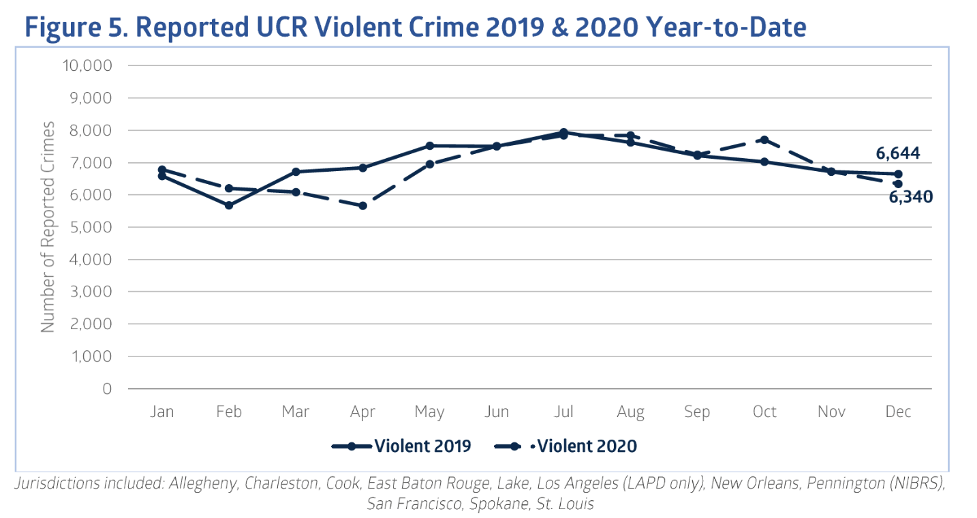
But the SJC has always been a data-driven initiative. It is important to always let the data speak first, investigate causation, and then, and only then, develop policy. A recent JFA Institute report, based on data from 11 SJC cities and counties, draws some key conclusions regarding recent jail population and crime trends. Amongst our conclusions is that crime as reported to police in general and violent crime in particular are not up across those jurisdictions.

It is wrong, therefore, to say “violent crime is spiking”.

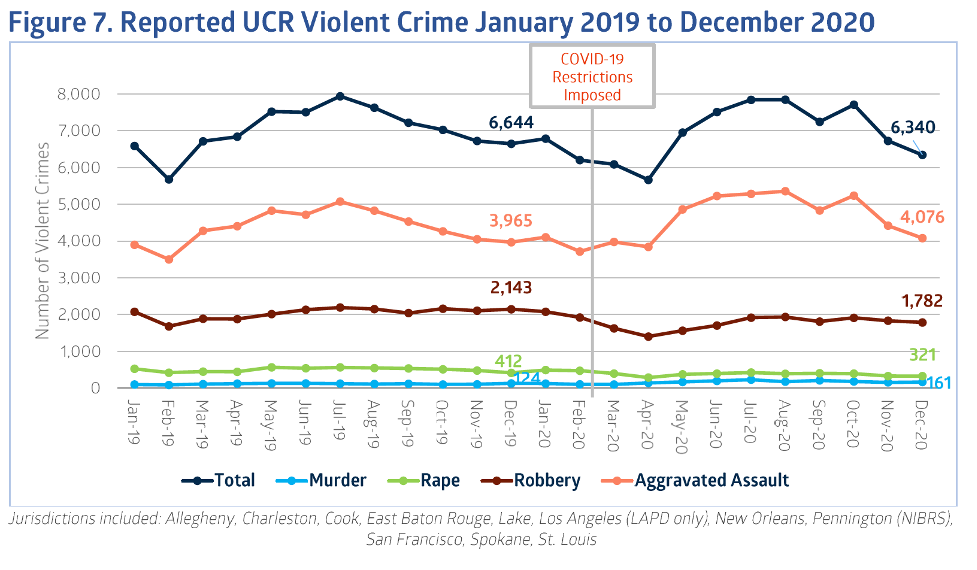
“Violent crime” as categorized by the FBI under the UCR system (Uniform Crime Report) is made up of four crime types: homicide, rape, robbery, and aggravated assault. In our report on 11 cities and counties, there was a short-term increase in homicides reported, representing a 45% increase from 2019 to 2020. This on the surface seems dramatic, but it is important to put this finding in context. Homicide is the rarest of all crimes and represents a small portion of the totality of violent crime. Homicides represent an even smaller portion of total crime, making up only .05% of the total crimes reported in December 2020. Further, in terms of the context of historical crime rates, the number of crimes committed each year are way down over the long term:

Much more time is needed before any credible scientist would say there is a trend.

Perhaps more important, it’s clear that jail de-incarceration has no causal link to crime trends.

Among our key findings:

  • Analysis of the eleven cities and counties studied revealed jail populations declined, yet crime and arrests declined as well, giving indication that declining jail populations did not compromise public safety.
  • Overall, total reported crime was 22% lower in December 2020 when compared to December 2019 and 14% lower for the total number of reported crimes for Calendar Year (CY) 2020 versus CY 2019.
  • When combining all jurisdictions. there was an average 39% decrease in jail bookings, which equates to over 130,000 fewer jail bookings in a one-year time frame. Jail booking decreases were fueled by the decrease in property crime and arrests, primarily for misdemeanor and lower-level felony charges.
  • As a result of the change in jail bookings, the composition of the jail populations changed post-COVID-19, with a higher proportion being male and charged with violent felony and non-drug felony crimes.
  • The length of stay for people in jail has increased due to the changing make-up of the jail populations and a slowdown in court case processing.
  • After the historic initial decrease, jail populations rebounded somewhat, but stabilized in October 2020. During this time, there was no substantial increase in overall crime.

The report expands on our preliminary report issued in December 2020, which focused on the Impact of COVID-19 on crime.

COVID-19 created the most dramatic decrease in jail populations, over the shortest amount of time in modern history. The pandemic gave us an opportunity to rethink old practices and consider changes for the longer term.

The data we produced should be used to start a conversation on how and why some specific crime types did increase in the time frame studied. And we should consider how to combat that, smartly. Answers include improving community relationships and cohesion, better community policing, and violence de-escalation initiatives.

At this time, we must resist short-term narratives that do not match the data. It critically important now and should be a lesson learned we can apply to the future sustainability of criminal justice reforms, both within the Safety and Justice Challenge and elsewhere.

How Prisons and Jails Might Function if Addressing Trauma Was A First Priority

By: Dr. Nneka Jones Tapia

Behavioral Health Community Engagement Victims June 3, 2021

Incarceration is traumatic, and the institutions charged with that function—prisons and jails—often operate in a way that is most traumatic for the people who are incarcerated. But we often overlook the trauma that is also experienced by those who work to staff the jails, and the families of people who are incarcerated.

It’s an opportunity for us to do better, and the scale of the challenge is huge. Every year, people are placed in jails 10.6 million times. On any given day, approximately 2.7 million US children have a parent who is incarcerated, and more than 5 million children have experienced parental incarceration in their lifetime. Approximately 415,000 correctional officers work in our jails and prisons.

Families

Over-policing of Black communities results in a disproportionate number of Black people being sent to jail for low-level offenses. My own father was arrested for marijuana possession when I was growing up in a small town in North Carolina, and he ended up going to jail and then to prison for a couple of years.

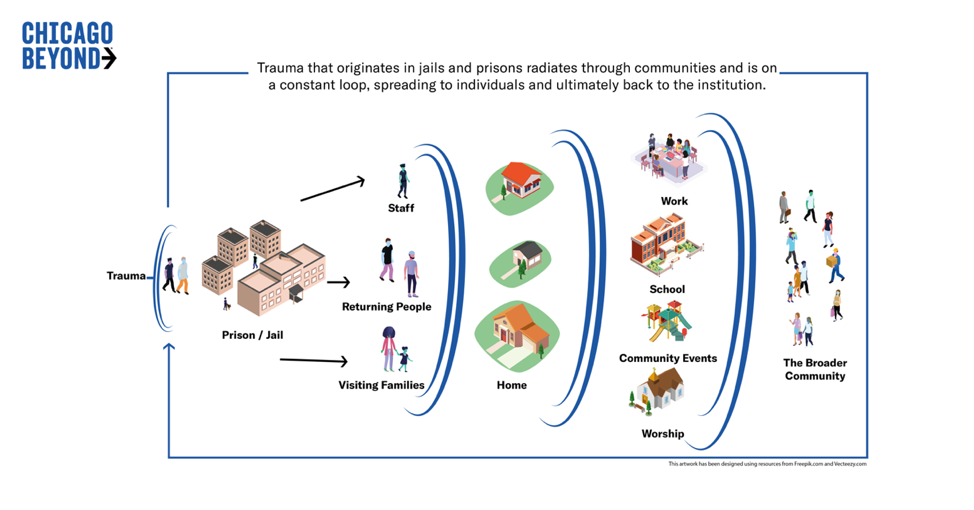
As a child, you never forget the experience of police officers hauling your father off. You do not forget having to interact with your father through a piece of glass. They are links in the chain of trauma that lie embedded within a person. And it radiates through communities. Yet, these communities have no pathway to power when it comes to the policies and practices of the institutions responsible for the safety of their loved ones. That must change. There must be a shift in power from correctional leaders to community members when developing and overseeing policies, practices, training, and environmental conditions within these institutions.

Image credit: Chicago Beyond.org

Staff

I ran the jail in Chicago, Illinois, otherwise known as Cook County Jail, as warden, for several years. I was one of the first clinical psychologists in the country to run a correctional institution. My focus was to use my training to instill humanity in the institution, but we don’t talk about how people are traumatized by the experience of incarcerating other people.

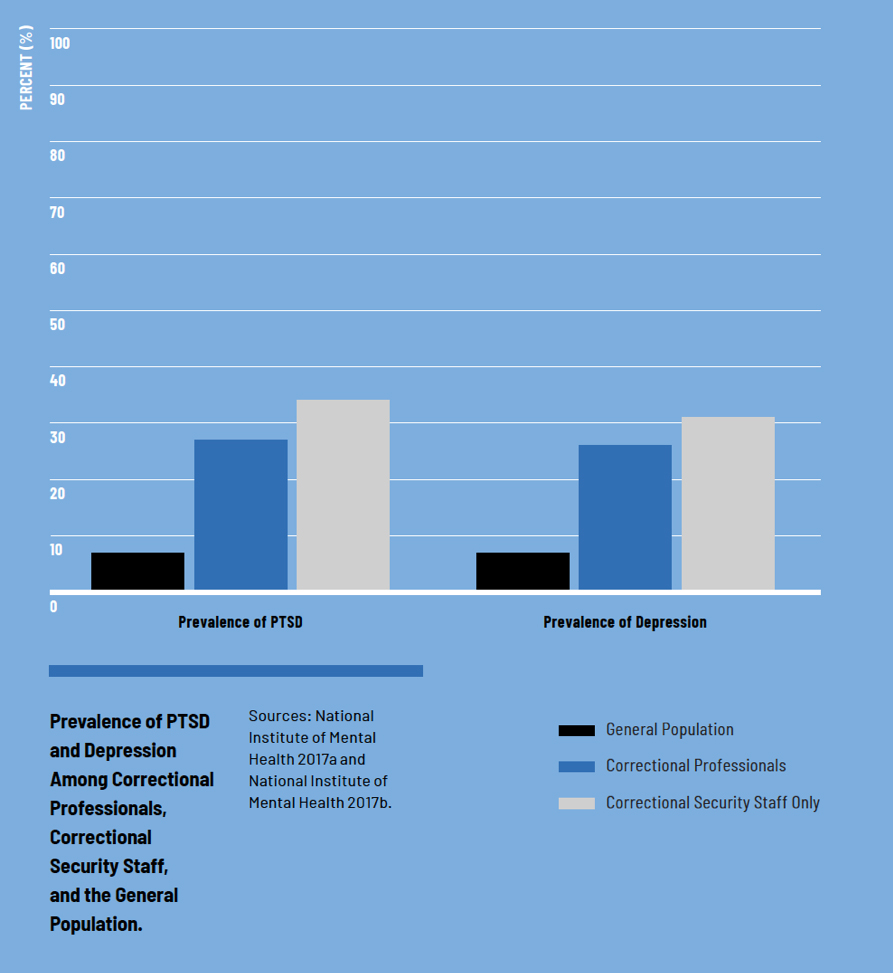
The numbers are stark.

When you talk about such trauma the attitude, historically, towards jail and prison staff is, “Suck it up. You signed up for this.” But the problem is that compartmentalizing the trauma just leads it to bleed out in other areas of your life.

A person’s partner might say, “you are snapping much more often.” Or point out that you are not the same person you used to be. It took me a while after I left the job to realize that it is not normal to sleep only two hours a night. It is not normal to be constantly ready for your phone to ring. To feel on the edge of your seat worrying about the next crisis. It takes a significant toll on a person, and it is hard to see the woods for the trees when you are in the thick of it.

People who work in the system are sometimes a little nervous when I bring this stuff up. They do not want to risk opening an emotional Pandora’s box by talking about the trauma they might be suppressing. My response is that the box is already open. The effects are already exerting themselves on you, on your family, and on those you signed up to keep safe.

Interconnected Humanity

At Chicago Beyond, we have started an impactful conversation about all this. In my reflection on my time at Cook County Jail, one of the big things we realized was that if correctional staff treated the people who were confined and their families with humanity, they could also see the humanity in themselves. We partnered with the Cook County Sheriff’s Office to develop family-friendly visitation, because helping people who are incarcerated hug their children for the first time in years is humanizing for everyone. People had strong emotional reactions to working in visitation, and we talked about the implications. We also acted on them at the policy level.

We have produced a report on this at The Square One Project, called Harm Reduction at the Center of Corrections. It includes a first-of-its kind framework for correctional leaders to better support the people detained, staff, and the families of both. It provides recommendations for correctional leaders centering on safety, transparency, agency, asset-based approaches, and interpersonal connections for these three groups to minimize the harm created by jails and prisons.

The project of harm reduction is critical from this perspective. There are many specific measures that can be used in correctional settings to decrease harm, including incarcerating fewer people. But the key ideas center around one core concept: correctional leaders promoting human interaction that instills humanity.

We are talking about imagining a future for justice and public safety that starts from scratch — from square one — instead of tinkering at the edges or cherry-picking cordoned-off areas for reform. To do so, we need to get to the root of the problem: decades of neglect around communities with chronic poverty and the twin crises of ingrained racism. That begins with drastic systemic change. It requires addressing the specific harm we have experienced as people and extending the compassion we give to ourselves to other people – all people.

(Trans)forming Systems: LGBTQ+ People in the Age of Criminal Justice Reform

By: Olivia Dana (she/her/hers), Julian Adler (he/him/his)

Incarceration Trends May 20, 2021

Jurisdictions must take an intersectional approach to legal system transformation if they are to end the misuse and overuse of jails. This means understanding the drivers of overincarceration for any and all populations that have been overrepresented and disproportionately harmed by the criminal legal system—and developing culturally responsive strategies to address them.

The LGBTQ+ population has received strikingly little attention in the criminal justice reform movement, including the Safety and Justice Challenge. In order to address the overrepresentation of queer people in the criminal system, jurisdictions must challenge discrimination against LGBTQ+ people before, during, and after their system involvement, and they must question the impact of their own policies on this community. This is especially urgent as LGBTQ+ people continue to be increasingly targeted for discrimination by other powerful state forces.

Most recently, the current legislative assault on transgender youth shocks the conscience and makes our skin crawl. It targets an already vulnerable group of kids—with a disturbingly high rate of suicidal ideation—for political gain, threatening their physical and mental health and general wellbeing. But while this latest display of cruelty and bigotry is particularly staggering, it is not terribly surprising. The wellspring of transphobia and homophobia in the United States runs deep, far, and wide. And it is rarely disguised.

It took the Supreme Court of the United States until 2020 to hold that it violates the Civil Rights Act of 1964 to fire a person simply for being gay or transgender. In addition to failing to protect, laws targeting the LGBTQ+ community, whether directly or through discriminatory enforcement, have run the gamut. Some laws have been plainly aimed at punishing gay sex, such as the paradigmatic anti-sodomy laws, which existed in many states until the 1970’s and remained in force in others until ruled unconstitutional in Lawrence v. Texas in 1993.

Other laws appear facially neutral but are discriminatory in their enforcement. New York State recently repealed its “walking while trans” law that police used to detain and arrest individuals on suspicion of “loitering for the purposes of prostitution”—a practice so disproportionally used on trans women of color that it is sometimes referred to as “stop-and-frisk for trans women.” Elsewhere, however, the law remains on the books.

Adding insult to injury, there is an emerging trend of attorneys nefariously misgendering trans people in legal proceedings. And if they end up incarcerated, LGBTQ+ people frequently face abuse and ill-treatment in jails and prisons, with one study finding that 40% of transgender people were sexually assaulted while incarcerated in a given calendar year (for a good resource on policies to address this, look here).

In case there was any doubt, this bias and harm transcends the realm of laws and legal systems. Consider the ostensibly non-adversarial space of mental health care. It took the American Psychiatric Association until 1973 to remove the diagnosis of “homosexuality” from its Diagnostic and Statistical Manual (DSM)—and only after an extensive campaign. It then took until June 2019 (the 50th anniversary of the Stonewall riots in New York City) for the American Psychoanalytic Association to issue a formal, “overdue” apology for “past views that pathologized homosexuality and transgender identities.” The association’s press release acknowledged the role played by “the American psychoanalytic establishment” in perpetuating “discrimination and trauma.” Strikingly, one of the earliest examples we can find of court-ordered outpatient mental health treatment as an alternative to incarceration involved conversion therapy for men charged with violating Maryland’s anti-sodomy laws in 1938.1

All told, it is hardly coincidental that—even in 2021—LGBTQ+ people are disproportionately represented at every stage of the criminal legal system. Lesbian and bisexual women are four times more likely to be arrested than straight women. And as Black people have borne the brunt of mass incarceration, so too have Black members of the LGBTQ+ community. Nearly half of Black transgender people have experienced incarceration and 38% have reported being harassed by the police. Made worse by the discrimination that many face in their own homes and communities, LGBTQ+ people are more likely to experience unemployment, poverty, difficulty accessing healthcare, and homelessness, all destabilizing factors that can lead to and prolong their criminal (and civil) legal system involvement.

Despite their overrepresentation in the criminal legal system, LGBTQ+ people have been largely ignored by the justice reform movement. This must change—both at the federal and local level. In addition to legislative changes that can directly or indirectly effect criminal justice and those that can harm or support the dignity and well-being of the LGBTQ+ community, there are many improvements that can be made at the local level as well.

Jurisdictions must take a hard look at—and attempt to correct for—the drivers of LGBTQ+ overrepresentation in their criminal legal systems, creating accountability measures for system actors. It starts with reviewing existing policies, practices, and training protocols to ensure that they are inclusive, respectful, and responsive to the needs of LGBTQ+ people, especially those that are Black, Indigenous, and people of color. System actors must also authentically engage LGBTQ+ people and community organizations in collaborative policymaking and be sure that this representation includes transgender, genderqueer, and gender nonconforming people of color. Jurisdictions should also review their data collection practices and should work with LGBTQ+ organizations to consider more inclusive and representative data policies.

The overrepresentation of LGBTQ+ people in the criminal legal system is a manifestation of the discrimination they face in state legislatures, schools, housing, employment, health care, and sometimes their own families. Discrimination is cumulative and compounding, and LGBTQ+ people are especially vulnerable to harm. It is incumbent upon the criminal legal system to be aware of the points of disparity for people who are LGBTQ+ and to make the changes necessary to do better.

Crowley, R. M. (1938). The courts and psychiatry. Psychiatry. 1, 2, 265 - 268.