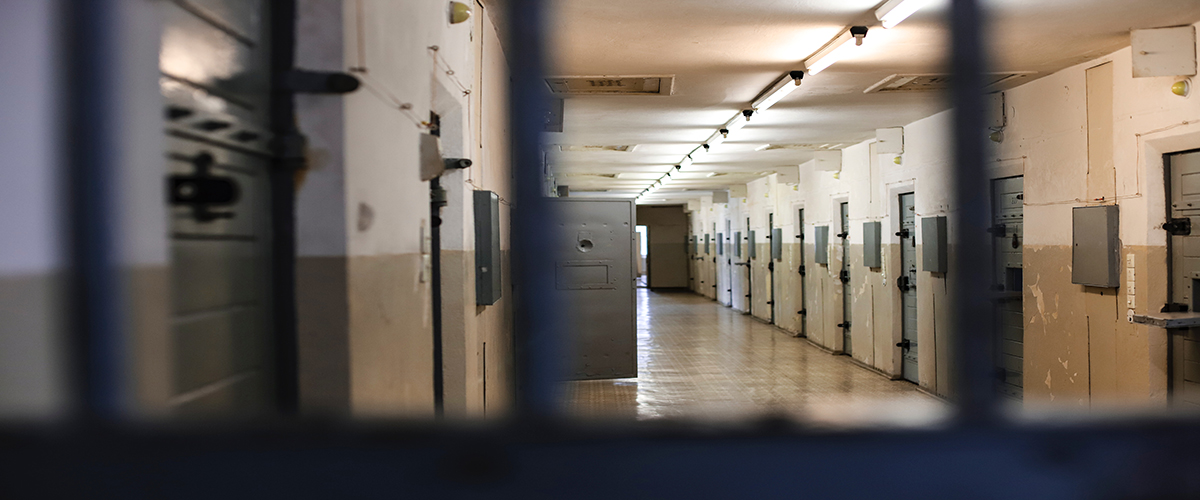
At the National Center for Victims of Crime, we have come to realize that the majority of the people in our jails and prison are victims of crime themselves.
We hope to shed light on the link between experiencing trauma or victimization and incarceration in our new video series.
We hope this series will encourage cities and counties across the country to develop and provide programs for crime victims who are behind bars to overcome their traumatic pasts, and live happier, more fulfilling lives.
The series focuses on the experiences of three people: Lisa James, David Garlock, and Richard Smith, all alumni of Just Leadership USA—a national nonprofit dedicated to decarcerating the United States by educating, elevating and empowering the people and communities most impacted by systemic racism. Each of them has a lived history of victimization, trauma, and incarceration. These videos focus on them as survivors, examining their pasts through their own words. We are extremely thankful that Lisa, David, and Richard were willing to share their stories in such an honest, open, and vulnerable way.
The videos are an effort to break down the false dichotomy between victims and offenders. The videos do not suggest that being a victim necessarily leads a person to involvement with the criminal legal system, later on. But they provide insight as to how these experiences are sometimes connected, and why the trauma experiences of incarcerated individuals need to be addressed. Just as we provide someone who is diabetic in jail with proper treatment, we should provide help to someone with a history of abuse.
One way that cities and counties can begin to address this issue is by reaching out to victim organizations in their communities who may be able to provide assistance to individuals inside the jail and those who are re-entering their communities.
—Renee Williams is the Executive Director of the National Center for Victims of Crime
Related Blog Posts
CollaborationIncarceration TrendsPresumption of InnocenceMay 16, 2018
Advancing Reform: SJC Sites Make Significant Changes to Law Enforcement and Behavioral Health Services Funding
By:
Ashley Krider
Community EngagementPolicingNovember 2, 2020
Prompted by recent cries for police reform across the U.S., many jurisdictions have made or promised significant changes to law enforcement funding, frequently allocating additional funding to behavioral health and community services. Many sites are exploring or expanding community-based emergency first response as an alternative to police response to individuals experiencing crisis and those with mental health needs.
As technical assistance providers to the Safety and Justice Challenge, Policy Research, Inc. (PRI) has compiled an ongoing listof examples of this shift across the country, to serve as a resource to other communities who may be considering their own reform.
Here are some examples of changes in SJC sites:
Baltimore, Maryland: In June, the City Council approved a $22.4 million (less than 5%) cut to the Police Department’s $550 million 2021 budget, including nearly $7 million from overtime spending.
Portland, Oregon: In late 2019, the city announced a similar program to CAHOOTS, Portland Street Response (PSR), which takes police off of low-priority 9-1-1 calls and instead sends a new branch of first responders, trained in behavioral health, to address issues related to people experiencing homelessness or mental health crises. In June, the Portland City Council approved $4.8 million funding for PSR, along with a 3% reduction (about $15 million) to the Portland Police Bureau budget.
Los Angeles, California: In June, the Los Angeles City Council voted to cut $150 million (of an $1.8 billion total budget) from the city’s police department budget, halting a planned increase in funding. The $150 million will be redirected toward community-building projects and health and education initiatives in minority communities. In July, the city council announced plans to expand a pilot program to create a new police bureau focused on community policing, relying on guidance from community leaders, representatives from city hall, and others.
New York City, New York: In July, the New York City Council approved shifting roughly $1 billion away from the $6 billion annual Police Department budget. The budget also shifts school safety and homeless outreach away from police. New York City’s Crisis Management System (CMS) program deploys teams of credible messengers who mediate conflicts on the street and connect high-risk individuals to services that can reduce the long-term risk of violence. In the last three years, the Crisis Management System has contributed to a 15% decline in shootings in the 17 highest violence precincts in New York City. In early June, Mayor Bill de Blasio announced that he plans to increase CMS spending by ten million dollars, hire additional workers, and expand programs to Soundview, Jamaica, Crown Heights, Flatbush, and Canarsie.
Albuquerque, New Mexico: In June, the Mayor announced the formation of a new department, Albuquerque Community Safety, designed to relieve stress on the city’s police. Instead of the police or fire departments responding to 9-1-1 calls related to homelessness, addiction, and mental health, the new division will deploy unarmed personnel made up of social workers, housing and homelessness specialists, and violence prevention coordinators. Mayor Keller stated that the department’s creation will start with a focus on “restructuring and reallocating resources” that the city is already investing in different areas, saying he anticipated “tens of millions of dollars that will move” with the department’s creation.
Philadelphia, Pennsylvania: In June, the City Council approved a 2021 fiscal year budget that reduced police department funding by $33 million and allocated $45 million into affordable housing, arts funding, and social services addressing poverty.
San Francisco, California: In July, the Mayor announced a $120 million cut from the city police and sheriff’s departments over the next two years, redirecting funding toward addressing disparities in the Black community including in housing, mental health and wellness, workforce development, economic justice, education, advocacy, and accountability.
Durham, North Carolina: In June 2019, the city council voted against hiring 18 new patrol officers after a public campaign led by Durham Beyond Policing. The city is now exploring a new “community safety and wellness task force” instead. While the city’s 2021 budget did include an increase of $1.2 million for the police department, $1 million was also added for a Community Health and Safety Task Force to “potentially take on some of the responsibilities of policing the city over time.”
Many jurisdictions around the country are also taking a hard look at the wisdom of continuing to place police in schools. Several SJC sites that have pledged to remove or removed police from schools include:
Portland, Oregon: In June, the Portland Public Schools superintendent announced that it will discontinue the regular presence of SROs. New investments in counselors, social workers, and culturally specific partners were proposed.
Milwaukee, Wisconsin: The Board of School Directors voted unanimously in June to terminate its contract with the Milwaukee Police Department in its public schools.
Madison, Wisconsin: The school board voted unanimously in June to end its contract with the Madison Police Department for SROs.
Portland, Maine: The school board voted in July to remove SROs from Deering and Portland High School. Money previously allocated for SROs will be diverted toward programs like “supporting security at large events and de-escalation training for staff.”
COVID-19 and the nationwide racial equity and justice protests over the past few months have shifted the ground beneath much of the advocacy and work that we do. We are faced with an opportunity and responsibility to not only respond to the changing landscape of criminal justice and behavioral health fields, but to advance reform.
—Ashley Krider is a Senior Project Associate at Policy Research, Inc.
This March, the Police, Treatment, and Community Collaborative (PTAC) held its inaugural National Pre-Arrest Diversion Conference: Seeding Pre-Arrest Diversion Across the United States, to provide information, training, and technical assistance to representatives from jurisdictions across the United States looking to implement pre-arrest diversion or enhance their existing diversion efforts.
Issues like the emerging opioid epidemic and the realization that arrest is not the answer for individuals battling addiction and mental illness have caused a dramatic evolution in the practice of law enforcement. Increasingly, law enforcement leaders are uniting with behavioral and public health professionals to change how they address the needs of their communities. These changes include cultivating or expanding local partnerships, enhancing skills, and exploring innovative ways to expand services in their individual communities. The conference allowed teams of law enforcement, behavioral health, community partners, and other stakeholders to identify shared goals and create extensive strategic plans, with advice and guidance from national experts in order to meet those goals.
Anchored by Jac Charlier, PTAC co-founder and National Director for Justice Initiatives, Center for Health and Justice at TASC (Treatment Alternatives for Safe Communities), the conference provided an opportunity for attendees to learn about the five frameworks or “pathways” of pre-arrest diversion, and to hear about examples of each from leaders in communities who are using those particular pathways. These include:
“Self-referral,” which originated in Gloucester, Massachusetts in 2015 as the Angel Program and helped to establish the Police Assisted Addiction Recovery Initiative (PAARI);
“Active outreach,” which was discussed by Lucas County Sheriff John Tharp, who established the Drug Abuse Response Team (DART) in 2014;
“Naloxone Plus,” which works to ensure that individuals who have received Naloxone to reverse the effects of an overdose are then linked to treatment programs;
“Officer prevention,” which is exemplified by the Law Enforcement Assisted Diversion (LEAD) program; and
“Officer intervention,” which was represented at the conference by the Leon County (FL) Adult Civil Citation Network.
In addition to offering information about pre-arrest diversion, the conference offered educational sessions to aid in guiding the sites with their strategic planning. While these sessions were crucial to help attendees understand pre-arrest diversion and the context in which it must be practiced, what made this conference unique was the devotion of a full day for facilitated action planning that for many teams, resulted in a plan for implementing pre-arrest diversion that they could present to their partners upon their return home. Sites were assigned facilitators and put to work filling out Solutions Action Plans and related assessment and planning tools to guide the development and implementation of their pre-arrest diversion program(s).
This conference was a tremendous opportunity for attendees to learn, plan, strategize, and broaden their perspectives about how to think about and use diversion, engage with and listen to their communities, and collaborate better with system partners or pull in new partners. The PTAC Collaborative plans to hold a second conference next year to feature presentations from jurisdictions that planned or enhanced their pre-arrest diversion efforts at this conference, and to work with representatives from additional jurisdictions wanting to address their community’s challenges in innovative and collaborative ways.
The PTAC Collaborative is an alliance of practitioners in law enforcement, behavioral health, advocacy, research, and public policy, whose purpose is to provide vision, leadership, advocacy, and education to facilitate the practice of pre-arrest diversion across the United States. Launched in April 2017, PTAC is open to anyone who would like to have a voice in the conversation about pre-arrest diversion. For more information, contact Karen Maline at maline@theiacp.org.
What the Predominance of Plea Bargaining Can Teach Us About (In)Efficiency
By:
Melvin Washington II
CourtsPresumption of InnocenceProsecutorsSeptember 10, 2020
Due process has given way to mere process when it comes to criminal justice in the United States. From June 2017 to June 2018, nearly 90 percent of all people charged in federal cases were convicted and sentenced without a trial. National data on state courts, where the majority of criminal cases are filed, reflects the rarity of trials. These statistics are evidence of the criminal legal system’s reliance on often private negotiations, known as plea bargains, which produce guilty pleas and eliminate the need for a trial. Retired U.S. Supreme Court Justice Anthony Kennedy has framed this as the American “system of pleas.” Despite the central role plea bargaining plays in the criminal legal system, the systemic factors surrounding the practice remain obscure. However, a critical examination of the values that drive the system of pleas can provide important insights for those seeking to transform how government institutions respond to harm.
Guilty pleas have become a linchpin of the U.S. criminal legal system. They enable overworked attorneys to chip away more quickly at constantly burgeoning caseloads and enable courts to more easily meet time standards for clearing cases by speeding up dispositions. They may even enable people accused of crimes, many of whom are forced to await the resolution of their cases from jail cells because they cannot afford small bail amounts, to return home more quickly. Plea bargaining is one of the many routines that have become essential to current criminal legal practice. But just because it’s prevalent doesn’t mean it’s positive.
A new report released by the Vera Institute of Justice with support from the Safety and Justice Challenge reviews the complex and inconclusive body of research surrounding plea bargaining. But the private nature of plea bargaining—and the dearth of studies focused on the people who are most impacted by its outcomes—make it difficult to truly understand this cornerstone of the American legal system.
What we do know is that the current system of pleas creates faster dispositions—at times to the detriment of individualized justice. Attorneys and judges make decisions with little contextual information about the person accused or the underlying circumstances of what occurred, partially because plea bargains reduce the need for the more transparent examination of facts that may happen with a trial. And for misdemeanors and other lower level offenses that make up the majority of charges filed, there is frequently little “bargaining” at all. Instead, there are standard “deals” intended to resolve cases—sometimes as early as a person’s first court appearance. What often results are speedy determinations that have less to do with the complex needs of the people involved and are more associated with local caseloads and crime rates, a person’s previous contact with the legal system, and the initial charging decision. Additionally, coercive factors, including being incarcerated pretrial and the fear of a harsher sentence should one lose at trial, can drive a person to plead guilty. Specifically, pretrial incarceration, which is rife with racial, economic, and gender inequities, increases a person’s likelihood of pleading guilty by 46 percent. As a result, pretrial incarceration and the system of pleas simultaneously contribute to the increased marginalization of already marginalized people by making them more likely to add convictions to a criminal record.
The lack of transparency in the process further diminishes the legitimacy of the criminal legal system. Before offering a plea deal, prosecutors can and, at times, do consult those who have been harmed. However, what the prosecution ultimately decides after these private negotiations is almost completely up to them. Without transparency and accountability, people are more likely to feel disconnected from the processes they are told to rely on for justice and safety. It should come as little surprise then that surveys of crime survivors indicate significant dissatisfaction with the current criminal legal process and the remedies it may offer.
The predominance of guilty pleas provides an important lesson as practitioners and advocates continue to think about creating new systems for justice and improving the current one. Any strategy that maximizes the public good while minimizing the resources required to do so will be attractive. But when it comes to justice, the “public good” cannot be simply reduced to the number of cases resolved. A system that obtains a high number of convictions but does not promote healing should not be considered efficient.
Instead, we need notions of efficiency that reflect our values. This requires being explicit about the principles driving decision making while constantly checking for alignment between those principles and the routines that emerge in implementation. For those concerned with promoting safety, healing, and accountability, this does not mean counting the number of people who are processed through a system. It means measuring how effective the processes, practices, and institutions that constitute a system are at empowering communities, both to prevent harm and to facilitate healing when harm occurs. Under this framework, plea bargaining may prove to be much more costly than its ubiquity suggests.
Related Blog Posts
CollaborationIncarceration TrendsRacial and Ethnic DisparitiesMarch 16, 2018
BailCourtsPresumption of InnocenceSeptember 4, 2020
Those of us on different sides of the political spectrum can disagree on plenty of issues, but we can all agree that more must be done to uphold equal access to justice as enshrined in the U.S. Constitution.
Justice for all is a core value of the John D. and Catherine T. MacArthur Foundation’s Safety + Justice Challenge. And it’s achievable. We should start with the pretrial system, moving from the current approach largely based on ability to pay to a system focused on public safety and due process.
Having more money in a free market economic system should mean you can buy a bigger television or a nicer house, but it shouldn’t grant you better access to justice. A pretrial system based on wealth combines with other disparities—such as the ability to obtain qualified defense counsel—to undermine equal access to justice.
In Tarrant County, which is the area around Fort Worth in Texas, for example, some 9,000 low risk-assessed defendants languished in jail for a year or more before trial because they couldn’t afford bail set at $2,000. That is to say, they couldn’t find $200 to pay a bail bondsman.
In practice, pretrial liberty is not the norm, despite both the Constitution and Supreme Court precedent demanding that pretrial detention be a “carefully limited exception.” Rural areas, not urbanized ones, have been driving much of this growth in pretrial incarceration.
This could be because of fewer judges and lawyers to process cases in small towns, economic incentives to build unnecessary jail capacity, and the opioid epidemic. Possible solutions include reducing jailable offenses, expanding police diversion, using validated risk-assessments to identify those who can be safely released following arrest, and revising state bail laws.
I recently discussed these topics in a conversation that covered bail reform and other pretrial justice issues in the context of COVID-19, as well as in the aftermath of the death of George Floyd. The panel, which was part of the 2020 Smart on Crime Innovations conference, featured diverse perspectives, including those of Cherise Fanno Burdeen of the Pretrial Justice Institute, Kristie Puckett-Williams of the North Carolina ACLU, and Terry Schuster of the Pew Charitable Trusts.
These discussions come at a highly polarized time, when some question whether local and state governments can afford reforms. Having worked on criminal justice policy in Texas since 2005—when reform was not even on the radar screen—and spearheaded the launch of Right on Crime in 2010, I know the importance of sustainable models, such as Texas’ landmark 2007 justice reinvestment package. This approach redirected some of the funds that would have been used to build new prisons to strengthening alternatives such as drug courts and mental health treatment, along with programming behind bars and increasing the number of halfway house beds. From 2007 to today, the state’s incarceration rate has fallen from 641 to 423 per 100,000 people. Most importantly, the crime rate has fallen 40 percent, exceeding the national decline.
Texas’ success was widely cited as an impetus for the federal First Step Act in 2018. That in turn created momentum for a second wave of state reforms. North Carolina’s governor just signed the state’s unanimously passed First Step Act, which like the federal version includes dialing back mandatory minimum drug sentences and increasing incentives for time off prison terms through completion of recidivism reduction programs.
Similarly, the Pennsylvania’s State Senate unanimously passed a probation reform bill in July that uses research to inform the length of supervision and allows those with exemplary performance to end supervision early.
And earlier this year, Louisiana passed a raft of reforms, while Tennessee reined in its sweeping drug-free school zone enhancement law, which is projected to save $18 million. Penalties will rightfully remain tougher for those who sell drugs to kids, but no longer will a motorist nearby face many more years in prison for simple drug possession.
While these efforts have bridged the political divide, those of us on the right must continue to emphasize how such reforms adhere to traditional principles of personal responsibility, limited government, and public safety. It is an opportunity to make the public safer while spending less money in the process. It is also a chance to humanely address challenges such as mental illness and addiction that cross all ideological lines.
Ultimately, criminal justice is different from other issues because the debate is not about whether government should be involved. It must be involved—delivering public safety and justice is one of the few core functions of government. Just as pretrial decisions should not vary based on whether one is rich or poor, every community is entitled to a justice system that not only holds individuals accountable, but is also held accountable for its outcomes.
This means applying the same lens of scrutiny to the criminal justice system as every other government system. Examples of this have included legislation requiring data reporting and performance measures. As policymakers face declining revenues and a public health crisis, our efforts to maximize the use of limited resources to create a fairer and more effective justice system have never been more urgent.
—Marc Levin is Chief of Policy and Innovation at Right on Crime, an initiative of the Texas Public Policy Foundation in partnership with the American Conservative Union and Prison Fellowship.
Related Blog Posts
CollaborationIncarceration TrendsRacial and Ethnic DisparitiesMarch 16, 2018