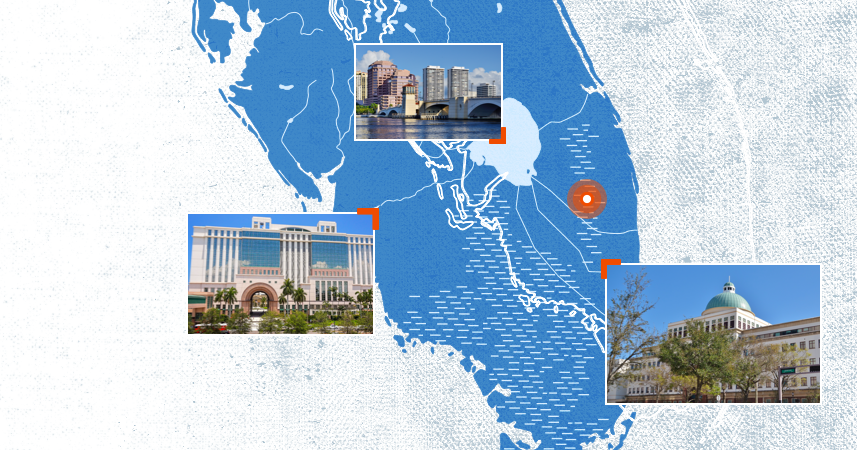
Palm Beach County, FL

Change in Jail Population 1%

Action Areas Community Engagement Courts Defense Counsel Racial and Ethnic Disparities

Last Updated

Background

While Palm Beach County’s jail has not been overcrowded, too many individuals with low-level offenses who pose minimal risk to public safety are incarcerated. In addition, significant racial and ethnic disparities persist in the jail population. Specifically, jail admissions and length of stay are both disproportionate for people of color.

Palm Beach County’s jail is the biggest mental health care provider in the county. People with behavioral health issues, many of whom are homeless, regularly cycle in and out of the jail with no clear path for ending that cycle.

Strategies

Palm Beach County has advanced a number of strategies to rethink and redesign its criminal justice system so that it is more fair, just, and equitable for all.

01

COURT REMINDERS

To reduce failures to appear in court and at mandatory appointments for individuals on pretrial supervision and probation, the county started a program to send text message reminders to defendants for court dates and required appointments.

02

HOLISTIC DEFENSE

The Public Defender’s Office established new positions including a client navigator and social services coordinator, who are responsible for identifying individuals with behavioral health or housing needs at first appearance and connecting them with community-based services to facilitate pretrial success and reduce recidivism.

03

COMMUNITY ENGAGEMENT

Palm Beach County has been engaging the local community with a series of policing forums and “Dialogue To Change” meetings. Specific policy proposals stemming from these community forums will be presented to stakeholders for consideration and implementation.

04

REDUCING RACIAL DISPARITIES

In an effort to meaningfully reduce racial and ethnic disparities in its justice system, the county sought to infuse all its strategies with a racial equity lens. This started with establishing a Racial Equity Team, which is responsible for identifying areas of disparity and generating strategies to combat inequities.

05

FREQUENT UTILIZERS PROGRAM

The PalmFUSE (Frequent Users Systems Engagement) project was a pilot program to provide housing and case management for unhoused individuals with behavioral health issues who were frequently arrested and cycled in and out of the jail. The program is being expanded in 2021.

06

CASE PROCESSING

The county has worked to increase efficiencies in case processing by bringing individuals who are incarcerated while awaiting trial into court sooner for hearings. The goal was to resolve cases more quickly and reduce unnecessarily long stays in the jail.

07

ENHANCED DATA

The county collaborated with the local Clerk and Palm Beach County Sheriff to gain more robust and efficient access to court and jail data. Enhanced data will allow the county to better address challenges in its justice system. A public-facing criminal justice data dashboard is in development.

Results

As a result of the above strategies, Palm Beach County has made progress towards its goal of rethinking and redesigning its criminal justice system.

Quartery ADP for Palm Beach County (2016-2025)

1.4% from baseline

More Results

Since joining the Safety and Justice Challenge, the jail population in Palm Beach County has been significantly reduced while keeping the community safe.

The county’s PalmFUSE program has demonstrated that housing frequent utilizers and providing them with wraparound services creates stability and ensures that people with behavioral health issues do not cycle in and out of jail. Launched as a pilot, the initial PalmFUSE project provided housing and case management for 12 unhoused individuals with behavioral health issues who were frequently arrested and cycled in and out of jail. Before the program, the 12 participants had been arrested 64 times collectively in the two years before they were housed. The pilot was completed in 2020. All participants have remained in housing, and no one has been rearrested since joining the program. A new contract has been signed to expand the program to 25 participants in 2021.

The county’s text message court date reminder system has successfully reduced the number of warrants issued for failure to appear by 62% for Public Defender clients, as of December 2020.

Initial Case Conference (ICC) hearings are designed to decrease the average length of stay for incarcerated individuals charged with second- and third-degree felonies. COVID-19 has unfortunately affected the program by increasing length of stay. Further research is being conducted to measure the program’s impact as court schedules return to normal.

There is productive collaboration among key stakeholders, including judges, prosecutors, law enforcement, public defenders, and community members, which has contributed to the progress to achieve a more fair and equitable use of jails.

Remaining Challenges

Palm Beach County is focused on addressing its remaining challenges in its local justice system.

The major challenge the county faces is significantly reducing racial and ethnic disparities in the justice system. The county is doubling down on the work to address disparities moving forward.

A second challenge is to examine changes the county has made in response to the COVID-19 pandemic to determine if they are effective and should be continued after the pandemic has subsided. These changes include amending the administrative bond schedule and scheduling bond hearings more quickly.

Lead Agency

Criminal Justice Commission

Contact Information

Katherine Shover
KShover@pbc.gov

Partners

Judges of the Fifteenth Judicial Circuit, State Attorney, Public Defender, Palm Beach County Sheriff’s Office, Multiple municipal police departments, Felony and misdemeanor probation departments, Pretrial Services, Clerk and Comptroller, Community Partners of Southeast Florida, Local hospitals, The Lord’s Place, Gulfstream Goodwill, Healthier Neighbors

Blog Posts

Pennington County, SD

Change in Jail Population 26%

Action Areas Collaboration Community Engagement Courts Diversion

Last Updated

Background

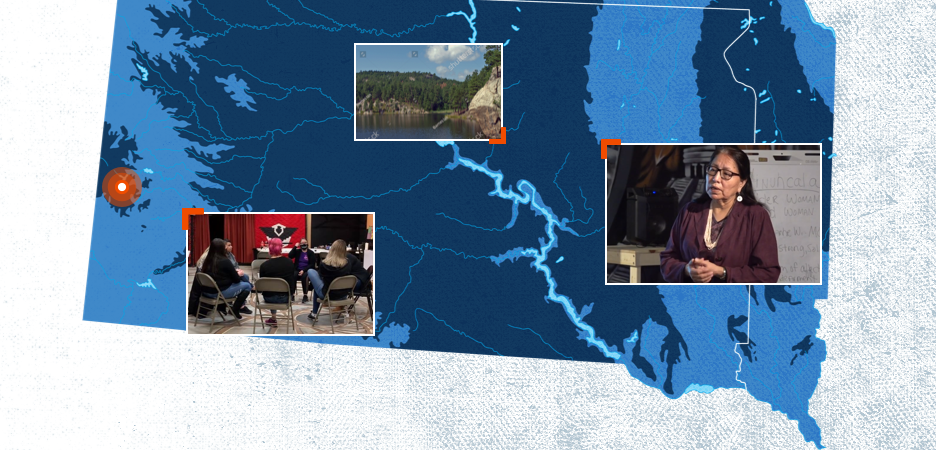
Native Americans are overrepresented in Pennington County’s jail. Though Native Americans make up 10-20% of the population, more than 50% of the daily jail population is Native American, as of January 2021. This is exacerbated by a long history of distrust between the Native American communities and the County, inspiring strategies related to building relationships with the neighboring Tribal communities and reducing disparities.

In addition, in recent years Pennington County has experienced a methamphetamine epidemic, causing felony drug arrests to increase by 200% between November 2015 and April 2019.

Last, pretrial release is a significant driver of the county’s jail population. The jail pretrial population alone made up roughly 92% of the total jail population as of January 2021.

Strategies

Pennington County continues to advance a number of strategies to rethink and redesign its criminal justice system so that it is more fair, just, and equitable for all. This work started by analyzing data to identify areas of need, and using that information to seek out safe, smart solutions.

01

JAIL POPULATION REVIEW TEAM

The Jail Population Review Team is made up of representatives from the State’s Attorney's Office, Public Defender’s Office, Probation, and a coordinator who compiles the information. The team reviews people currently held in jail who may be eligible for release, or whose cases may be delayed. The team began meeting regularly in March 2019, and more frequently in response to emergencies such as the COVID-19 pandemic.

02

DIVERSION TO SUPPORT SERVICES

The Care Campus is a social service complex that provides a single point of entry for mental health and substance use services. Safe Solutions at the Care Campus opened in 2018. It offers a safe place for people to sleep if they are intoxicated. This helps keep people with substance use disorders from entering or being involved further in the criminal justice system.

03

TEXT REMINDERS FOR COURT

Pennington County has a robust system to remind people about their upcoming court hearings. In January 2019, the program began with calls and by mid-2019, transitioned to text messages. People who cannot afford or simply do not have access to phones can receive court reminders at the Hope Center (a local day center), and/or through the Health and Human Services Case Managers at the Care Campus.

04

COMMUNITY ENGAGEMENT

Throughout Pennington County’s involvement in the Safety and Justice Challenge, community outreach and relationship development have been front and center. Using culturally appropriate community programming has also helped reduce the overall jail population.

05

REDUCING RACIAL AND ETHNIC DISPARITIES

To address racial and ethnic disparities, Pennington County works with community stakeholders to implement programming and assist individuals with navigating through the criminal justice system. Their focus has been not only to find and implement measures to reduce racial inequities, but also to find ways to make cases move more efficiently through the criminal justice system.

06

PRETRIAL SERVICES

Along with the implementation of additional pretrial strategies, the Community Work Program originally began in August 2018 as a sentencing alternative. Since that time, it has grown to also provide alternatives to people with Child Support cases, and individuals with a Probation or Specialty Court sanction.

Results

As a result of the strategies above, Pennington County has made progress towards its goal of rethinking and redesigning its criminal justice system.

Quartery ADP for Pennington County (2016-2025)

25.6% from baseline

More Results

By implementing pretrial strategies, Pennington County has reduced the number of bookings for non-violent, low-level offenses by 76% between January 2018 and January 2021. Racial and ethnic disparities in the jail population have decreased as well. During that same timeframe, Pennington County saw a 22% reduction in Native Americans referred to the jail.

Between the first meeting in March 2018 through January 2021, the Jail Population Review Team has been able to look more closely at 1,225 individuals to determine if they would be able to be safely released from jail. As a result, 25% of people in jail were both recommended and approved for release, meaning that people spent over 5,196 days at home with their families, instead of in jail.

The Court Notifications program has delivered 66,770 reminders to people awaiting their court hearings between January 2019 and January 2021. Although the data is not yet available to directly connect the messages with court appearance, participant responses show that the reminders are extremely helpful, not only helping people remember court dates but also answering their questions and helping them find services.

Since its launch in August 2018, 425 people have been referred to the Community Work Program as an alternative to jail. Instead of remaining in the jail and away from their families and communities, they completed more than 7,000 hours of community service.

The Care Campus and Safe Solutions program made significant progress in keeping people struggling with substance use from entering or going further into the justice system. Since its opening in September 2018, the Care Campus has had 54,563 admissions of people with substance use disorders. Of these, 70% were admissions into Safe Solutions.

Beyond the statistics, these and other programs supported by the Safety and Justice Challenge have touched the lives of people in Pennington County. For example, a 28-year-old single mother contacted the 1-800 warrant resolution number—one of the strategies the county is advancing as part of local justice reform. She shared that she had two non-violent, low-level warrants. She had been offered a job within her community as a case worker but could not be officially offered the job with her active warrants. After being easily connected to the Safety and Justice Challenge Attorney Liaison, she provided the required documents, her warrants were cleared, her cases were dismissed, and she was able to accept the job.

Remaining Challenges

Pennington County continues to experience a high number of people awaiting trial within the jail. In order to respond, the Pretrial Monitoring Program began as a pilot in 2020. Program staff helps individuals waiting for case disposition to make sure they attend their next hearing without further contact with law enforcement. The county is seeking ways to grow more opportunities to release people before their trial begins.

Pennington County also continues to work to address racial and ethnic disparities in their local justice system, particularly the over-representation of Native Americans in the jail. The county continues to conduct tribal outreach and engagement on reservations and with Pennington County communities with the goal of reducing the over-representation of Native Americans in the jail system. While relationships with tribal communities have improved, there is still progress to be made.

Last, the COVID-19 pandemic has had a significant impact on every aspect of the county’s local justice system. The foundation of collaborative, data-driven strategies, including the necessary structures and collaboration from local stakeholders that are in place to support these strategies, has set the county up well to respond to the pandemic effectively.

Lead Agency

Pennington County Sheriff and the Seventh Judicial Circuit Court of South Dakota

Contact Information

Liz Hassett

Partners

Rapid City Police Department, Pennington County Public Defender's Office, Pennington County State's Attorney's Office, Rapid City Attorney's Office, Pennington County Health and Human Services, Pennington County Commission, and key community providers and stakeholders including I.Am.Legacy and Seven Directions among others.

Blog Posts

Milwaukee County, WI

Change in Jail Population 5%

Action Areas Behavioral Health Courts Data Analysis Diversion Reentry

Last Updated

Background

In 2015, Milwaukee County had 33,500 jail bookings per year. Most county jail bookings were tied to misdemeanors arrests. People with mental health issues and substance use disorders also cycled through the justice system.

Both community members and system personnel were exposed to trauma in the justice system. This was particularly true of people of color, who were and continue to be disproportionately involved in the justice system. In 2015, Black and Hispanic people made up less than half (41%) of the population of Milwaukee County and yet comprised almost 70% of the local jail population.

Strategies

Milwaukee County advanced a number of strategies to rethink and redesign its criminal justice system so that it is more fair, just, and equitable for all.

01

MENTAL HEALTH

A new, countywide Crisis Assessment Response Team helped people across the county get help while in a mental health crisis, rather than being jailed. A new mental health diversion program placed a behavioral health liaison in the jail to conduct assessments and connect people to community resources. Peer support specialists, people with lived experience with the justice and behavioral health systems, were trained on helping people manage their mental health conditions.

02

DATA ANALYSIS

An analyst began dedicated work monitoring jail population data and system bottlenecks. A new jail population review team worked to identify trends at the system level and cases that could be eligible for faster resolution and alternatives to incarceration. A court reminder program was also established.

03

DIVERSION

The county expanded the capacity for diversions and deferred prosecution agreements; re-examined practices around unpaid fines and fees; expanded mental health resources; connected people to community-based behavioral health services; created mental health diversion processes; and increased availability of peer support. The expansion included developing a deferred prosecution program for domestic violence cases.

04

REENTRY SERVICES

Milwaukee County expanded the services that helped people return to the community. The Home to Stay Resource Fairs helped connect people with supportive resources. For returning citizens with medical needs, they could find the help they needed at the Midwest’s first Transitions Clinic.

05

COMMUNITY ENGAGEMENT

New staff focused on reentry and community engagement. The Community Justice Council (CJC) created a process to release community subgrants. The county hosted open dialogues with community members and helped build connections between the community and criminal justice systems to work together to advance change.

Results

As a result of the strategies above, Milwaukee County has made progress towards its goal of rethinking and redesigning its criminal justice system.

Quartery ADP for Milwaukee County (2016-2025)

5% from baseline

More Results

Milwaukee County has far exceeded its original goal, which was to reduce the overall jail population by 19%, thanks to a partnership among system and community stakeholders working hand-in-hand to build a more fair, efficient, and effective justice system.

As a result of the county’s efforts to center racial equity, county departments are now required to use an equity budget tool across multiple domains, including workforce inclusivity and diversity, people-focused design, employee perspective, and improved performance/equity practice.

The county’s emphasis on trauma-informed practices resulted in a better understanding of trauma among system stakeholders. Over 500 county employees were trained in how trauma impacts people throughout the justice system.

Remaining Challenges

Milwaukee County is focused on addressing its remaining challenges in its local justice system.

Racial disparities continue to persist in the local justice system. Going forward, the Race, Equity, and Procedural Justice workgroup outlined a six-point Racial Equity strategy. Under this strategy, the CJC will hire a racial equity coordinator, engage in analyses to address disparities at system decision points, develop a criminal justice strategic plan with system and community partners, re-launch a criminal justice learning series, and invite community members and people with lived experience to join criminal justice workgroups.

Lastly, the COVID-19 pandemic has had a significant impact on every aspect of the county’s local justice system and continues to uniquely affect those incarcerated in the local jail. However, the foundation of collaborative, data-driven strategies supported by the Safety and Justice Challenge, including the necessary structures and collaboration from local stakeholders that are in place to support these strategies, has set the county up well to respond to the pandemic effectively.

Lead Agency

Milwaukee Community Justice Council (CJC)

Contact Information

Mandy Potapenko
CJC Director
mpotapenko@milwaukeecjc.org

Erin Perkins
SJC Project Manager
eperkins@milwaukeecjc.org

Partners

Medical College of Wisconsin, Milwaukee County Circuit Court, Milwaukee County Behavioral Health Division, Milwaukee County District Attorney’s Office, Milwaukee County Executive, Milwaukee County House of Correction, Milwaukee Police Department, Milwaukee County Sheriff’s Office, Wisconsin Department of Corrections, Wisconsin State Public Defender’s Office

Follow @MKECJC

Blog Posts

Charleston County, SC

Change in Jail Population 22%

Action Areas Community Engagement Courts Diversion Racial and Ethnic Disparities

Last Updated

Background

In 2014, there were nearly 25,000 local admissions to Charleston County’s jail. The most frequent charges resulting in jail use were municipal and magistrate charges (e.g., simple possession of marijuana) that also disproportionately impacted the county’s Black community. Individuals living with mental illness, substance use disorders, and/or homelessness were among the most frequent users of the jail, often cycling through repeatedly.

In the courtroom, defendants in bond court rarely had representation, and judges had minimal information when making decisions at initial appearance. Judges ordered financial bonds routinely. If they were not able to get released, people often remained in jail for long periods while waiting for their cases to resolve.

Delays in the earliest stages of a case (while evidence was transferred from law enforcement to prosecution, for example, or attorneys for defense or prosecution were assigned) added to the time it took to bring cases to justice.

Strategies

Since joining the Safety and Justice Challenge in 2015, Charleston County has advanced a number of strategies to rethink and redesign its criminal justice system so that it is more fair, just, and equitable for all.

01

INCREASED COLLABORATION

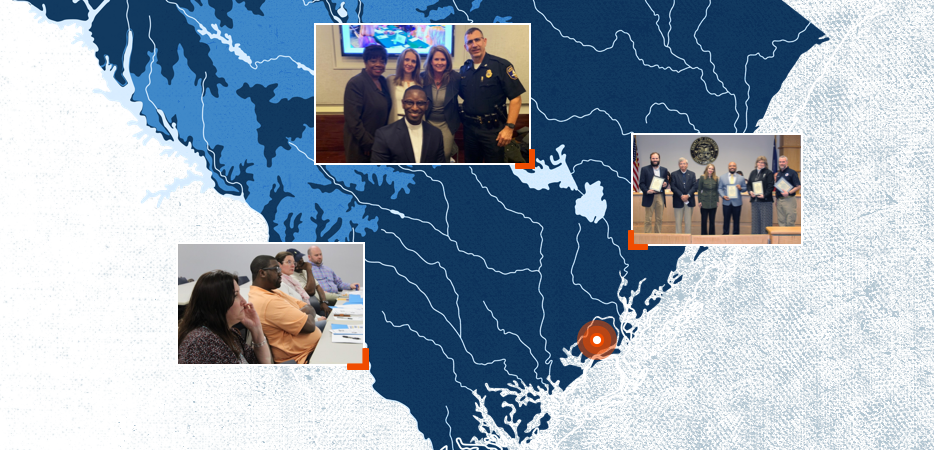
The county’s Criminal Justice Coordinating Council (CJCC) formed in 2015 to make sustainable, data-driven improvements to the local criminal justice system, as well as improve public safety and community well-being. The CJCC is a collaboration of elected and senior county officials, law enforcement leaders, judicial and court leadership, behavioral health professionals, victim and legal advocates, and community leaders.

02

COMMUNITY ENGAGEMENT

The CJCC aimed to use data alongside expanded community engagement as it developed its strategic plan, using the idea of a “dialogue to change.” This included a particular focus on those most impacted. The CJCC engaged people through a series of events, roundtable dialogues, and surveys, which helped involve the community in setting the course for the next strategic plan.

03

ENHANCED DATA

Charleston County strengthened its commitment to transforming the local criminal justice system using a variety of data-based strategies. To make sure the county could track progress, a centralized database was developed to track progress across the criminal justice system and study trends.

04

DIVERSION TO SERVICES

Charleston County set out to divert people from jail on municipal and magistrate charges when appropriate. The program expanded the options that law enforcement could use beyond jail, offering alternatives that helped individuals get the help they need and reduce the number of people cycling repeatedly through the jail.

05

IMPROVED COURT RESOURCES

More resources were set up for individuals within the courts. For the first time, public defenders were available at Centralized Bond Court for defendants who qualified. Docket management was transferred from the Solicitor to the Court, and people were able to get through the early stages of case processing faster through new, more efficient processes (e.g., transferring evidence and assigning attorneys faster).

06

JAIL POPULATION REVIEW

Charleston County instituted regular reviews of the jail population to identify pretrial defendants that are not a threat to safety or flight risk and remain in jail on financial bonds in an effort to expedite case movement and reduce how long they stay in jail before the trial.

Results

As a result of the strategies above, Charleston County has made progress towards its goal of rethinking and redesigning its local criminal justice system.

Quartery ADP for Charleston County (2016-2025)

22.2% from baseline

More Results

By 2020, jail use in Charleston County was returning to its intended purpose, reducing the harms of unnecessary incarceration on people, families, and communities. This included a reduction in the jail population, local bookings, individuals booked, and charges.

The centralized database, launched in 2017, and now provides access from across the criminal justice system to see results, conduct analysis, and evaluate how the local criminal justice system is functioning and allows for identification of areas with the opportunity for improvement. This reporting shows that the municipal and magistrate charges brought to the jail declined by 78% from 2014 – 2020.

Five single-charge bookings, including simple possession of marijuana, open container, misdemeanor shoplifting, trespassing, and public intoxication, were specifically targeted as part of the county’s Safety and Justice Challenge efforts, and as a result, were reduced by 84% from 2014 – 2020. The number of people regularly cycling through the jail who were booked and released between 2014 – 2020 decreased by 63%.

The county made significant progress in diverting people from jail to alternatives to help get the help they need. In 2019, law enforcement referred 74 individuals to the Tri-County Crisis Stabilization Center, conducted 473 law enforcement consultations with embedded clinicians, and executed 152 law enforcement drop-offs to the Charleston Dorchester Mental Health Center.

Bond court representations by public defender attorneys started in 2016, gradually increasing from zero in 2015, to 2,128 in 2020. Bond court judges also became involved as partners, getting more information on setting bonds that are fair, just, and meaningful. As part of this, Pretrial Service Reports were set up in 2018 to better inform bond setting judges. These reports offered a consistent, objective, and reliable way to assess for risk of rearrests and/or missing court. By 2020, the reports became available to over 90% of bond hearings in the Centralized Bond Court.

The average number of days in the early stages of case processing improved from 2015 to 2020. This included improvements in the time it took to be assigned a public defender, assigned a solicitor, and how long it took for initial evidence from law enforcement to be provided to prosecutors.

While analyzing the relative rates of incarceration between racial and ethnic groups helped the county improve inequities in the criminal justice system, there is still more work to do. Disproportionately, Black people were booked into the local jail on low-level target charges as well as overall charges, although the gap had shrunk between 2014 and 2017.

The Criminal Justice Coordinating Council (CJCC) efforts to engage the community in the development of the strategic plan brought together over 1,200 community members, including many with direct experience of the justice system. Together, community members and system stakeholders (i.e., judges, public defenders, prosecutors, etc.) created the CJCC’s strategic plan in 2020, focusing on identifying data trends and community priorities to advance change for the next three years (FY2021 – FY2023).

Remaining Challenges

Charleston County is focused on addressing its remaining challenges in its local justice system.

The county’s current strategic plan aims to do more to help protect public safety, minimize harm, and more efficiently use limited system resources—all to create an effective, just, and equitable local criminal justice system.

The strategic plan includes a focus on community engagement, to keep people involved and provide more ways to engage in improving its criminal justice system. It also includes a planned update on the data around racial and ethnic disproportionality and disparities. Beyond data, a race equity fellowship proposal is in the works to create effective agents of change in building consciousness and reducing disparities among criminal justice system actors and people who are leading efforts to address racial and ethnic inequities throughout the community.

Regular reviews of the local jail population continue to be necessary, helping make sure that people who are not a threat to public safety or a flight risk are not detained pretrial unnecessarily. Continued General Sessions court reminders continue to remind defendants of their upcoming court events to increase court appearances and help make sure that the system doesn’t lose contact with people while their cases are pending.

The county must also continue to work on options for diverting and deflecting people from jail. This will include inter-agency case conferencing with service providers, law enforcement, and judicial stakeholders to improve outcomes for those who are most frequently booked into the local jail in an effort to break the cycle of repeated jail use; research on how diversion and deflection from the criminal justice system and into diversionary options impacts arrests, jail population, and behavioral health outcomes; and stronger county-wide tracking on crime and jail use.

The county will also continue to focus on bond hearings in Centralized Bond Court are fair, just, and meaningful. Regardless of the type of bond set, within the state there is currently minimal oversight of the conditions of the bond setting, let alone feedback about pretrial outcomes or a continuum of pretrial options available to help maximize safety and improve the rate of appearances. The strategic plan includes developing a proposal to help address these challenges.

The CJCC, in partnership with Trident United Way 211, is working to strengthen the directory of services for justice-involved people that will help ensure they know which services are available and who they can help.

Last, the COVID-19 pandemic has had a significant impact on every aspect of the county’s local justice system and continues to uniquely affect those incarcerated in jail. More research is needed on the impacts of the pandemic on the justice system, and what lessons can be learned in the long-term.

Lead Agency

Criminal Justice Coordinating Council
3831 Leeds Avenue
North Charleston, SC 29405

Contact Information

Ellen S. Steinberg
Project Director
essteinberg@charlestoncounty.org
843-554-2476

Partners

Charleston County Council, Charleston Sheriff's Office, Charleston Police Department, North Charleston Police Department, Mount Pleasant Police Department, Ninth Circuit Defender, Ninth Circuit Solicitor, Charleston County Clerk of Court, Judiciary, including Circuit, Probate, Magistrate and Municipal Court Leadership, Charleston Dorchester Mental Health Center, Charleston Center, Probation, Parole and Pardon Services, Victim Advocacy, Veteran Justice Outreach, American Civil Liberties Union, One80 Place, 12 diverse community representatives

Follow @ChsCJCC

Blog Posts

Allegheny County, PA

Change in Jail Population 20%

Action Areas Courts Defense Counsel

Last Updated

Background

For many years, Allegheny County has been committed to making improvements to the local justice system.

The overuse of the Allegheny County jail takes an especially heavy toll on people of color. Despite making up only 13% of the local population, Black people make up 67% of the jail population as of June 2021.

In addition, roughly 75% of the jail population has been identified as having a mental health issue or substance use disorder. Those with a history of behavioral health issues spend an average of 14 days longer in jail than those without that background.

Though there has been marked progress, the data shows there is still more to be done to address racial and ethnic disparities in the justice system, more effectively address behavioral health issues, and more efficiently process cases.

Strategies

Allegheny County advanced a number of strategies to rethink and redesign its criminal justice system so that it is more fair, just, and equitable for all.

01

COUNSEL AT FIRST APPEARANCE

The county expanded public defender representation at first appearance by hiring additional attorneys to represent people during evening and overnight hours.

02

COURT PROCESSING

The county developed a plan to expedite the court process by combining two hearings into one.

03

RESOLVING PROBATION VIOLATIONS

The county implemented a new procedure to resolve probation violations and new charges with one hearing.

04

REDUCING DETAINERS FOR PROBATION VIOLATIONS

The county implemented strategies to reduce the number and length of detainers for probation violations by adopting a new policy to limit the use of detainers and expedite lifting them and by establishing a multi-agency workgroup to review cases of people held on detainers.

05

RACIAL & ETHNIC DISPARITIES

The county is participating in a research study commissioned by the University of Pittsburgh's Institute of Politics to use qualitative and quantitative data to determine what is driving racial and ethnic disparities in the criminal justice system and to recommend solutions.

Results

As a result of the strategies above, Allegheny County has made progress towards its goal of rethinking and redesigning its criminal justice system

Quartery ADP for Allegheny County (2018-2025)

19.9% from baseline

More Results

The county has been able to reduce its jail population since joining the Safety and Justice Challenge while keeping the community safe.

In addition, the county found that individuals who are represented by the Public Defender at first appearance have a lower booking rate than those who are not. From there, the Office of the Public Defender started providing representation during evening and overnight preliminary arraignments. As a result, Magisterial District Judges used monetary bond 39% less often versus a comparison from the same timeframe in 2018.

The number of people detained by the county’s Adult Probation dropped 41.5% from October 2018 to April 2021. In addition, during the same time period, the early probation violation process saved an average of 84 days in jail for over 300 cases.

Remaining Challenges

Allegheny County is focused on addressing its remaining challenges in its local justice system.

First is that the COVID-19 pandemic has profoundly impacted how long it takes to resolve cases, and second, and the county has seen an increase in racial disparities in the jail population.

The COVID-19 pandemic has had a significant impact on every aspect of the county’s local justice system and continues to uniquely affect those incarcerated in local jails. The foundation of collaborative, data-driven strategies, including the necessary structures and collaboration from local stakeholders that were developed to support these strategies, set the county up well to respond to the pandemic swiftly and effectively, however challenges remain.

Like many jurisdictions, Allegheny County has seen incarceration rates drop for Black individuals, while the racial disparity in the jail population has grown. The county is working with the Burns Institute on strategies to address this disparity, while still working tirelessly to reduce overall incarceration rates.

Lead Agency

Allegheny County Manager’s Office

Contact Information

Molly Morrill
Mmorrill@alleghenycourts.us

Partners

Fifth Judicial District Court Administration, Allegheny County District Attorney's Office, Executive Branch of the County government, including the Jail, the Office of the Public Defender, Allegheny County Adult Probation, and the Department of Human Services

Follow @allegheny_co

Blog Posts