

Human Toll of Jail Incarceration Trends Racial and Ethnic Disparities October 8, 2021
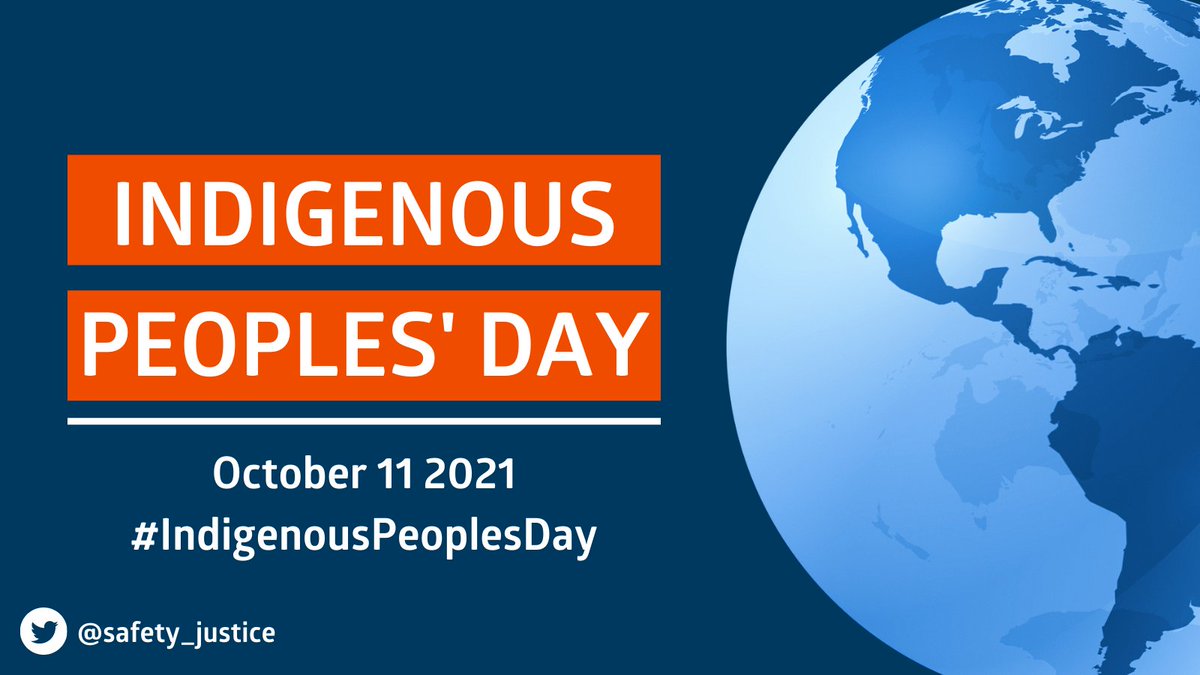
October 11, 2021, marks Indigenous Peoples’ Day—a tradition first instituted in Berkeley, California, in 1992 as a counter-celebration to the 500th anniversary of Christopher Columbus’s arrival in the Americas and the federal holiday honoring him. The goal of Indigenous Peoples’ Day is to recenter Indigenous people’s stories, celebrating their culture and history, and to highlight the grave impact that Columbus and colonialism had on them.
This year, the MacArthur Foundation’s Safety and Justice Challenge (SJC) is using the day to highlight the overrepresentation of Indigenous people in jails across the country while we are also actively pursuing solutions. Some estimates suggest that Indigenous people are jailed at twice the rate of White people in the U.S. We spoke to Indigenous people working to reform local criminal justice systems through SJC to explore how we can all work to reduce Indigenous populations in jails.
Carolyn Olson works in the state attorney’s office in Pennington County in South Dakota. She identifies as biracial, Indigenous (from the Anishinaabe Monacan, and Eastern Band Cherokee tribes) and White, and serves as the local SJC community liaison attorney. Census takers estimate that the Native American population of Pennington County is between 10 and 25 percent, but the jail population in Pennington County is 55 percent Indigenous.
“It’s unacceptable, the disparity,” Carolyn said. “It’s way too high.”
Carolyn spent 18 years working as a prosecutor in Pennington County and has seen how Indigenous people are disproportionately impacted by the criminal justice system there. Now Carolyn is spending her time connecting system-impacted Indigenous individuals with existing and emerging Indigenous resources in the area, so that they can better access services to help them heal, overcome addiction and trauma, and stay out of jail.
Carolyn has worked with an Indigenous-focused group called I. Am. Legacy which was founded by Erik and Morgan Bringswhite to build trust in the county and on neighboring tribal reservations. I. Am. Legacy offers culturally relevant programming for people who are involved with the criminal justice system—particularly those who might have encountered law enforcement because of an underlying behavioral health issue, like substance abuse disorders. I. Am. Legacy helps people reconnect with their culture as part of their work to overcome trauma and the root sources of their substance abuse disorder. In addition, Carolyn has also built bridges with criminal justice system programs, law enforcement, as well as other Indigenous-rooted services.
“As a Native person working in the criminal justice system for so long, I really do think systemic racism plays a big role in the way the system was set up and operates,” Carolyn said. “The volume of cases coming through the system means that hardworking, well-intentioned people don’t have time to reflect on why things are happening. The work I’ve been doing is to get people to see that historical trauma impacts Indigenous people who go through the system and work to overcome things like substance abuse disorders. The goal is to connect people to culturally rooted services to overcome some of that, and it’s starting to have an impact.”
Char Green-Maximo recently left her position as the SJC community engagement coordinator in Minnehaha County, South Dakota, to join South Dakota Urban Indian Health, which provides culturally based mental health and substance use treatment, mentoring, arts programs, and other services to Indigenous people. “Judges are referring people to the services, and they are starting to have an impact,” Char said.
Originally from Fort Peck, Montana, Char is from the Nakoda and Dakota tribes. She has an older brother who spent time incarcerated, and while she knew about the overrepresentation of Indigenous people in prisons and jails, she did not realize the impact on people’s lives until she visited him.
“I went to see him, and I always knew the rates of imprisonment for Indigenous men were high, but that was the first time I saw so many Native men together,” she said. “And it was just mind-blowing. I went from reading a number to seeing the people, and it was just a whole different thing. It’s just a lot to take in when you consider the families impacted.”
Char meets often with law enforcement in the county as part of her work. While there has been an occasional Indigenous person in the police department, and there is one Indigenous judge, locally, most people working in law enforcement and the criminal justice system are White.
“They see the overrepresentation of Indigenous people, but it’s hard to soak it in, because most of them didn’t grow up by reservations or around the Native American population, so they don’t know anybody, personally, like that,” Char said. “The only time they’re interacting with Indigenous people is when they’re arresting them. I think sustained training for law enforcement would help them understand the deeper issues that contribute to some of the issues. And I don’t mean a two-day training but ongoing work. These issues often traumatize people as children and take time and training to understand over a long period as you see the behaviors coming out in response to stimuli.”
“They want to recruit more Indigenous officers, but it’s about forming more authentic relationships in those communities earlier so that people know you more and trust you more,” she added.
In Missoula County, Montana, county participating in SJC, Dr. Desiree Fox and Dr. Ciara Hansen are clinical psychologists who are working on an upcoming paper with support from the MacArthur Foundation about the overincarceration of Native Americans. They worked with the Confederated Salish and Kootenai Tribes—of which Desiree is a member—on a project designed to facilitate successful return to the reservation community for Indigenous people who had been incarcerated.
“People were coming back to the reservation and facing sentencing conditions that were impossible to meet,” said Ciara. “People were going back to prison at disproportionate and alarming rates for things like not being able to line up anger management training. It’s impossible to access that training when you’re living on a reservation.”
Ciara and Desiree collaborated with the managing attorney at the Confederated Salish and Kootenai Tribal defender’s office to develop a tribal reentry program based on the “holistic defense” program developed by attorney Robin Steinberg, the founder and former executive director of the Bronx Defenders in New York. Under the holistic defense model, public defenders work in interdisciplinary teams that include social workers, mental health professionals, and others, to address not only a client’s criminal case, but also its causes and wider consequences not just for the individual accused of a crime, but for their families and wider circle. For example, if a person is sent to jail and spends time away from their family, unable to be a parent or work to earn money for the family, then when they return, the consequences can be severe. Likewise, it is possible that a person committed a crime because of a behavioral health issue that can be treated.
In response, Ciara and Desiree began to develop new risk assessment tools that were more sensitive to the physical, social and cultural needs of Indigenous people.
“The typical mainstream predictors for recidivism are not the same as they are for Indigenous people,” said Desiree. “For example, the court system might increase your risk because of where you grew up or how you grew up. And now you’re automatically considered an increased risk of recidivism because you grew up on a reservation. That inherent bias discriminates against Indigenous people in a way that is out of control.”
“While we were doing the program, we realized that all of the risk assessments that were being used to provide insight about the conditions people need in their sentencing were not based on Native populations,” Ciara said.
“Systemic biases in America’s government and legal systems are rooted in historic genocide perpetrated against Native people,” said Dr. Selso Villegas. He is a member of Pima County, Arizona’s Collaborative Community, part of the local SJC’s work. He is also a member of the Tohono O’odham Nation and the Executive Director of the Nation’s Department of Water Resources. Selso thinks that mainstream America believes its in their best interest to not acknowledge the struggles undergone by Native people, perhaps thinking it is better to ignore it rather than deal with it.
“We’re invisible to people because that’s the way many in society want it,” he said. “Not too many people have Native friends. We know we’re not a priority to Pima County. We are sort of a nuisance. For example, my grandson, who has been diagnosed with Fetal Alcohol Disorders, has not had rehabilitation or behavioral training recommended to the Court. He is doing time for the addictions of his parents. We also understand that tribal needs are an afterthought in local, state, and federal government operations.”
Selso recently participated in a wellness day focused on mental health and self-care sponsored by two local tribes. He set up a booth to talk to people about how to go to court to expunge outstanding warrants, the majority being failure to appear warrants. He signed up over 30 tribal members and talked to over 100 people about taking advantage of the Pima County Court program.
“For a short amount of time, we got some people to believe that they had a chance in the legal system,” he said. “And that’s good. I felt like I was contributing to the cause because it will keep at least a hundred people out of jail.”
Selso wants to remind people that Native people may have been forgotten by many, but that Native people take great pride in this country. “It is our home too,” he said. “We are the first Americans.”
Renee Bourque, a citizen of the Mvskoke Nation from Oklahoma, is the Director of the Victim Assistance to Support Tribes (VAST) Center at the National Center for Victims of Crime, a strategic ally of the Safety and Justice Challenge. VAST provides technical assistance and training on Indigenous issues to tribal governments and victims’ service agencies, but also to any federal, state, or non-governmental agency that serves Indigenous people. The initiative’s staff are Indigenous by intention so that they can build relationships across the criminal justice system and Indigenous partners.
Renee attributes historical and generational trauma perpetuated against Indigenous people as a root cause of overrepresentation in the justice system.
“I’ve been working with crime victims in Indian Country for 20 years, and it is so evident that hurt people hurt people,” Renee said. “It’s not uncommon in Indian Country for you to serve a victim one week and then in a couple of months, that person may be the offender, and you might be serving the same family.”
She points to news stories coming out of Canada about the murder of Indigenous children at boarding schools and says it is a moment to build awareness of the harms perpetrated on Indigenous people across North America. Secretary for the Interior Deb Haaland has launched an investigation into the lasting effects of the more than 350 government-funded Indian boarding schools in the United States. The remains of 10 Native American and Alaska Native children were recently returned home to their communities from the Carlisle Indian Industrial School in Pennsylvania.
The school’s chilling motto, like many boarding schools across the United States for Indigenous youth attempting to “Americanize” them, was to “kill the Indian, save the man.”
“Most Americans also don’t realize that there are 574 tribal nations in the United States, with 229 in Alaska, and the rest in the lower 48,” Renee said. Each one is an individual sovereign nation with their own codes, laws, courts, traditions, language, and treaties with the U.S. government.
“We each have a different creation story,” Renee said. “We’re all different. And I think the biggest misnomer is that ‘Indigenous people’ all get lumped into one group. But tribal affiliation for each group is important. It’s most important to me to identify as a ‘Mvskoke’ woman, for example. There’s still so much education that needs to be done.”
Aside from a deeper understanding of the complexity facing Indigenous people in the U.S., the most important thing on October 11, Renee said, is for people across the country to understand the history of these issues.
“It’s only by understanding our history and treatment of our people that we may move forward,” she said. “The treaties must be honored, so that we may honor our ancestors and continue to grow and prosper as the first peoples of this land. We are still here!”