Jail Costs Strain Local Budgets Even as Crime Falls

By: Julie Wertheimer

Courts Diversion Jail Costs May 5, 2021

In 2015, the City of Philadelphia—where I led the local Safety and Justice Challenge work through 2019—contemplated replacing a jail that was more than a century old. But following a public outcry against building an expensive new facility, and thanks to concerted efforts by government agencies and community advocates working to reduce the level of incarceration in the city, Philadelphia was able to close the existing jail in 2018 without building a replacement—because the jail population had fallen significantly since historic highs in 2012.

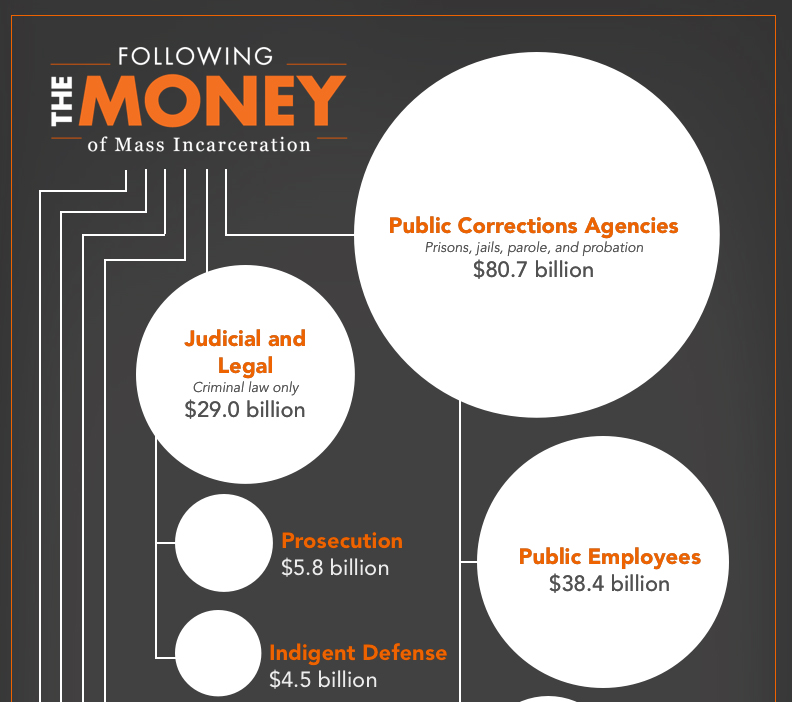
As many cities, counties, and states face significant budget pressures as a result of the pandemic, spending on jails is receiving increased attention. The cost of these facilities has grown 13% over the last decade, despite falling crime and fewer people being admitted to jail. Spending on jails far outpaces many other vital services, such as fire protection, housing and community development, and libraries. About 1 in 17 county dollars nationwide is targeted for incarceration costs, with jails among the top six cost-drivers for the average county.

The Pew Charitable Trusts recently examined expenditure data for all U.S. localities and undertook an analysis of jail costs, primarily from 2007 and 2017, when jail spending could be disaggregated from the relatively small amount of other costs at local jails. We found that local corrections costs rose sixfold between 1977 and 2017, when adjusted for inflation.

These rising jail costs have occurred even though 2 million fewer crimes were reported to law enforcement in 2017 than in 2007. During that same period, jail admissions dropped 19%, from 13.1 million to 10.6 million, while the average daily jail population remained relatively flat, declining only 4%, or by 27,500 people. The gap between the change in admissions and population is because of rising average lengths of stay between 2007 and 2017.

Jail costs can rise for a variety of reasons. Growing populations lead to an increase in variable costs, such as utilities, but jails also carry sizeable fixed costs because of their physical footprint and staffing requirements—regardless of how full a facility may be. Counties with older jails may have to contend with frequent repairs or the prospect of replacing a deteriorating building with a new facility, an expense that can cost hundreds of millions of dollars. And the growing number of people with behavioral health and substance use issues in jails can contribute to escalating health care costs, which can eat up 1 in 3 correctional dollars.

And although people typically equate spending more on jails with safer communities, the numbers do not bear that out. Pew found that increased spending on jails as a percentage of local budgets within a state did not correlate with state crime rates:

A recent Vera Institute report on large city jails showed that safely reducing jail populations can be an effective way for local jurisdictions to curb incarceration costs. Of the jails in the study, almost half of those that cut their population by at least 30% since 2011 were able to decrease their spending. All but one of the jails that increased their population saw increased costs. Philadelphia was one of those cities that decreased its population by 45% and was able to achieve an 18% reduction in jail expenditures. And public officials can expand policies implemented during the pandemic—which have proved effective in safely lowering jail populations—to continue to downsize their jail systems even when COVID-19 is no longer a threat.

The data is clear and suggests a solution that can satisfy those with fiscal and safety concerns alike. By continuing and strengthening efforts to reduce jail populations, policymakers can make more effective use of public safety dollars while keeping communities safe.

­—Julie Wertheimer directs the public safety performance project at The Pew Charitable Trusts.

SJC Hosts Twitter Chat on Racial Disparities During Black History Month

By: Matt Davis

Jail Costs Racial and Ethnic Disparities March 4, 2021

Marshall Project Staff Writer Jamiles Lartey hosted a recent Twitter chat on strategies for addressing racial equity in our criminal justice system as part of the Safety and Justice Challenge’s commemoration of Black History Month.

From ending cash bail to empowering impacted communities in criminal justice reform, to replacing police with community response models for crimes better handled without a law enforcement response, the conversation emphasized ways to hold the system more accountable for racial disparities and to reduce them.

A broad group of participants joined the chat from prosecutors to defenders, and from academics to activists. It took place under the hashtag #RethinkJailsChat, and you can review the whole thing by going to Twitter and searching for the hashtag or simply clicking here.

Some attendees included:

@RashadRobinson — Color of Change President Rashad Robinson
@ResLegalDiva — Melba Pierson, Policy Director at the Steven J. Green School of International and Public Affairs at Florida International University
@DrAprylA — Dr. Apryl Alexander, Associate Professor at the University of Denver Grad School
@JustLeadersUSA — Just Leadership USA — a national nonprofit led directly by impacted people
@PhillyDefenders — the Defender Association of Philadelphia
@CUNYISLG — the Institute for State and Local Governance at City University of New York
@JamiraBurley — activist and social impact strategist Jamira Burley
@APAinc —the Association of Prosecuting Attorneys
@NLADA — National Legal Aid and Defender Association
@AA_Consults — Consultant and trainer for education, empowerment and equity, Alexandra Arrington
@AntiRecidivism — The anti-recidivism coalition

Mr. Lartey set the tone by citing sobering recent research on Black imprisonment in the United States.

To open, Mr. Lartey linked to a recent report published by the Institute for State and Local Governance showing that overall booking rates are down, but that racial disparities persist. He asked how we can make criminal justice reform more inclusive.

Color of Change President Rashad Robinson, @RashadRobinson, emphasized the importance of holding key decision makers accountable for how they enable a system “designed to incarcerate BIPOC at higher rates.”

The Defender Association of Philadelphia, @PhillyDefenders, stressed the importance of empowering and encouraging involvement from people in most-impacted communities in criminal justice reform.

The next question focused on a 2018 report from the Prison Policy Initiative that found the “prison penalty” in unemployment disproportionately punishes formerly incarcerated Black men and women, Mr. Lartey asked: “Where are some other places we see this kind of racial disparity play out?”

Responses included disproportionate stops by the police of BIPOC individuals, jail populations, housing and education prospects, all contributing to a “cycle of desperation.”

Next, the discussion moved to focus on civilian responder models. A 2020 study from Police For Reform and the Center for American Progress found that between 33 and 68 percent of police calls for service could be handled without sending an armed officer to the scene.

“Many feel civilian first responders can help reduce overreliance on police & racial disparities in policing + arrests. The “CAHOOTS” program is a popular example,” Mr. Lartey wrote, linking to an article at The Marshall Project on the program in Eugene, Oregon.

He asked: “Do these kinds of civilian responder programs hold promise for reducing the disparate impact of the criminal justice system? What are some other possible solutions you think are worth mentioning?”

There was broad support for such models, and also, a call for deeper investment in the social safety net.
As stated in @MarshallProj’s The System, “rollbacks in the social safety net, growing income inequality & deinstitutionalization of the mentally ill” have all played into our current policing issues. We have to invest in alternative systems of care & support.#RethinkJailsChat https://t.co/ZFl97qVm29

— Association of Prosecuting Attorneys (@APAinc) February 25, 2021

Next, the conversation concluded by pivoting to bail reform, citing a recent report by Loyola University, which found that bail reform measures in Cook County increased the number of people released pretrial & was not associated with any significant change in the rate of criminal activity.

Mr Lartey asked:  What could findings like this mean for the prospect of bolder action on bail moving forward, or the spread of reform efforts? Could more findings like this stem the political backlash that reform efforts often meet?

The question drew an emphatic response:


—Matt Davis is a communications consultant supporting the Safety and Justice Challenge blog.

The “Radical” Notion of the Presumption of Innocence – A Better Way Forward

By: Arthur Rizer

Incarceration Trends Jail Costs Presumption of Innocence August 17, 2020

In America, we tell ourselves, those merely accused of crimes are presumed innocent, while those convicted of crimes may be sent to jail or prison.

But in reality, we treat most people in this country who are accused of crimes exactly the same as those who have been convicted: they are detained in jail and cut off from family, work, and legal counsel. How did this come about, and how can the ideal and reality be reconciled? That’s the question we posed in “The ‘Radical’ Notion of the Presumption of Innocence.”

The paper was written as part of Columbia University’s Square One Project and can be found in full here.

In it, we argue that pretrial detention in America has come unmoored from its constitutional and historical foundations and become a threat to the due process rights of Americans accused of committing crimes—especially misdemeanor crimes.

We put the word “radical” in scare quotes to connote irony: the presumption of innocence, a bedrock principle of English and American criminal law, today has been rendered toothless. Historically, this presumption wasn’t just an abstract ideal; it afforded meaningful protections to the accused. Almost every state in the country, by constitution or statute, recognizes that defendants have a presumption to pretrial release under bail conditions that are no more onerous than required to ensure the defendant’s return.

But starting in the 1980s, as part of the tough-on-crime “revolution,” changes to federal law made it easier for judges to remand accused but un-convicted persons (or set their bail at an impossibly high amount, which amounts to the same thing) based on a finding of “danger to the community.“

States soon followed suit. Studies show that now, in the federal system and in some jurisdictions, 80 percent or more of un-convicted accused are detained for days, weeks, or even months before their cases are resolved. Detentions often take place on the basis of rushed bail hearings, the most industrialized feature of America’s assembly-line approach to criminal justice. In most cases, defendants don’t even have the right to be represented by counsel and have just two or three minutes to argue for their freedom.

There is no doubt that defendants are prejudiced by pretrial detention. Persons in jail have little practical opportunity to assist their attorneys in preparing a case for trial. Even a relatively short stay in jail can cause loss of a job or housing, reducing defendants’ ability to marshal the resources needed to go to trial. The desperation jailed defendants feel causes many to plead guilty, even when the state’s evidence is weak. Prosecutors are well aware of this leverage, which is why they almost always seek no or excessive bail. This practice is especially damaging to misdemeanor defendants who often spend more time in jail before trial than they ever would if they went to trial and were found guilty.

This reality grounds our statement that pretrial processes that are supposed to serve the presumption of innocence instead have come to resemble findings of guilt. Deprivation of freedom is the most serious criminal sanction our nation imposes, short of the death penalty. Pre-trial detainees are not people who have been duly sentenced to this punishment. Indeed, they are supposedly protected by a legal presumption that, we like to tell ourselves, can only be overcome by overwhelming evidence that establishes guilt beyond a reasonable doubt.

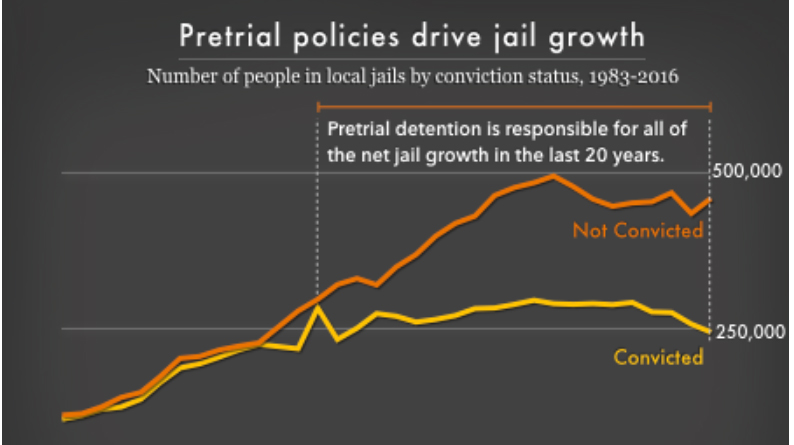
Yet the accused are routinely treated exactly the same as those who have been convicted. Pre-trial detention is so common that more than two-thirds of the 746,000 people held in jails in America are pretrial detainees. Essentially, we have turned jails into massive pre-trial detention centers, to which people are sentenced on almost no evidence and with little process, to watch their lives be destroyed as their attorneys work out pleas that will often send them home almost immediately.

We impose this miscarriage of justice on defendants who have been accused of both violent crimes and non-violent petty offenses, because of a finding that someone is “dangerous.” But this finding usually occurs after a two- or three-minute bail hearing, often without opposing counsel, frequently without any meaningful assessment of risk. The rich make bail and the poor are remanded because they can’t pay trivial amounts of money. Is there any universe in which this process serves the presumption of innocence?

There is little evidence this system makes the community safer. In fact, there is evidence that pretrial detention is criminogenic—actually increases crime. One study found that after only two or three days in detention, individuals deemed to be “low-risk” were about 40 percent more likely to commit a crime upon release when compared to other low-risk individuals who were detained for 24 hours or less. This finding makes sense: homelessness, joblessness, strained family relationships, are factors that increase the likelihood of crime. They are all also obvious outcomes of even a short stint in jail. A practice designed to make the community safer likely increases crime while destroying lives to boot.

Widespread pretrial detention is especially unsupportable today when there are mechanisms to monitor and restrain those persons who really do those who present a threat. Near-perfect GPS tracking—either through bracelets or cell phone monitoring—are useful and effective tools to address concerns about danger to the community. These programs have been shown to work in localities that have reformed bail laws to decrease the number of pretrial detainees.

The fact that something is common does not make it just, effective, or wise. We can imagine a better criminal justice system. Reforming America’s broken pretrial detention system would be a major step forward. The irony is that this would not be a bold or unprecedented reform. It would simply be a return to the foundational American principle that people accused of crimes are presumed innocent and that the state’s burden in attempting to deprive citizens of their liberty is a heavy one. “Radical,” indeed.

—Arthur Rizer is the director of criminal justice and civil liberties at the R Street Institute. Arthur is also an adjunct professor of law at George Mason University’s Antonin Scalia Law School.

—Tracey Meares is the Walton Hale Hamilton Professor at Yale Law School and the founding director of the Justice Collaboratory.

Research Report

Incarceration Trends Jail Costs November 19, 2019

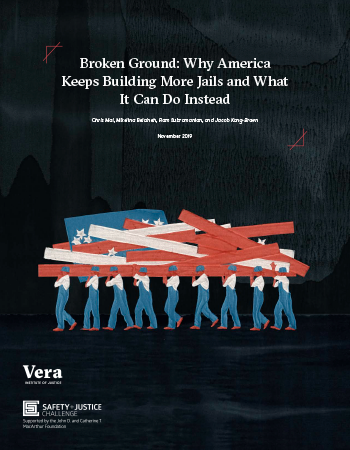
Broken Ground: Why America Keeps Building More Jails and What It Can Do Instead

Vera Institute of Justice

Jail construction has vastly expanded America’s capacity to incarcerate people. In 1970, there were 243,000 jail beds in the United States, but by 2017, there were 915,100. This report explores the persistence of jail expansion by examining a convenience sample of 77 counties in 31 states that considered or pursued jail expansion between 2000 and 2019. From this sample, Vera researchers identified three major arguments county officials make to support construction: health and safety concerns due to overcrowding or aging facilities; the need to provide specialized services, including mental health and drug treatment; and the opportunity for revenue from renting beds to other authorities. The report also outlines negative or unanticipated consequences counties experienced from the decision to build or expand and provides examples of places that have pursued better alternatives to new jails.

Implementation Guide

Incarceration Trends Jail Costs May 6, 2019

Does our county really need a bigger jail?

Prison Policy Initiative

As jail populations have skyrocketed over the past three decades, jails around the country have become dangerously overcrowded. The reflexive response is often to start the long, expensive process of building a larger jail. However, this report provides a roadmap to easier, quicker, cheaper, and more just solutions to jail overcrowding. It is organized around a series of questions that local decisionmakers should be asking advocates of jail expansion, and then lays out a detailed briefing on best practices for reducing jail overcrowding.