Counties Enhancing Racial Equity in the Criminal Justice System through Grantmaking

By: Chelsea Thomson

Community Engagement Racial and Ethnic Disparities September 12, 2022

The National Association of Counties, in partnership with the National Criminal Justice Association and with support from the Bureau of Justice Assistance, has released a toolkit for counties interested in addressing racial and ethnic disparities in the criminal legal system through grantmaking. The toolkit outlines eight principles, developed by a working group of county stakeholders, state administering agency representatives, and community-led organization leaders, to help enhance equity in the criminal legal system. It features several communities participating in the Safety and Justice Challenge (SJC) that are undertaking initiatives such as grants to community-led organizations.

More information about the toolkit is found here.

County governments play an important role in funding programs and services that support the well-being of community members. With this budget authority, county governments have a unique opportunity to invest in community-led organizations that often provide critical services and supports to communities underserved by social service systems and overrepresented in the justice system. By strategically investing in and partnering with such organizations, counties are also working to close these gaps to correct for historic disinvestment that has led to racial and ethnic disparities in the criminal legal system. To achieve this goal, counties can help ensure equitable access to funding opportunities and minimize barriers to implementation of grant-funded programs and services.

When deploying resources and managing implementation of programs or policies, county leaders pursuing equity in procurement and grantmaking may choose to guide their decision making with the following guiding principles in mind: Trust, Transparency, Community, Fairness, Intentional Access & Inclusion, Support, Creativity, and Joint Accountability.

These guiding principles are supported by several strategies and practices counties can implement to bring them to life and demonstrate a commitment to equity in our communities. Some examples of SJC communities, drawn from the toolkit, include:

Building Trust in Lucas County, Ohio

Trusting partnerships can open lines of communication, encourage a willingness to innovate, and create opportunities for mutual respect. To help build trust with community-led organizations, counties can invest in the capacity and expertise of community leadership, anchor the relationship in a common goal, reject the funder/recipient power dynamic that can stifle relationships, and learn from and listen to one another as partners.

In Lucas County, Ohio, commissioners dedicated $200,000 to community-led organizations engaging in criminal justice reform efforts and addressing racial disparities. The grant fund provides awards of up to $10,000 to grassroot organizations working in four zip codes. The county’s Criminal Justice Coordinating Council (CJCC) also administers federal criminal and juvenile justice funds on behalf of the state, to allow for greater flexibility while continuing to provide oversight and technical assistance.

Advancing Joint Accountability in Cook County, Illinois

As stewards of public dollars, government funders and community-led organizations play a critical role in responding to and serving community members’ needs. Prioritizing intentional investments in communities traditionally left out of the funding process, communicating funder expectations, committing to sharing data, and building a working relationship with continued communication and support can help counties work towards joint accountability.

Cook County, Illinois launched a 50-member taskforce to advise on the county’s strategic investments. One of the grant programs invests in community-led organizations that serve areas with disproportionately high rates of gun violence. Tiered funding tracks with staggered deadlines provide organizations that may have smaller budgets and/or grant writing capacity with time to submit strong applications and be evaluated among similarly situated organizations. The grant funding is provided on a quarterly basis, rather than a reimbursement, and grantees may request a funding advance. Organizations that are led by, support, or employ community members with criminal convictions are not barred from applying on that basis.

Enhancing Fairness in Multnomah County, Oregon

Implementing new processes to enhance fairness in the types of organizations funded and how these funds are administered will help improve access and equity. Strategies to advance fairness include training staff to recognize and address personal and organizational biases, promote practices that allow grantees to contribute to the grantmaking process, raise up champions, and not lower the bar but raise the platform.

Leaders in Multnomah County, Oregon evaluated county investments to fund programs that address the underlying drivers of harmful behavior and uplift communities of color.  The county expanded the Community Healing Initiative that invests resources in community-based partnerships to support youth and families. The program deploys culturally specific services and provides direct relief such as rent, utilities, and internet access. To support smaller and emerging organizations, the county is piloting an initiative to provide 13 months of funding for year-long projects to jumpstart their programming with resources.

Promoting Intentional Access and Inclusion in Philadelphia, Pennsylvania

Aligning resources with equity goals and removing barriers to participation and use of funding will expand and diversify grantee opportunities and potential relationships. By considering the structure and level of funding, allowing for various entry points, evaluating needed changes in the application process and components, and measuring and broadening success, counties can support access and inclusion for all potential grantees.

The Criminal Justice Microgrant Fund in Philadelphia, Pennsylvania provides resources to community-led organizations engaged in innovative criminal justice reform efforts. Funding can be used to support communities disproportionately impacted by the criminal legal system or provide services to residents who are involved in the system. Organizations led by people of color may also seek general operating support.

Honoring and Uplifting Creativity in Los Angeles County, California

While working within the confines of funding rules and requirements may pose challenges, it can be beneficial to evaluate and revise processes. Honoring and uplifting creativity and innovation, through learning, sharing, and evolving beyond the status quo and utilizing the tools, discretion, and flexibility available to counties, can help to challenge and expand standard practices to work for both sides of the grantmaking equation more effectively.

Residents of Los Angeles County, California approved Measure J in 2020 to dedicate no less than 10 percent of the county’s locally generated, unrestricted funding to community investments that address the disproportionate impact of racial injustice. The county established a 24-member committee that can garner community input and project recommendations through an online form, in both English and Spanish. A community-based, third-party administrator and a community engagement consultant ensure diverse community voices are elevated and incorporated into the decision-making process.

Offering Support in Milwaukee County, Wisconsin

Providing an infrastructure of support and resources for community-led organizations, particularly those new to applying for and/or receiving government funding, can help successfully manage funds. To expand support, counties can provide culturally and socially responsive training, technical assistance, and coaching, invest in funder internal capacity, and engage in intermediaries.

Milwaukee County, Wisconsin’s Community Justice Council is providing grants of $34,500 to each of four grassroots organizations working to reduce or prevent criminal legal system involvement, promote racial equity and engage the community. To support applications, the Community Justice Council sponsored a community grant writing training, hosted an optional information session prior to the submission deadline and published the scoring rubric. During the grant period, grantees are required to attend a new grantee orientation and meetings to discuss expectations, support grant administration and offer connections among the group. A local university serves as the fiscal agent to help grantees meet reporting requirements and disperse funds more quickly.

Improving Transparency in Dane County, Wisconsin

Publishing and sharing materials and decisions often contributes to increased buy-in, accountability and mutual understanding. By prioritizing an open and ongoing commitment to share information in a timely and helpful manner, announcing the process surrounding decision making and personnel/advisors involved, and communicating the purpose of data-collection efforts and results, counties can improve transparency.

Via working group recommendations in Dane County, Wisconsin, county leaders developed the Partners in Equity Grant Program to fund grassroots organizations that aim to reduce legal system involvement and address systemic racial inequities. Organizations can apply for up to $15,000 in funding. Additionally, the county requested an external evaluation of grantmaking policies and practices to enhance racial and social equity across departments.

The Opportunity for Counties

This equity toolkit, and the principles and strategies outlined within, can assist counties to reflect on grantmaking processes to administer funds more equitably and for greater impact. Capitalizing on national momentum to address and reduce racial and ethnic disparities in the criminal legal system, counties can find critical partners and trustees in community-led organizations.


Research Report

Human Toll of Jail Incarceration Trends LGBTQ Racial and Ethnic Disparities June 24, 2022

Overrepresentation of People Who Identify As LGBTQ+ In The Criminal Legal System

Jane Hereth, Assistant Professor of Social Work, Helen Bader School of Social Welfare, University of Wisconsin-Milwaukee

Individuals who identify as lesbian, gay, bisexual, transgender, queer, or who hold other marginalized sexual orientation and/or gender identities (LGBTQ+) are overrepresented within the criminal legal system. LGBTQ+ people of color and LGBTQ+ people with disabilities experience even higher rates of criminal legal system involvement than their White LGBTQ+ peers. This report will review factors contributing to these disparities. Additionally, the report will highlight the work of organizations addressing the needs of LGBTQ+ individuals involved in the criminal legal system and outline recommendations to address overrepresentation.

Focusing on Racial Equity in The Justice System

By: Matt Davis

Community Engagement Racial and Ethnic Disparities June 17, 2022

Cities and counties participating in the MacArthur Foundation’s Safety and Justice Challenge (SJC) significantly reduced their jail populations over the past few years – both prior to and since the start of the COVID-19 pandemic. Despite that progress, racial and ethnic disparities in jails persist. You can read more about the data here.

In January 2022, the Challenge deepened its commitment to learning and investing in more intentional and effective strategies to eliminate institutional and systemic racism within the justice system. It selected four jurisdictions to join a new Racial Equity Cohort based on proposals that explicitly focused on racial and ethnic equity in the criminal justice system.

The four cities and counties selected to participate in the Racial Equity Cohort were Cook County (IL), New Orleans (LA), Philadelphia (PA), and Pima County (AZ). Their proposals centered lived experiences of Black, Indigenous, Latinx, and other people of color. They also emphasized the SJC Community Engagement Pillars of authenticity, accessibility and transparency, respect for diversity, and commitment to ongoing engagement. Participation in the Racial Equity Cohort provides communities with training and technical assistance focused on racial equity and authentic community engagement, peer-to-peer support from other cohort members, and qualitative and quantitative data and analytic support.

Nearly six months into the project, we spoke to people in Chicago, New Orleans, and Philadelphia about the progress of the initiative so far.

Sisters With a Goal Research Budgets in Philadelphia

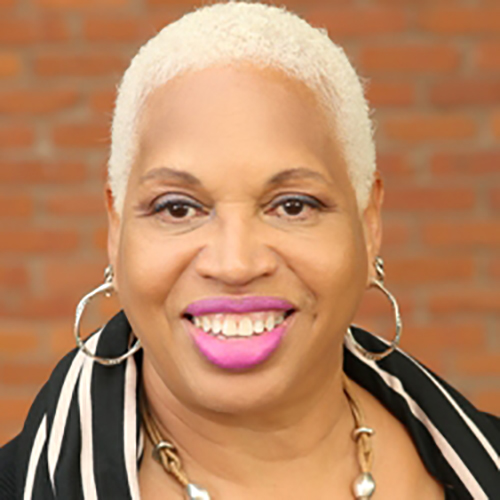
The author of three books, Reverend Dr. Michelle Anne Simmons is the founder and Executive Director of Why Not Prosper, Inc., a grassroots Philadelphia nonprofit devoted to helping incarcerated women make a smooth transition back into society. Michelle has lived experience of incarceration and overcoming addiction, achieving sobriety in 1999. In 2014, she helped form and implement a pilot program for women escaping trafficking. Since then, she has created several services supporting Philadelphia women including graphic arts programs, leadership advocacy programs helping women recognize their leadership abilities, domestic violence programs, and women’s advocacy workshops. She received a full and unconditional pardon for her conviction in 2015.

Michelle’s team of Sisters With A Goal (“SWAG” for short) is leading an exploration into justice investment in Philadelphia through a participatory action research project—a kind of research project where people who are traditionally subject to research are viewed as experts in their own experience and stories, and are involved in the question development. They are working with academics at Bryn Mawr College on the project. As part of the project the Vera Institute of Justice worked with Philadelphia’s Office of the Director of Finance to produce an analysis of criminal justice spending. Based on that analysis, Michelle and her sisters are coming up with deeper questions for further research around racial and ethnic disparities.

“We’ve all been involved in the criminal justice system,” Michelle said. “Now we’re leaders in the community. And we’ve not historically been involved in looking at the data or the budgets. If you look at the budget with a regular lens, you might not see what we’re seeing. But if you look at the budget with an equity lens and you look at how many people are arrested and where the money is being spent, it gives you a whole different picture. And we’re also having an intentional dialogue around that as we come up with a pilot program to do things differently.”

The goal is to look at reinvesting some of Philadelphia’s criminal justice dollars into a community-based alternative under a pilot program suggested by the community, said Lisa Varon, the Interim Deputy Director in the Office of Criminal Justice at the City of Philadelphia, which is also a partner in the research project.

“This is an example of people closest to the issue looking at the possible solutions themselves, and we’re excited to learn from the ideas coming from the community,” Lisa said. “Government can’t solve the racial equity issue on its own, so I do appreciate that we’ve had the opportunity to partner with the community to come up with solutions.”

Meanwhile, the city is also partnering with the Center for Carceral Communities, an initiative of the University of Pennsylvania, to work collaboratively with neighborhoods in West Philadelphia to help people with a history of incarceration re-engage with the community. In partnership with the Philadelphia District Attorney’s Office, CCC will deliver services as part of a diversion program pilot, providing free, evidence-based psychosocial services to participants.

 Intentional Conversations in Chicago

Kim Davis-Ambrose is the Community Engagement Coordinator for the Justice Advisory Council in Cook County. She describes Chicago’s history in Dickensian terms: “We absolutely see Chicago as the tale of two cities,” she said. “And I’ve lived and breathed that because I grew up in public housing. So, I understand how we got here.”

She has been working in partnership with Everyday Democracy as technical assistance providers on a dialogue-to-change process in three of Cook County’s most vulnerable communities based on data about recidivism, violence, and disparities.

“We’ve started to have conversations intentionally to hear from community members what their feelings were toward the criminal justice system, what their feelings were, and what they think needs to be done to improve the system,” she said. “And how we could best partner with community to continue to have their voices at the table in a shared power space.”

As part of the racial equity cohort, Kim’s team is working in six communities and identifying people who would like to become fellows and be paid a stipend so that their voices can be part of ongoing efforts to reform.

“We take for granted that people understand the criminal justice system, but that’s not true,” she said. “And we want people to be able to continue to educate the community about what the different wheels are of the system and how they can continue or start to become involved.”

The fellows will go through a rigorous trauma-informed curriculum covering violence intervention, restorative justice, community organizer facilitation and training.

“We want them to be equipped to go into the community and continue that dialogue to change process,” Kim said.

Derrick Dawson is a National Organizer and Workshop Facilitator for Crossroads Antiracism Organizing and Training in Chicago. As an Equity Cohort Partner to the Cook County Racial Equity Cohort, he is focused on addressing long-term systemic and institutional racism as a factor in who goes to jail and who does not.

Right now, Derrick is working to identify fellows within ten organizations working on the ground on these issues, who will be paid a stipend to participate in a training program. He will also identify ten internal system representatives across criminal justice offices for the same program, to provide a collaborative learning experience.

The goal is to give the fellows a shared language on long-term systemic and institutional racism to take back to their everyday work. The big challenge, Derrick said, is helping people to see how their day-to-day work fits into the bigger picture so that they are more empowered to advocate successfully for change.

“Many organizations dealing with jail and justice and men and women going to jail get consumed with issues of the day,” he said. “Feeding, housing, getting jobs–those very important things. It takes a lot to get to the deeper issues of systemic racism when people’s lives are at stake every day.”

In that context, building an understanding of long-term systemic racism is crucial if Cook County’s justice system can move forward, Derrick said. From colonialism to slavery, “the jails would not exist today if it were not for systemic and institutional racism,” he said.  “The more folks we can get to think about these issues systemically and institutionally, perhaps the next generation will have less of a slog than we have. Otherwise, we will be in the same place 20 or 30 years from now as we are today.”

Supporting Community Engagement in New Orleans

New Orleans convened an Ethnic and Racial Disparity Working Group in 2020 to set goals to reduce justice system involvement for people of color. Half of the group were government agency staff and half were community members, and it analyzed disparities across the justice system. It came together quickly with commitment from all players and published a report in just 10 months with concrete recommendations supported by all the agencies and community members involved. The report recommended regular and authentic engagement by system stakeholders with system-impacted individuals. The group also recommended making grants to BIPOC-centered organizations to try innovative approaches to criminal legal system prevention and reform efforts.

New Orleans’ racial equity cohort is taking the next step in that process with the creation of a Blueprint for Racial Justice and Criminal Legal System Reimagination through data-driven analysis and community engagement. The City of New Orleans is partnering with nonprofit Total Community Action on the community engagement work.

“Our mission is to reduce poverty,” said Glenis Scott, Director of Community and Energy Services at Total Community Action. “And oftentimes when you’re working in the judicial system, both the adult and juvenile judicial system, we find it’s important to work with low-income families to ensure that there’s a path forward. When you’re looking at reentry from the judicial system or at housing funding, or at low-income food and energy programs, what we’re really trying to do is help people build a better life for themselves. Having the funding available to help educate people and provide supportive services is paramount if we’re going to be able to change what is happening inside the system right now. And that’s what the voice of the community is talking about. These systems are interconnected.”

New Orleans is also looking to convene leaders in the system around what the future looks like from a policy perspective, said Kate Hoadley, Racial Justice Program Manager at the City of New Orleans.

“The country has come to terms with the need to rectify systemic racism,” she said. “But right now, in New Orleans, we are seeing a rise in community harm. Gun violence is up and many people are proposing different solutions. But key to fixing that rise in community harm is to talk about the systemic issues that underlie it, and those include systemic racism and poverty. This is the time for us to have those conversations on all sides.”

Reckoning With the Legacy of the Tulsa Race Massacre

By: Matt Davis

Community Engagement Racial and Ethnic Disparities May 31, 2022

Members of the Safety and Justice Challenge learned during their annual convening in January 2022 about how Tulsa, Oklahoma has struggled to reckon with the legacy of its 1921 Race Massacre. The discussion showed how Tulsa’s history impacts its present. It also demonstrated the complexity any jurisdiction must face in navigating ongoing inequities as it seeks to lower its jail populations sustainably and fairly.

Today in 1921 mobs of White residents of Tulsa killed as many as 300 Black people. City officials had deputized some of the mobs and given them weapons. The mobs burned and destroyed 35 square blocks of homes and businesses in the Greenwood District. At the time, it was one of the wealthiest Black communities in the country, known as “Black Wall Street.” For many years after the massacre, Oklahomans rarely spoke about it. Long-term Oklahoma residents say they only recently heard about it. Meanwhile, efforts to commemorate the centenary brought tensions to the fore.

At the SJC convening, Madison Dawkins, manager of local partnerships at the Square One Project, chaired the discussion about the Race Massacre. She was joined by Oklahoma State Senator George Young; Kris Steel, Executive Director of Tulsa’s Education and Employment Ministry; Kymberly D. Cravatt, Assistant Director of Prosecution for the Chickasaw Nation; and Yvita Fox Crider, the Director of Statewide Outreach for Oklahomans for Justice Reform.

Square One’s Reimagining Justice Locally initiative is working with these Oklahoma-based leaders and others on a two-year project to consider important contextual issues around the Race Massacre. While last year marked the centennial of the Tulsa Race Massacre, historic injustices persist in Tulsa. They include ongoing racial disparities, economic inequities, and the social and cultural consequences of Oklahoma’s overreliance on punishment.

Kris began by saying Oklahoma’s historic policies and practices are rooted in racism, economic disparity, and violence. “Unfortunately, we have a pretty tough time recognizing and certainly reckoning with the historical past,” he said. The centennial weekend of the Massacre brought “tension and awareness,” Kris said, but after it was over, “it felt like we went back to things as normal.” Kris pointed to subsequent actions by the Oklahoma legislature to forbid teaching about racial disparities in schools. “Our response has not been good,” he said. “We have struggled ultimately to recognize and deal with our troubled past as a state.”

Tulsa County is an SJC site. Kris said the goals of the SJC in Oklahoma are three-fold: to advance social change through reckoning with the county’s historical injustices; to support and empower local communities to reimagine a vision of justice grounded in racial and social equity; and to invite and build a coalition among diverse stakeholder groups to build power and increase equity. Those groups will engage in discussions around “our current reality,” Kris said, focusing on historic disparities, how the state responds to violence, and what opportunities exist to build a more just state.

Yvita echoed Kris’s sentiments about ongoing disparities in Tulsa. “We are harming our communities of color. We’re seeing generational cycles of poverty and trauma,” she said. “One of the things we’re seeing is that the problem is so big, and there’s such a lack of understanding about it that people don’t necessarily know where to start.” That’s why the Reimagining Justice Locally project is so important, she said. “It helps us to engage in this conversation and guide us through civil discourse.” She said the project invited Oklahomans to understand one another’s experiences and see historic inequities. It is ultimately an opportunity to build a better state, she said.

Oklahoma State Senator George Young was brought up in Memphis, Tennessee, but has since spent 40 years in Oklahoma. During that time, he has not heard much discussion of the Massacre, he said. “The problem is that we in Oklahoma have not opened it up,” he said. He said local efforts to acknowledge the 100th anniversary of the massacre were a start in addressing years of denial that took place after the event, but that they still did not go far enough. “We have not done enough to reveal, to make this manifestation of what occurred and how it’s significant and important,” he said.

Senator Young pointed out that Black people account for 35 percent of Oklahoma’s incarcerated population compared to eight percent of the state’s population. As a pastor, he also raised the fact that overt religiosity is often a part of legislative discourse in the state. He said it is concerning that these inequities persist despite frequent references to Christian faith. Others echoed this concern.

Kymberly D. Cravatt said that as a lifelong Oklahoman, she did not know about the Race Massacre until she was an adult. Everyone involved in the discussion agreed that while complex, the effort to continue this work in Tulsa is worthwhile. They also agreed that it cannot go forward without properly acknowledging the historic racial violence.

Research Report

Behavioral Health Disability Policing Racial and Ethnic Disparities May 26, 2022

Examining The Impacts Of Arrest Deflection Strategies On Jail Reduction Efforts

Shannon Magnuson, Cherrell Green, Amy Dezember, Brian Lovins—Justice System Partners

In 2015, the John D. and Catherine T. MacArthur Foundation launched the Safety and Justice Challenge (SJC), a multi-year initiative to reduce populations and racial disparities in American jails. To advance knowledge development grounded in a research agenda that explores, evaluates, and documents site-specific strategies to safely and effectively reduce jail populations and address racial and ethnic disparities, the Foundation engaged the Institute for State & Local Governance (ISLG) at the City University of New York (CUNY) to establish and oversee an SJC Research Consortium. Consortium members are nationally renowned research, policy, and academic organizations collaborating with SJC sites to build an evidence base focused on pretrial reform efforts.

Reducing jail populations and the collateral consequences of the legal system requires jurisdictions to critically examine the practices bringing these populations through the criminal legal system's front door. It requires implementing opportunities to reduce reliance on citation or arrest/booking, especially for populations with serious mental health disorders (SMHD) or substance use disorders (SUD), while also providing individuals the help and referrals they need to be well. Police-led deflection allows police officers discretion to replace arrest with outreach to community-based service providers. In an effort to learn more about how police-led deflection strategies operate, ISLG funded Justice System Partners to conduct mixed-methods studies of deflection strategies in two SJC sites.

Using administrative data from local crisis centers and interviews with police officers in Pima County, AZ and Charleston County, SC, this mixed methods study aimed to understand how deflection of individuals with SMHD/SUD operates in both sites.

Key takeaways include:

  • A parallel treatment revolving door to the legal system revolving door, which acknowledges the challenges of treatment initiation and engagement and provides individuals with SMHD/SUD with a "no wrong door" policy. This creates enhanced opportunities for treatment while eliminating collateral consequences of the legal system and jail for these vulnerable populations.
  • Deflection first, arrest rare as both policy and principle connects vulnerable individuals to the services they need. At the same time, it lessens opportunities for implicit bias and non-clinical judgements about readiness for change to impact the decision to deflect.

In summary, when police departments deflect as the primary response, they no longer make access to treatment conditional or contingent. In both Charleston and Pima counties, an individual can agree to treatment, receive a police transport to the local crisis center, and then at the door decide not to enter with no legal consequences, meaning that the individual is not arrested for refusing to initiate treatment. The findings suggest support for the implementation of deflection strategies, as well as a need for agencies to critically examine inconsistencies in policies that may result in disparate outcomes. Ultimately, the study finds that deflection strategies can be used to facilitate access to the treatment revolving door, rather than the justice system revolving door.

Additional Downloads