Two Years Since George Floyd: The Challenge of Sustaining Momentum for Reform

By: Matt Davis

Community Engagement Racial and Ethnic Disparities May 25, 2022

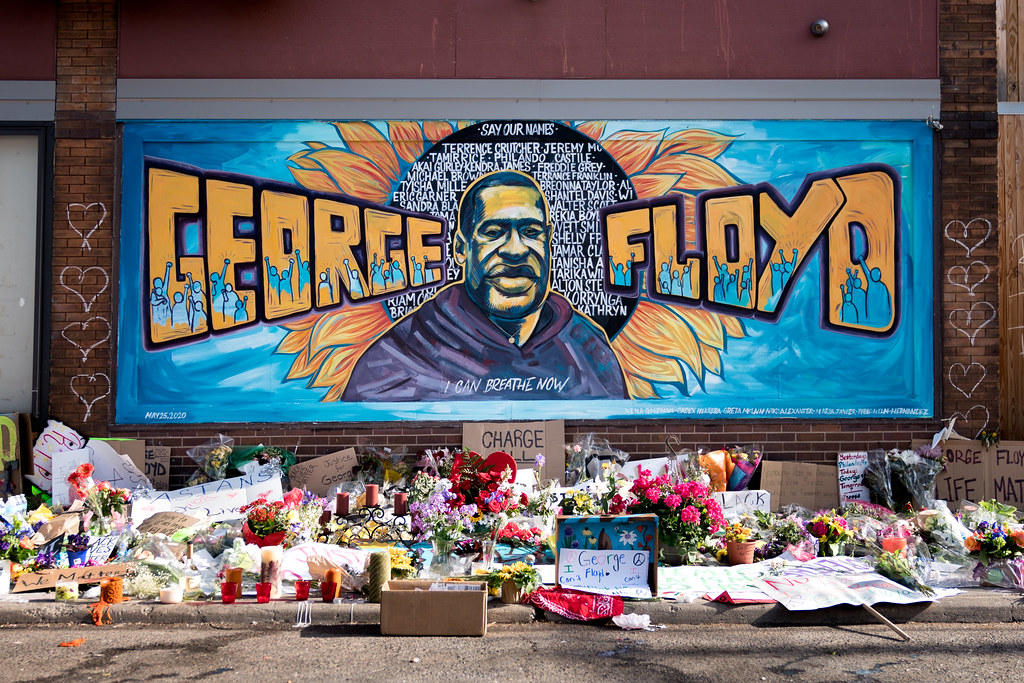
Minneapolis Police Officer Derek Chauvin murdered George Floyd two years ago today on May 25, 2020. People protested racial injustice in the criminal justice system across the country and beyond, and as a result, some cities and counties pledged to make significant changes to law enforcement.

But in recent conversations with people involved with the MacArthur Foundation’s Safety and Justice Challenge (SJC), many reflected on how not enough has changed in the last two years and how the landscape for criminal justice reforms is now becoming more challenging. And yet, they also pointed to areas of progress.

Jose Bernal, an organizer with the Ella Baker Center in Oakland, California, was the SJC representative on San Francisco’s Reentry Council, where he was part of the movement that successfully worked for the closure in 2020 of a seismically unfit jail facility. Bernal said the COVID-19 pandemic, coupled with Mr. Floyd’s death, brought about a reckoning that helped close the jail. San Francisco’s Board of Supervisors had been talking about closing it since 1996, but the events of 2020 helped influence some supervisors to finally support the closure.

But since 2021, there has been a shift in how some people view the criminal justice system, Bernal said.

“In an ideal world, we want to believe that our elected officials are moved by data and facts. And, you know, there are a few that are,” Bernal said. “But right now, there is this very dangerous narrative moving us back towards the 1990s’ ‘tough on crime’ approach.”

Some people believe that we “don’t have enough police, law enforcement is under-resourced, and crime is out of control,” Bernal said. “And it’s a false narrative. The facts don’t substantiate it. Crime is actually at historic lows.”

“We should still be having the conversation about reinvesting that money into the community, but it’s not what you see in the headlines,” Bernal concluded.

Keith Smalls is a community representative and Co-Vice Chair of the Charleston County Criminal Justice Coordinating Council. He said the influx of new people into the movement for criminal justice reform following Mr. Floyd’s murder was welcomed. But the passion did not always help change policy, and in some cases, it provoked a backlash.

“Two years ago, a lot of new voices came into the movement for reform,” Smalls said. “A lot of passionate people lent their support and joined the front line for reform. But suddenly, when the protesting stopped, people took their passion home. What I tell people is that they were welcome to join the movement for reform then, but that they are even more welcome now. We need you.”

Smalls also reflected on how the criminal justice system continues to fail people, and how those who have experienced incarceration can help address these continuing problems. He recently delivered a Ted Talk in Charleston about the misnomer of calling it the “corrections” system. In the talk, he said his own experience in the criminal justice system helped him understand that it is not designed to rehabilitate.

“The system has never been designed for ‘correction,’” Smalls said. “The only people who can really show that to people at the decision-making table are people who have experienced incarceration.”

“Eighty-five percent of the people who go to prison come home. So, we should talk about what we’re making inside these systems. We get to a safer society by treating and rehabilitating people,” Smalls said.

The city council in Portland, Oregon—located in Multnomah County which is participating in the SJC—voted in 2020 to shrink the Police Bureau, but some advocates think accountability is still needed. Portland’s former Assistant Police Chief Kevin Modica believes there is more work ahead but that is optimistic.

“There have been some administrative rule changes and there is legislation moving now towards more accountability, but without a new movement for public safety reform, we’re still going to be living in the status quo. That’s going to show up in police interactions with Black boys and Black men on the street,” Modica said. “We’ve not done enough to engender a culture change. But I’m a lifelong reformist, and I do believe things will get better.”

Derrick Dawson is a National Organizer with Crossroads Antiracism Organizing and Training in Chicago. He is serving as a technical assistance provider to the SJC’s racial equity cohort in Cook County.

“Unfortunately, once George Floyd was murdered, everybody wanted a quick fix for systemic racism,” he said. “And quick fixes don’t work for systemic racism. In fact, every time we try to initiate one, we do more harm than good. It supports White supremacy. Because when quick fixes do not work, we’re allowed to say, ‘well, we tried that and it didn’t work, so why should we try?’ And that serves to reinforce the continuation of White supremacy, because now we have an excuse not to try anything new or different.”

Instead, Dawson said, it is important to strike the balance between starting somewhere and recognizing that there is a long way to go.

“In our work with the Cook County SJC team, for example, we’ve been very clear with everybody that this is a two-year project, and we have no delusions about solving the problem of systemic racism in two years. But we also recognize that we must start somewhere,” he said.

“There has been a growing understanding of the issues around systemic and institutional racism. The more folks that we can get to think about these issues systemically and institutionally, now, perhaps the next generation will have less of a slog than we have. Cook County and other systems are recognizing that we need to engage in the long-term work, otherwise we will be in the same place 20 or 30 years from now, as we are today.”


Research Report

Housing Incarceration Trends Probation Racial and Ethnic Disparities May 5, 2022

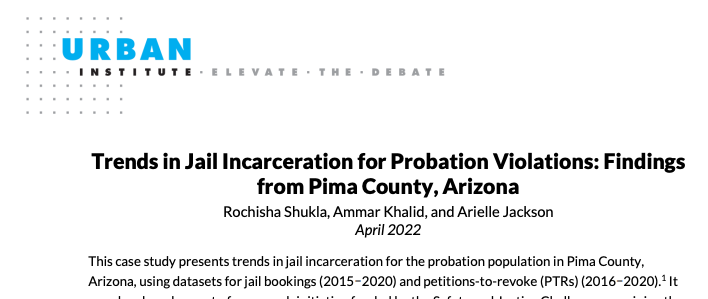
Trends in Jail Incarceration for Probation Violations

Rochisha Shukla, Ammar Khalid, Arielle Jackson

Urban Institute report on Trends in Jail Incarceration for Probation Violations

In partnership with the Adult Probation Department in Pima County, Arizona, and as part of broader research funded by the Safety and Justice Challenge to examine the impact on jail use of providing housing supports for people on probation in Pima County, the Urban Institute analyzed trends in jail incarceration for people with probation violations using datasets for overall jail bookings in the county from 2015 to 2020 and petitions-to-revoke for people on probation from 2016 to 2020. This case study summarizes our findings on patterns in overall jail bookings and petitions-to-revoke and, for the probation population in jail, analyzes average lengths of stay and patterns by race and ethnicity and sex.

Research Report

Collaboration Incarceration Trends Pretrial Racial and Ethnic Disparities April 26, 2022

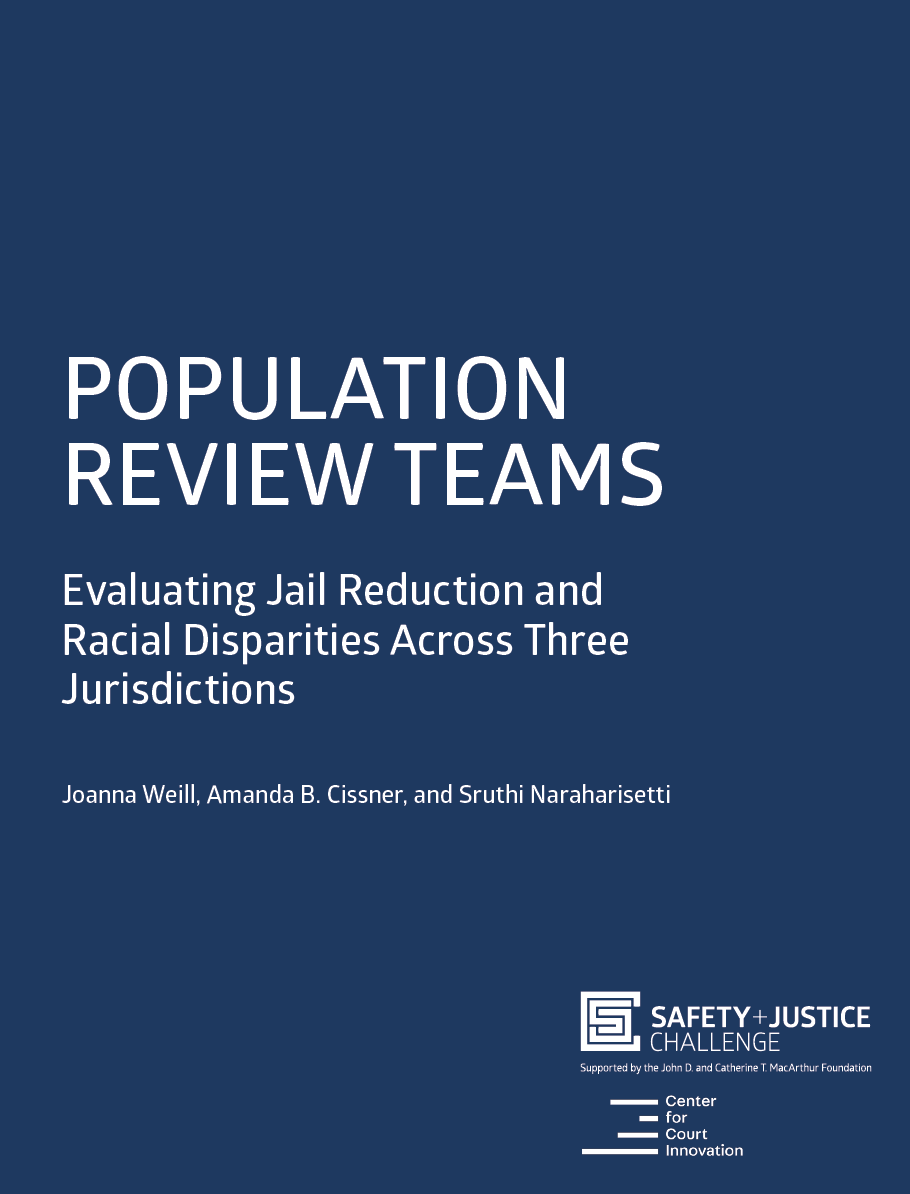
Population Review Teams: Evaluating Jail Reduction and Racial Disparities Across Three Jurisdictions

Joanna Weill, Amanda B. Cissner, and Sruthi Naraharisetti

Nearly one-third of those incarcerated across the U.S. are held in local jails, mostly held during the pretrial period, before they have been convicted of any crime. Among those detained in local jails, Black individuals are disproportionately represented, making up more than a third of the jail population in 2019.

Within this context of a national overreliance on jail, the John D. and Catherine T. MacArthur Foundation launched the Safety and Justice Challenge (SJC) in 2015. This effort supports local jurisdictions across the country in their search for safe and effective ways to reduce jail populations and eliminate racial and ethnic disparities.

Currently implemented in more than a dozen cities around the country, jail Population Review Teams (PRTs) are one strategy to reduce jail populations. Funded by the SJC and with guidance from ISLG, the Center for Court Innovation conducted a quantitative research study of the PRT model and its impacts in three sites through the spring of 2020: Lucas County, Ohio; Pima County, Arizona; and St. Louis County, Missouri. Although the sites did not design their PRTs to explicitly reduce racial disparities, this project helps them to measure the impact of PRTs and continue to work toward disparity reduction.

The analysis found:

  • A small impact on the jail population: Ultimately, the PRTs examined resulted in the release of a small proportion of the total jail population during the study period.
  • A larger impact, once a case is reviewed: For cases that make it to actual review by the PRT, about half go on to be released.
  • PRTs can increase disparities: In St. Louis County, White individuals are more likely than Black individuals to be eligible and recommended by the PRT.
  • Small disparity reduction at early PRT stages is not enough: In Lucas and Pima Counties, Black individuals were slightly more likely than White individuals to be eligible for the PRT, but these differences were not sustained past the eligibility stage.

Together, the findings across the three sites suggest that a jail reduction strategy is unlikely to reduce racial disparities if it does not explicitly consider race during the development of program policies. In addition, the PRTs included here impacted a small percentage of the overall jail population. However, feedback from the sites suggests that as a supplement to other local efforts or a driver of broad policy change, the PRT model shows promise in building collaboration, engaging local stakeholders across the system in meaningful discussion about overreliance on jail, and shining a light on potential areas for future efforts.

Additional Downloads

Population Review Teams Start Collaborative Conversations About Reducing Jail Populations

By: Joanna Weill

Data Analysis Racial and Ethnic Disparities April 26, 2022

Data analysis in criminal justice reform helps prevent us from acting on unexamined and invalid assumptions. It helps us check whether reforms are having the intended results. A great example of this is recent data analysis by my colleagues and me at the Center for Court Innovation. We looked at Population Review Teams (PRTs) in three sites supported by the John D. and Catherine T. MacArthur Foundation’s Safety and Justice Challenge: Lucas County, Ohio; Pima County, Arizona; and St. Louis County, Missouri.

The PRTs generated good will at these SJC sites. They bring diverse stakeholders together and engage them in conversations they would not otherwise have. But digging into the numbers shows a more complicated story. In fact, PRTs do not substantially reduce jail populations on their own. Indeed, while they do help release some people, in some instances they release a disproportionate number of White people.

But the PRTs also foster deeper conversations. Those conversations focus on other ways stakeholders can change the justice system, and this is where teams can unlock more significant long-term value. The value of these conversations became clearer during COVID-19, for example. Jurisdictions were able to use the PRT structure to make quicker decisions about whom to release. As a result, there were fewer people in the jails during a dangerous time.

More detail on the numbers 

The PRTs we examined resulted in the release of a small proportion of the total jail population (0.4% of the total jail population in Lucas County, 1.2% in Pima County, and 0.3% in St. Louis County). The PRTs have a larger impact once a case is chosen for review. For people that make it to this threshold, about half are released: 46% of reviewed cases are released in Lucas County, 48% in Pima County, and 47% in St. Louis County.

In addition, PRTs may have the unintended effect of increasing racial disparities. In St. Louis County, White individuals are 1.5 times more likely than Black individuals to get out of jail through the PRT process. White people are more likely to be eligible for and recommended by the PRT in the first place and then ultimately more likely to get out of jail. We also found that reducing racial disparities at early stages of the process is not enough to reduce disparities in who is released. In Lucas and Pima counties, Black individuals were more likely than White individuals to be eligible for review, but these differences disappeared after the initial eligibility stage. In other words, Black individuals were no more or less likely to be released.

Broader impacts and recommendations

Our findings spotlight the problem of expecting initiatives to reduce racial disparities when they are not explicitly designed to do so. PRTs need to overtly consider race during their development and adopt policies and practices that incorporate race.

Feedback from the sites also suggests that the current PRTs supplement and drive broad policy change. The PRTs engage stakeholders in meaningful collaboration and foster conversations about over-reliance on jail. And in Lucas and St. Louis counties the goals of the PRT are not limited to pretrial release; they also aim to move cases along by helping connect clients to attorneys and working out plea deals. These are valuable achievements that are not captured when we look exclusively at the number of releases.

We recommend jurisdictions draw on PRTs as a foundation for collaboration, collective problem solving, and informed decision making. They can also use the data to explore avenues for innovation, as happened during COVID-19. In addition, we recommend that jurisdictions reconsider who is eligible for PRT review, including explicit consideration of race and potentially expanding eligible charges.

Understanding that all sites have limitations to capacity and resources, we believe that transparent and intentional selection criteria are crucial to establishing a fair process. To this end, we recommend sites seek to improve the transparency of PRTs. Systematizing the steps involved in selecting people for review can help to reduce the influence of bias or excessive subjectivity and improve fairness.

We recommend increasing the number of people reviewed for release. One mechanism to do this is expanded eligibility criteria. St. Louis and Pima Counties are already considering such changes by expanding to include more charges, like people held on a violent charge or a probation violation. We also recommend using the PRT process to drive policy change. If PRT members, for example, see that a specific charge often results in a release, they could recommend pretrial supervision for such a charge as a de facto policy. This would keep more people out of jail and reserve PRT resources for more complex cases. Ongoing data review can help inform such policymaking.

PRTs are a first step, but the data suggests the teams can go further. Sites should use the data to inform PRT changes and the potential is there for broader impact.

Linking Mass Incarceration to Black History in Los Angeles and Beyond

By: Matt Davis

Community Engagement Human Toll of Jail Racial and Ethnic Disparities April 6, 2022

Members of the Safety and Justice Challenge grappled with questions about how mass incarceration is linked to Black history at a recent fireside chat during the annual convening of SJC network members.

Bria L. Gillum, Senior Program Officer, Criminal Justice with the John D. and Catherine T. MacArthur Foundation hosted the conversation with Kelly Lytle Hernandez, a professor of History and African American Studies at University of California, Los Angeles. She is also a member of the SJC Advisory Council and a MacArthur Fellow.

Bria asked Kelly how she uses her journey as a historian and professor to think about mass incarceration. Kelly began by acknowledging that the land she was dialing in from in Los Angeles was historically colonized. She talked about the Tongva Basin in Los Angeles, home to the Chumash and Gabrielino peoples. Mass incarceration, Kelly said, is “the current chapter in a long book of inequity here in the United States and in the colonies that predated it.”

Academics like Angela Davis have also shown how mass incarceration emerged out of Jim Crow, which arose from enslavement, Kelly said. She recommended Imani Perry’s South to America: A Journey Below the Mason Dixon to Understand the Soul of a Nation. The book “helps us to understand how so much of our contemporary life, our institutions, our families, our culture is really anchored in the experience of Black enslavement,” she said. The United States was created through a particular form of colonization—the transfer of a European population to the North American continent, Kelly said. The intention was to “remove, erase, and replace the Indigenous population,” Kelly said. Scholars call it “native elimination.” Mass incarceration can be seen in that arc of elimination in   U.S history, Kelly said. It is about “removing unwanted populations” from the “white settler society.”

Bria asked Kelly how current conversations about criminal justice policy fit into that lens. For example, there are conversations happening today about reverting to policies from the 1980s and 1990s, like bringing back cash bail or arresting people for crimes of poverty. Bria asked: “What lessons can history teach us about criminal justice reform, and how can we use the history of this country to impact change?”

Kelly said that white supremacy is resilient and adaptable, cautioning against supposed reform efforts if they end up harming colonized and marginalized groups. For example, Kelly referenced Indian Boarding Schools as a so-called reform effort against genocide. She referenced Jim Crow laws as supposed reform efforts against the white backlash against Black emancipation from slavery. We need to monitor the outcomes of reform efforts across time to see if historically marginalized communities are not harmed, Kelly said.

Bria also asked Kelly to reflect on what era the United States is in, now, in 2022. We are transitioning out of an era of mass incarceration, Kelly said. But what comes next is still being defined. We need to listen to the voices and leadership of Black and Indigenous communities “to ensure we have the capacity to build a new society rather than a new regime,” Kelly said. She also called this a “very dangerous moment.”

Kelly spoke about using data to inform those conversations.

“One of the things that we noticed here in Los Angeles – and I’m sure you all were noticing this in other localities across the country – is that data was being used against our communities. We were being told that we always needed a bigger jail or more jails to keep us safe,” she said.

Instead, at UCLA, Kelly worked with community-based organizations in Los Angeles to acquire arrest and jail data. She worked together with those communities to clean up the data, categorize it, give it definitions, and analyze it. Together, they founded the Million Dollar Hoods project, which maps the cost of mass incarceration, documenting that local authorities are spending more than a million dollars annually to incarcerate people in some neighborhoods. The leading charges and causes of arrest in those neighborhoods were narcotics possession and driving under the influence, according to the data. “Both are substance related issues and the community wanted to see a community health response – not incarceration — to those substance related issues,” Kelly said.

The project has also sued the Los Angeles Police Department for data, including 200 boxes of records from the 1980s and 1990s. “We can use these records to document happened during the era of mass incarceration, and how the rise of policing and incarceration extracted much-needed resources from Black communities” Kelly said. Million Dollar Hoods is also collecting oral histories with residents. It’s important to collect people’s stories, Kelly said, to assess the past, understand the present, and imagine a new way forward. “Today, at the end of the age of mass incarceration, we refuse to have our stories overlooked, hidden, or ignored. We are saving our stories, on our terms, to assert a voice in the future to come.”

Bria closed the conversation by asking Kelly to reflect on the work of the Safety and Justice Challenge. The SJC is a diverse network including public defenders, prosecutors, policymakers, city and county leaders, and judges, Bria said. We are entering the third year of a pandemic, and we are continuing to deal with the death of Black, Indigenous, and People of Color people by law enforcement. Bria asked Kelly: “Do you have any recommendations about what we can collectively do to move forward on our criminal justice reform efforts? Taking history as our example, what should we be grappling with?”

Kelly encouraged SJC members to read history, especially to understand the history of criminalization, policing, and incarceration. It documents the many turning points and is a way of opening up the collective imagination about what is next, she said.

Kelly also recommended another book, called Covered with Night—A Story of Murder and Indigenous Justice in Early America by Nicole Eustace. It is a story about the murder of an Indigenous man by a White colonist. The White colonists were eager to be seen as doing justice and proposed killing the White murderer. But Indigenous people halted the process to avoid “greater harm and greater damage.” Instead, they demanded that the murderer pay emotional and financial reparations and that the neighboring white and Indigenous communities use the crisis to build stronger bonds.

“I encourage people to look at that book for an early alternative to punishment,” Kelly said. “I know everyone’s so busy, but maybe on weekends, pick up a chapter here and there to find the alternative histories that ground our radical perspectives and possibilities for what’s to come.”