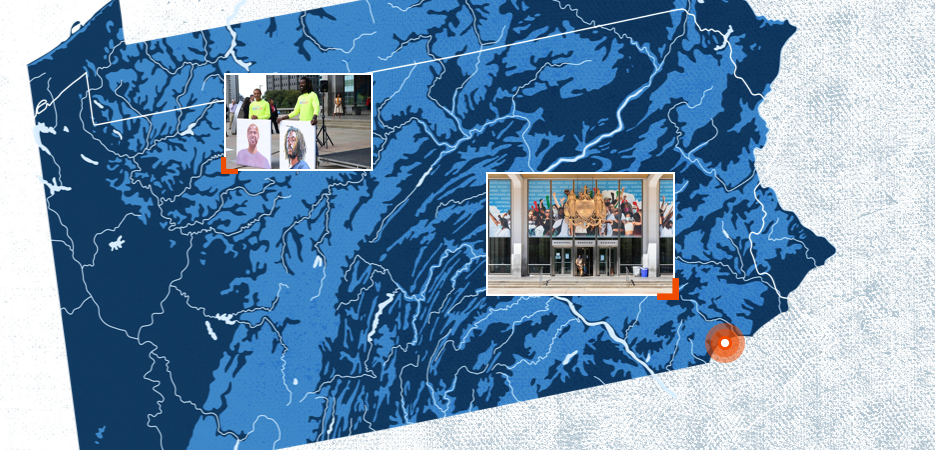
Philadelphia, PA

Change in Jail Population 52%

Action Areas Bail Community Engagement Diversion

Last Updated

Background

Philadelphia had the highest incarceration rate of any large jurisdiction in the country. This high rate of incarceration was partly driven by unnecessarily long lengths of stay in jail and disproportionate arrests and incarceration of people of color. Existing alternatives to incarceration that provided treatment did not substantially reduce the number of people with mental health issues and substance use disorders who were incarcerated.

Strategies

Philadelphia advanced a number of strategies to rethink and redesign its criminal justice system so that it is more fair, just and equitable for all.

01

REDUCE RELIANCE ON BAIL

Philadelphia advanced strategies like alternatives to cash bail, early bail review, pretrial advocates, and detention review hearings to reduce the number of people held in jail pretrial on low amounts of bail.

02

INCREASE EARLY DIVERSION

With alternatives to incarceration (e.g., pretrial and probation), post-arrest screening and supports, and the development of a police co-responder model, Philadelphia increased early diversion opportunities for people struggling with mental illness and substance use disorders.

03

CASE PROCESSING

To create efficiencies in case processing at the pretrial stage, Philadelphia implemented Municipal Court long stayer review, Common Pleas Court long stayer review, and early parole petitions. These strategies were designed to reduce the length of time people spend in jail by reviewing individual cases, with long lengths of stay, to address continuances and other delays in processing.

04

DATA CAPACITY

Philadelphia expanded its ability to collect and share data across multiple criminal justice agencies by using standardization and regular reporting to enable collaboration and data-informed decision-making. Quantitative and qualitative data will also drive a scientific evaluation of the impact of the city's reform efforts to date.

05

RACIAL DISPARITIES

Philadelphia hired staff dedicated specifically to addressing racial disparities. This enabled the site to conduct data-informed reviews of existing policies and reform initiatives to determine their impact on disparities, train other staff on racial bias, and provide recommendations to broaden the scope of reform with a focus on equity.

06

COMMUNITY ENGAGEMENT

Through a criminal justice microgrant fund, Philadelphia increased investments in community-based services. The city also established a Community Advisory Committee and services for people in the community pretrial.

Results

As a result of the strategies above, Philadelphia has made progress towards its goal of rethinking and redesigning its criminal justice system, including substantial reductions in its jail population.

Quartery ADP for Philadelphia (2016-2026)

52.2% from baseline

More Results

Through their strategies to reduce the jail population, the city successfully established a program to provide early bail review hearings within five days for people held in jail pretrial; increased early diversion opportunities through the Police-Assisted Diversion Program and other alternatives to detention; and reduced the average length of time people spend in jail awaiting trial or a violation of probation hearing.

Additionally, as part of the city’s efforts to eliminate racial and ethnic disparities in the jail population, Philadelphia established a racial and ethnic disparities workgroup to develop approaches to embed racial equity in their decarceration strategies and work towards a more equitable justice system. They also developed data tools and processes for investigating racial disparities at decision points across the criminal justice system; reviewed outcomes of key reform initiatives by race and ethnicity and suggested policy and practice changes to reduce disparities; and conducted collaborative implicit bias training across criminal justice partner agencies.

Additionally, establishing a Community Advisory Committee and developing partnerships with community-based advisors allowed the city to bring in additional perspectives that are critical to the success of making the local justice system fairer and more equitable.

The Safety and Justice Challenge has relationships with community groups who are engaged in conversations and decision-making related to reforming the local justice system. The Philadelphia partnership represents a collaborative effort between key stakeholders including: courts, police, corrections, public defenders, district attorneys, behavioral health, community members, and many others who support the city’s efforts to dismantle barriers to racial equity in the local justice system.

Remaining Challenges

Philadelphia is focused on addressing its remaining challenges in its local justice system.

While Philadelphia has made great strides at reducing the size of the local jail population, racial and ethnic disparities have worsened. Local criminal justice and community partners have shifted the reform efforts to center racial equity, while collaborating closely to protect the health and safety of the city.

Additionally, the COVID-19 pandemic has had a significant impact on every aspect of the city’s local justice system and continues to uniquely affect those incarcerated in local jails. The foundation of collaborative, data-driven strategies, including the necessary structures and collaboration from local stakeholders that are in place to support these strategies, has set the city up well to respond to the pandemic. They are more focused than ever on supporting community-driven solutions and investing in services and supports for those impacted by the jail system.

Lead Agency

The City of Philadelphia’s Office of Policy and Strategic Initiatives for Criminal Justice and Public Safety

Contact Information

Erica Atwood
Senior Director, Policy and Strategic Initiatives for Criminal Justice and Public Safety, City of Philadelphia
erica.atwood@phila.gov

Rachael Eisenberg
Director, Office of Criminal Justice
rachael.eisenberg@phila.gov

Malik Bandy
Community Engagement and Communications Coordinator – MacArthur Foundation Safety and Justice Challenge
albert.m.bandy@phila.gov

Partners

First Judicial District of Pennsylvania, Municipal Court, Court of Common Pleas, Adult Probation and Parole Department, Pretrial Services Department, Department of Research and Development, Defender Association of Philadelphia, City of Philadelphia, Managing Director’s Office, Philadelphia Department of Prisons, Philadelphia Police Department, Department of Behavioral Health and Intellectual DisAbilities Services, Philadelphia District Attorney’s Office, Community Advisory Committee

Blog Posts

Minnehaha County, SD

Change in Jail Population 2%

Action Areas Community Engagement Courts Diversion

Last Updated

Background

When Minnehaha County joined the Safety and Justice Challenge, roughly 24% of the jail bookings and 37% of jail bed days included those who self-identify as having a behavioral health or substance use disorder. Untreated mental health and substance use issues had led to individuals continuing to cycle in and out of the jail.

A significant percentage of people quickly churned through the jail. In an analysis of a 12-month period (April 2017–April 2018), 51% of individuals released from jail were there less than 24 hours and 27% were released within 3 days. On a given day in April 2018, around 74% of the jail population was pretrial.

Despite making up 8.4% of the general population, as of 2018, people of color were over-represented in the jail. Specifically, Black people represented about 14% of jail releases and Indigenous people represented about 31%, totaling 45% of the jail releases, on average.

Strategies

Since joining the Safety and Justice Challenge, Minnehaha County has advanced a number of strategies to rethink and redesign its criminal justice system so that it is more fair, just, and equitable for all.

01

PRETRIAL SERVICES

To support enhanced pretrial services so people who pose little to no risk to public safety are not sitting in jail, Minnehaha County has implemented a pretrial services team, including three full-time staff. Each individual placed on pretrial supervision checks in regularly via text, email, phone, a kiosk in the jail lobby, or other methods. Staff also assist with making the county’s case processing more efficient.

02

COMMUNITY ENGAGEMENT

The county has done a deep dive into authentic community engagement through two committees to foster conversations and decision-making, as well as programming and events to engage people. In addition, the county created a leadership program for justice-involved people, and partnerships are being developed for Native American-based services that are underway.

03

DIVERSION TO SERVICES

The county is focused on creating better access to services for individuals with mental health and substance use issues. In 2021, the county opened a community triage center called “The Link” to increase access to mental health and behavioral health resources. A nonprofit board including county and city officials, two major healthcare partners, and a regional foundation, led on the development of the center.

04

IMPROVED CASE PROCESSING

The county is focused on building more efficiencies in its case processing by implementing best practices. Through collaboration across criminal justice stakeholders in the justice system, the county has created an in-custody review team and an updated bond schedule, as well as a program for text message court reminders to help ensure people attend their court dates.

Results

As a result of the strategies above, Minnehaha County has made progress towards its goal of rethinking and redesigning its criminal justice system. Specifically, the county has been able to implement strategies to make the justice system more fair, just, and equitable for all, without jeopardizing public safety.

Quartery ADP for Minnehaha County (2018-2026)

2.2% from baseline

More Results

As a result of the new community triage center for mental health and substance use disorders, more people with mental health and substance use needs have been able to access the services they need, instead of cycling in and out of the jail. As a result of its revised bond schedule, jail bookings have decreased by 26%. The new community triage center, opened in June 2021, provides another option for law enforcement to bring people who are better suited for assistance for their mental health and substance use disorders rather than jail, and Minnehaha anticipates continuing to decrease bookings because of this new resource.

Efforts to engage the community have allowed the county to foster deep relationships with community groups who continue to be involved in conversations and decision-making related to the strategies to transform our justice system. Specifically, the county developed a Race, Equity, and Community workgroup to develop and advise on a community-based workplan, as well as engaged top leadership of the community to support the work of the Community Engagement Committee. The county also developed formal partnerships with culturally-based organizations to inform strategies to improve the justice system. Last, the county hosted a community-wide “Community Table Talk” event focused on racial equity in the justice system to garner information about what the community needs.

There has also been and continues to be productive collaboration among key stakeholders in the justice system, including judges, law enforcement, public defenders, community members, and many others, that supports the county’s efforts.

Remaining Challenges

Minnehaha County is focused on addressing its remaining challenges in its local justice system.

The county is focused on enhancing its data to better inform decisions in the justice system. Specifically, the county’s leaders continue to look for innovative ways to assist in data tracking across systems.

In addition, to continue to build on progress to date and address the over-representation of people of color in the justice system, the county will remain focused in the next few years on engaging the community in discussions and decisions about strategies to improve the justice system.

Finally, the COVID-19 pandemic has had a significant impact on every aspect of the county’s local justice system and continues to uniquely affect those incarcerated in local jails. The foundation of collaborative, data-driven strategies, including the necessary structures and collaboration from local stakeholders that are in place to support these strategies, has set the county up well to respond to the pandemic swiftly and effectively.

Lead Agency

Minnehaha County

Contact Information

Erin Srstka
erin.srstka@usd.edu

Partners

Minnehaha County Commission, Urban Indian Health, Minnehaha County Sheriff, Minnehaha County State’s Attorney, Minnehaha County Public Defender’s Office, Think3D, Minnehaha County Office of Public Advocate, South Dakota Unified Judicial System, 2nd Circuit, Minnehaha County Human Services, Sioux Falls Police Department

Blog Posts

Multnomah County, OR

Change in Jail Population 23%

Action Areas Community Engagement Probation Racial and Ethnic Disparities

Last Updated

Background

Multnomah County has seen significant reductions in jail use, but work remains to be done. Over-reliance on jail continues to impact the most marginalized community members, including people of color, people with mental health issues and/or substance use disorders, and people who are unhoused or have limited incomes. Multnomah County is committed to continuing efforts to reduce its reliance on incarceration and address systemic inequities in the criminal justice system.

According to a 2019 report by the W. Haywood Burns Institute, prevalent and persistent racial disparities impact communities of color at every decision point in Multnomah County’s public safety system. Those disparities combined with system inefficiencies in the County’s pretrial system — a critical point in a defendant’s right to due process — create undue harm.

Strategies

Multnomah County advanced several strategies to rethink and redesign its criminal justice system so that it is more fair, just and equitable for all.

01

PRETRIAL SYSTEM OVERHAUL

In 2020, Multnomah County launched an initiative to overhaul the pretrial system and implement a system that is more risk-based and maximizes pretrial release. This includes implementing the Public Safety Assessment (PSA), rethinking the County’s approach to pretrial monitoring and improving the arraignment process. The County is approaching this process with emphasis on transparency, collaboration, and racial equity.

02

RACIAL & ETHNIC DISPARITIES

Reducing racial and ethnic disparities has been a focus of the County’s core strategies. The efforts, which include opening the Diane Wade House, a transitional house for justice-involved Black women, and using data to identify disparities, are a testament to partners’ determination to succeed. The County plans to launch a subcommittee comprised equally of community members and policymakers to address disparities throughout the criminal legal system.

03

AMPLIFYING COMMUNITY VOICES

Multnomah County launched a Community Advisory Board (CAB) to help guide the planning and oversight of the Diane Wade House. The CAB has played a vital role in the future visioning of the program. The County is currently identifying opportunities to amplify community voices in all other reform efforts, including work to overhaul the pretrial system and through Transforming Justice focus groups.

04

SUSTAINING COVID-RELATED POLICIES

The COVID-19 pandemic presented opportunities for policy change to reduce the transmission of disease and over-reliance on jail. Some of these changes include increased use of summons in lieu of booking, changes in booking policy, limiting the use of sanctions for technical violations of probation conditions and increased use of remote court hearings. Moving forward, Multnomah County will continue to evaluate the sustainability of these policy changes.

05

PROBATION SANCTIONS

Sanction practice changes for people on parole and probation have played a significant role in the reduction of local jail use. The policy, implemented within Multnomah County’s Department of Community Justice in 2016, requires parole and probation officers to limit the use of jail sanctions for technical violations such as failure to abide by a parole and probation officer’s directive. This change has not only reduced county jail use, but is consistent with evidence-based practices on the effectiveness of long-term sanctions in behavior change.

Results

As a result of the strategies above, Multnomah County has made progress toward its goal of rethinking and redesigning its criminal justice system.

Quartery ADP for Multnomah County (2016-2026)

22.9% from baseline

More Results

The County has seen significant reductions in the local jail population due to swift action from policymakers to reduce the spread of COVID-19 among adults in custody, as well as a continued interest in sustaining policies to maintain a low jail population. Additionally, local policymakers are committed to moving toward a risk-based pretrial system, which will increase the number of individuals released pretrial and further the County’s goals of reducing its reliance on jail. Since the beginning of the county’s participation in the Safety and Justice Challenge, there has been a significant reduction in the jail population while keeping the community safe.

Also, in recognition of the immense collateral consequences and economic disadvantage people on supervision already face, Multnomah County eliminated parole and probation fees within the County’s Department of Community Justice. Supervision fees place incredible financial pressure on individuals who are exiting the criminal justice system, a disproportionate number of whom come from Black, Indigenous, and other communities of color. The move includes elimination of community service fees, urinalysis fees, and any other administrative fee collected from people involved in the justice system.

Remaining Challenges

Multnomah County is committed to addressing its remaining challenges to ensure the local justice system is fair, just, and equitable for all.

In an effort to launch a broad systemic conversation about inequities embedded in the criminal legal system, the Local Public Safety Coordinating Council’s (LPSCC) January 2020 What Works conference highlighted the need to redefine the jurisdiction’s entire approach to criminal justice and intentionally put equity at the center. In response, LPSCC launched a multi-year Transforming Justice process to develop, align and implement strategies for system change by engaging criminal system leaders, health/housing system leaders, elected officials, service providers, victims of crime, community members, and individuals with lived experience to ask hard questions and, together, reimagine the future of justice policy. An inclusive steering committee of people with diverse backgrounds and professions was formed in May 2021 to direct this work, under the guidance of outside facilitators identified through a competitive procurement process.

Finally, the COVID-19 pandemic has had a significant impact on every aspect of the County’s local justice system and continues to uniquely affect those incarcerated in jails. The foundation of collaborative, data-driven strategies — including the necessary structures and collaboration from local stakeholders that are in place to support these strategies — set the County up to respond to the pandemic swiftly and effectively.

Action from policymakers to reduce the spread of COVID-19 among adults in custody led to significant reductions in the local jail population and, moving forward, a continued interest in sustaining the policies to maintain a low population. Further, the challenges of the pandemic, paired with local and national calls for racial justice and reckoning, are powerful motivators to substantially change the way the local criminal justice system functions.

Lead Agency

Multnomah County Local Public Safety Coordinating Council

Contact Information

Abbey Stamp
abbey.stamp@multco.us

Follow us:

Blog Posts

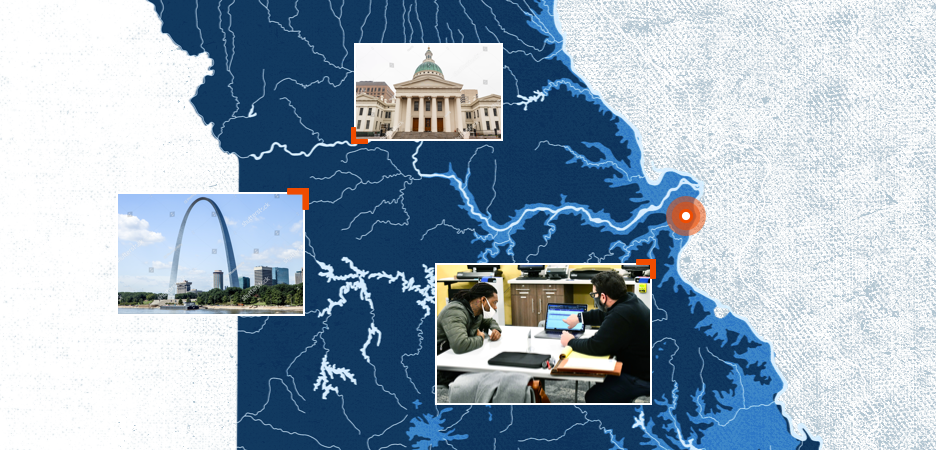
St. Louis County, MO

Change in Jail Population 2%

Action Areas Collaboration Community Engagement Diversion Racial and Ethnic Disparities

Last Updated

Background

Prior to joining the Safety and Justice Challenge, St. Louis County’s jail population had been either near or over capacity for over a decade. The county’s original goal was both to keep more people out of jail, and to reduce the overrepresentation of people of color in the jail population.

After the killing of Michael Brown by a police officer in Ferguson, in the northern part of St. Louis County, the county aimed to rise to the challenge of the resulting calls for reform. The Safety and Justice Challenge was how stakeholders from across the system came together with the goal of making bold systemic justice reform possible.

St. Louis County’s interventions required changes from many in the criminal justice system. Most of the work has focused on systematic case processing and access to justice.

Strategies

St. Louis County advanced a number of strategies to rethink and redesign its criminal justice system so that it is more fair, just, and equitable for all.

01

POPULATION REVIEW TEAM

A multi-disciplinary Population Review Team has been tasked with examining the jail population and the racial and ethnic composition of the jail, identifying factors related to long stays in jail, and improving case processing at every level: from the individual, to agencies, to entire systems. The team serves as a voice for reform and a laboratory for innovative solutions for the criminal justice community.

02

ENHANCED PRETRIAL REFORM

Two Justice Services case managers currently provide enhanced pretrial supervision and support, as well as connect people with the substance abuse and mental health services they need. Additionally, a team of social workers from a local mental health treatment provider is embedded in the jail to assess residents’ needs and work with jail staff to establish discharge plans based on what each individual needs most.

03

PRETRIAL ASSESSMENT

The Public Safety Assessment tool was designed to more accurately identify people who can be safely released and supervised in the community, using rigorously evidence-based criteria. The tool was rolled out in November 2019 and was officially launched in January 2020.

04

LEGAL REPRESENTATION

SJC funds support two MacArthur attorneys who provide limited legal representation at arraignment and bond reduction hearings, where they can advocate for reduced bond or release on recognizance. Funds also support an Indigence Specialist to work with the Public Defender’s office to expedite application reviews and efficient case processing.

05

EXPEDITED PROBATION HANDLING

In order to decrease the average length of stay for individuals awaiting probation violation proceedings, individuals are screened in the jail to help identify the nature of the violation, get them reconnected with probation, and fast-track the hearing process.

06

COMMUNITY ENGAGEMENT

Through a partnership between the criminal justice system and the community, the need for a new initiative – the Tap In Center — was identified. Launched in September 2020 in partnership with the St. Louis County Library and The Bail Project, this community-based space helps justice-involved individuals handle legal matters, address outstanding warrants, and connect with much-needed local services and supports.

Results

As a result of the strategies above, St. Louis County has made progress towards its goal of rethinking and redesigning its criminal justice system. A 2019 analysis by CUNY-ISLG demonstrated that the strategies used by the county as part of its engagement in the Safety and Justice Challenge were instrumental in sustaining the decline of the jail population.

Quartery ADP for St. Louis (2016-2026)

2.4% from baseline

More Results

Strategies including the launch of the Initial Appearance Program have proved successful. Between April 2019 and early 2021, over 900 individuals have been supported with legal representation. Before the program, 53% of individuals were held on no bond or a cash-only bond at initial appearance. When people came to the initial appearance with legal representation, 78% of individuals had a reduction in bond or negotiated a release on recognizance, without paying bail.

As a result of the expedited probation program, the average length of stay for individuals decreased from 99 days to just 12 days during the period of 2017 to 2019. Because of the success of the program, the Missouri Probation and Parole department now fully funds the program and has hired staff to work at the county jail to fully institutionalize it.

Each of the county’s strategies is meant to decrease the disproportionate burden that people of color face in the criminal justice system. St. Louis County is also advised by the Ethnic and Racial Disparities committee, made up of criminal justice stakeholders, representatives from community advocacy groups, and individuals with lived experiences. As a result, the county is also seeing a sustained decline in racial and ethnic inequities in its justice system. As of Fall 2020, the population of Black people detained in jail has declined 37% during the Safety and Justice Challenge grant period, compared with 31% among white people. Length of stay has also declined, with Black individuals experiencing a 44% decline in the length of stay compared with 41% for white individuals.

The Population Review Team (PRT) has been meeting regularly since June 2018 to identify people who do not need to be in jail and can be safely released pretrial. As a result of the work of the PRT, there has since been a substantial decline in the Average Daily Population of people in the jail. Overall, the PRT has become a laboratory for innovation with committed stakeholders at the table who are committed to advancing the goals of SJC and beyond.

The newest St. Louis County initiative, the Tap In Center, has proved especially popular. For example, one individual visited the Tap In Center in January 2021 to get a public defender and a new court date. She said, “I am just very pleased with this program, I’ve felt stuck all my life with these warrants. To know that this program is available to help people, it’s a real reliever! Now that I don’t have a warrant I am about to be getting a job thanks to the Tap In Center!”

Remaining Challenges

St. Louis County is focused on addressing its remaining challenges in its local justice system.

While progress has been made in reducing racial and ethnic disparities, there is still work to be done in advancing equity in St. Louis County’s jails. The county will continue to work with the local community to develop initiatives that are responsive to the need for reform and assess any possible negative outcomes that could happen as a result.

St. Louis County has also developed a comprehensive plan for additional strategies and initiatives to invest in a safer, more effective, and more equitable system. The county will work with community service providers to expand access to mental health and substance abuse treatment, expand warrant resolution efforts, and continue to build the technological infrastructure and data capacity needed to sustain this work.

Finally, the COVID-19 pandemic has had a significant impact on local justice systems and continues to uniquely affect those incarcerated in local jails. The foundation of collaborative, data-driven strategies, including the necessary structures and collaboration from local stakeholders that are in place to support these strategies, has set the county up well to respond to the pandemic swiftly and effectively.

Lead Agency

St. Louis County

Contact Information

Beth Huebner
SJC Project Director
huebnerb@umsl.edu

Miranda Gibson
SJC Project Manager
mgibson@stlouisco.com

Partners

21st Judicial Circuit Court, St. Louis County Department of Justice Services, Office of the County Executive of St. Louis County, Missouri State Public Defenders, Missouri Division of Probation and Parole, St. Louis County Prosecuting Attorney’s Office, St. Louis County Police, The Bail Project, Places for People, St. Louis County Library, Queen of Peace

Blog Posts

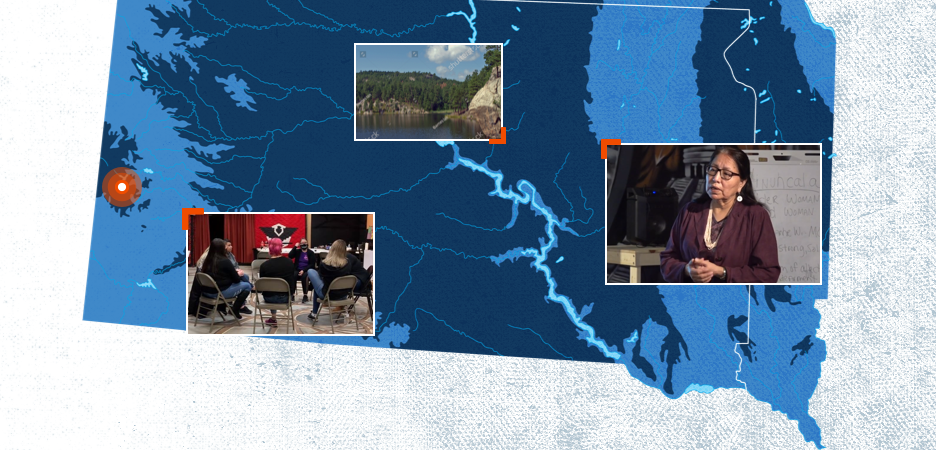
Pennington County, SD

Change in Jail Population 28%

Action Areas Collaboration Community Engagement Courts Diversion

Last Updated

Background

Native Americans are overrepresented in Pennington County’s jail. Though Native Americans make up 10-20% of the population, more than 50% of the daily jail population is Native American, as of January 2021. This is exacerbated by a long history of distrust between the Native American communities and the County, inspiring strategies related to building relationships with the neighboring Tribal communities and reducing disparities.

In addition, in recent years Pennington County has experienced a methamphetamine epidemic, causing felony drug arrests to increase by 200% between November 2015 and April 2019.

Last, pretrial release is a significant driver of the county’s jail population. The jail pretrial population alone made up roughly 92% of the total jail population as of January 2021.

Strategies

Pennington County continues to advance a number of strategies to rethink and redesign its criminal justice system so that it is more fair, just, and equitable for all. This work started by analyzing data to identify areas of need, and using that information to seek out safe, smart solutions.

01

JAIL POPULATION REVIEW TEAM

The Jail Population Review Team is made up of representatives from the State’s Attorney's Office, Public Defender’s Office, Probation, and a coordinator who compiles the information. The team reviews people currently held in jail who may be eligible for release, or whose cases may be delayed. The team began meeting regularly in March 2019, and more frequently in response to emergencies such as the COVID-19 pandemic.

02

DIVERSION TO SUPPORT SERVICES

The Care Campus is a social service complex that provides a single point of entry for mental health and substance use services. Safe Solutions at the Care Campus opened in 2018. It offers a safe place for people to sleep if they are intoxicated. This helps keep people with substance use disorders from entering or being involved further in the criminal justice system.

03

TEXT REMINDERS FOR COURT

Pennington County has a robust system to remind people about their upcoming court hearings. In January 2019, the program began with calls and by mid-2019, transitioned to text messages. People who cannot afford or simply do not have access to phones can receive court reminders at the Hope Center (a local day center), and/or through the Health and Human Services Case Managers at the Care Campus.

04

COMMUNITY ENGAGEMENT

Throughout Pennington County’s involvement in the Safety and Justice Challenge, community outreach and relationship development have been front and center. Using culturally appropriate community programming has also helped reduce the overall jail population.

05

REDUCING RACIAL AND ETHNIC DISPARITIES

To address racial and ethnic disparities, Pennington County works with community stakeholders to implement programming and assist individuals with navigating through the criminal justice system. Their focus has been not only to find and implement measures to reduce racial inequities, but also to find ways to make cases move more efficiently through the criminal justice system.

06

PRETRIAL SERVICES

Along with the implementation of additional pretrial strategies, the Community Work Program originally began in August 2018 as a sentencing alternative. Since that time, it has grown to also provide alternatives to people with Child Support cases, and individuals with a Probation or Specialty Court sanction.

Results

As a result of the strategies above, Pennington County has made progress towards its goal of rethinking and redesigning its criminal justice system.

Quartery ADP for Pennington County (2016-2026)

28.4% from baseline

More Results

By implementing pretrial strategies, Pennington County has reduced the number of bookings for non-violent, low-level offenses by 76% between January 2018 and January 2021. Racial and ethnic disparities in the jail population have decreased as well. During that same timeframe, Pennington County saw a 22% reduction in Native Americans referred to the jail.

Between the first meeting in March 2018 through January 2021, the Jail Population Review Team has been able to look more closely at 1,225 individuals to determine if they would be able to be safely released from jail. As a result, 25% of people in jail were both recommended and approved for release, meaning that people spent over 5,196 days at home with their families, instead of in jail.

The Court Notifications program has delivered 66,770 reminders to people awaiting their court hearings between January 2019 and January 2021. Although the data is not yet available to directly connect the messages with court appearance, participant responses show that the reminders are extremely helpful, not only helping people remember court dates but also answering their questions and helping them find services.

Since its launch in August 2018, 425 people have been referred to the Community Work Program as an alternative to jail. Instead of remaining in the jail and away from their families and communities, they completed more than 7,000 hours of community service.

The Care Campus and Safe Solutions program made significant progress in keeping people struggling with substance use from entering or going further into the justice system. Since its opening in September 2018, the Care Campus has had 54,563 admissions of people with substance use disorders. Of these, 70% were admissions into Safe Solutions.

Beyond the statistics, these and other programs supported by the Safety and Justice Challenge have touched the lives of people in Pennington County. For example, a 28-year-old single mother contacted the 1-800 warrant resolution number—one of the strategies the county is advancing as part of local justice reform. She shared that she had two non-violent, low-level warrants. She had been offered a job within her community as a case worker but could not be officially offered the job with her active warrants. After being easily connected to the Safety and Justice Challenge Attorney Liaison, she provided the required documents, her warrants were cleared, her cases were dismissed, and she was able to accept the job.

Remaining Challenges

Pennington County continues to experience a high number of people awaiting trial within the jail. In order to respond, the Pretrial Monitoring Program began as a pilot in 2020. Program staff helps individuals waiting for case disposition to make sure they attend their next hearing without further contact with law enforcement. The county is seeking ways to grow more opportunities to release people before their trial begins.

Pennington County also continues to work to address racial and ethnic disparities in their local justice system, particularly the over-representation of Native Americans in the jail. The county continues to conduct tribal outreach and engagement on reservations and with Pennington County communities with the goal of reducing the over-representation of Native Americans in the jail system. While relationships with tribal communities have improved, there is still progress to be made.

Last, the COVID-19 pandemic has had a significant impact on every aspect of the county’s local justice system. The foundation of collaborative, data-driven strategies, including the necessary structures and collaboration from local stakeholders that are in place to support these strategies, has set the county up well to respond to the pandemic effectively.

Lead Agency

Pennington County Sheriff and the Seventh Judicial Circuit Court of South Dakota

Contact Information

Liz Hassett

Partners

Rapid City Police Department, Pennington County Public Defender's Office, Pennington County State's Attorney's Office, Rapid City Attorney's Office, Pennington County Health and Human Services, Pennington County Commission, and key community providers and stakeholders including I.Am.Legacy and Seven Directions among others.

Blog Posts