Palm Beach County, FL

Change in Jail Population 1%

Action Areas Community Engagement Courts Defense Counsel Racial and Ethnic Disparities

Last Updated

Background

While Palm Beach County’s jail has not been overcrowded, too many individuals with low-level offenses who pose minimal risk to public safety are incarcerated. In addition, significant racial and ethnic disparities persist in the jail population. Specifically, jail admissions and length of stay are both disproportionate for people of color.

Palm Beach County’s jail is the biggest mental health care provider in the county. People with behavioral health issues, many of whom are homeless, regularly cycle in and out of the jail with no clear path for ending that cycle.

Strategies

Palm Beach County has advanced a number of strategies to rethink and redesign its criminal justice system so that it is more fair, just, and equitable for all.

01

COURT REMINDERS

To reduce failures to appear in court and at mandatory appointments for individuals on pretrial supervision and probation, the county started a program to send text message reminders to defendants for court dates and required appointments.

02

HOLISTIC DEFENSE

The Public Defender’s Office established new positions including a client navigator and social services coordinator, who are responsible for identifying individuals with behavioral health or housing needs at first appearance and connecting them with community-based services to facilitate pretrial success and reduce recidivism.

03

COMMUNITY ENGAGEMENT

Palm Beach County has been engaging the local community with a series of policing forums and “Dialogue To Change” meetings. Specific policy proposals stemming from these community forums will be presented to stakeholders for consideration and implementation.

04

REDUCING RACIAL DISPARITIES

In an effort to meaningfully reduce racial and ethnic disparities in its justice system, the county sought to infuse all its strategies with a racial equity lens. This started with establishing a Racial Equity Team, which is responsible for identifying areas of disparity and generating strategies to combat inequities.

05

FREQUENT UTILIZERS PROGRAM

The PalmFUSE (Frequent Users Systems Engagement) project was a pilot program to provide housing and case management for unhoused individuals with behavioral health issues who were frequently arrested and cycled in and out of the jail. The program is being expanded in 2021.

06

CASE PROCESSING

The county has worked to increase efficiencies in case processing by bringing individuals who are incarcerated while awaiting trial into court sooner for hearings. The goal was to resolve cases more quickly and reduce unnecessarily long stays in the jail.

07

ENHANCED DATA

The county collaborated with the local Clerk and Palm Beach County Sheriff to gain more robust and efficient access to court and jail data. Enhanced data will allow the county to better address challenges in its justice system. A public-facing criminal justice data dashboard is in development.

Results

As a result of the above strategies, Palm Beach County has made progress towards its goal of rethinking and redesigning its criminal justice system.

Quartery ADP for Palm Beach County (2016-2026)

1.4% from baseline

More Results

Since joining the Safety and Justice Challenge, the jail population in Palm Beach County has been significantly reduced while keeping the community safe.

The county’s PalmFUSE program has demonstrated that housing frequent utilizers and providing them with wraparound services creates stability and ensures that people with behavioral health issues do not cycle in and out of jail. Launched as a pilot, the initial PalmFUSE project provided housing and case management for 12 unhoused individuals with behavioral health issues who were frequently arrested and cycled in and out of jail. Before the program, the 12 participants had been arrested 64 times collectively in the two years before they were housed. The pilot was completed in 2020. All participants have remained in housing, and no one has been rearrested since joining the program. A new contract has been signed to expand the program to 25 participants in 2021.

The county’s text message court date reminder system has successfully reduced the number of warrants issued for failure to appear by 62% for Public Defender clients, as of December 2020.

Initial Case Conference (ICC) hearings are designed to decrease the average length of stay for incarcerated individuals charged with second- and third-degree felonies. COVID-19 has unfortunately affected the program by increasing length of stay. Further research is being conducted to measure the program’s impact as court schedules return to normal.

There is productive collaboration among key stakeholders, including judges, prosecutors, law enforcement, public defenders, and community members, which has contributed to the progress to achieve a more fair and equitable use of jails.

Remaining Challenges

Palm Beach County is focused on addressing its remaining challenges in its local justice system.

The major challenge the county faces is significantly reducing racial and ethnic disparities in the justice system. The county is doubling down on the work to address disparities moving forward.

A second challenge is to examine changes the county has made in response to the COVID-19 pandemic to determine if they are effective and should be continued after the pandemic has subsided. These changes include amending the administrative bond schedule and scheduling bond hearings more quickly.

Lead Agency

Criminal Justice Commission

Contact Information

Katherine Shover
KShover@pbc.gov

Partners

Judges of the Fifteenth Judicial Circuit, State Attorney, Public Defender, Palm Beach County Sheriff’s Office, Multiple municipal police departments, Felony and misdemeanor probation departments, Pretrial Services, Clerk and Comptroller, Community Partners of Southeast Florida, Local hospitals, The Lord’s Place, Gulfstream Goodwill, Healthier Neighbors

Blog Posts

Charleston County, SC

Change in Jail Population 16%

Action Areas Community Engagement Courts Diversion Racial and Ethnic Disparities

Last Updated

Background

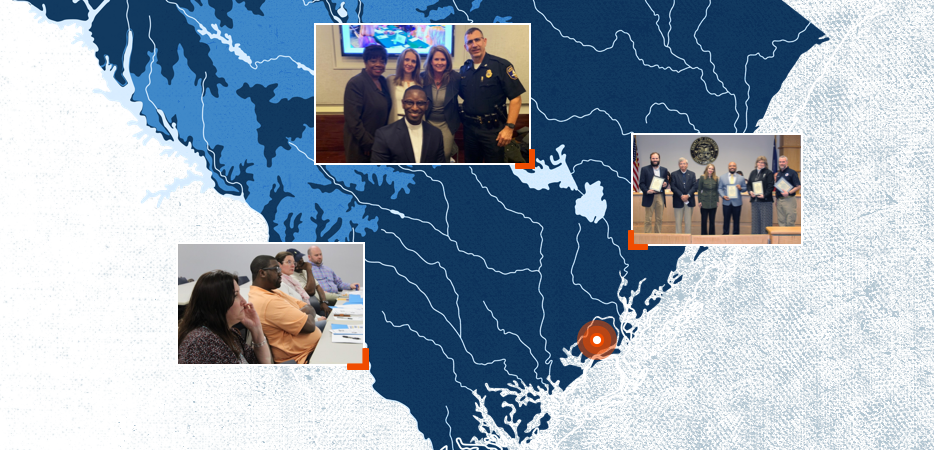
In 2014, there were nearly 25,000 local admissions to Charleston County’s jail. The most frequent charges resulting in jail use were municipal and magistrate charges (e.g., simple possession of marijuana) that also disproportionately impacted the county’s Black community. Individuals living with mental illness, substance use disorders, and/or homelessness were among the most frequent users of the jail, often cycling through repeatedly.

In the courtroom, defendants in bond court rarely had representation, and judges had minimal information when making decisions at initial appearance. Judges ordered financial bonds routinely. If they were not able to get released, people often remained in jail for long periods while waiting for their cases to resolve.

Delays in the earliest stages of a case (while evidence was transferred from law enforcement to prosecution, for example, or attorneys for defense or prosecution were assigned) added to the time it took to bring cases to justice.

Strategies

Since joining the Safety and Justice Challenge in 2015, Charleston County has advanced a number of strategies to rethink and redesign its criminal justice system so that it is more fair, just, and equitable for all.

01

INCREASED COLLABORATION

The county’s Criminal Justice Coordinating Council (CJCC) formed in 2015 to make sustainable, data-driven improvements to the local criminal justice system, as well as improve public safety and community well-being. The CJCC is a collaboration of elected and senior county officials, law enforcement leaders, judicial and court leadership, behavioral health professionals, victim and legal advocates, and community leaders.

02

COMMUNITY ENGAGEMENT

The CJCC aimed to use data alongside expanded community engagement as it developed its strategic plan, using the idea of a “dialogue to change.” This included a particular focus on those most impacted. The CJCC engaged people through a series of events, roundtable dialogues, and surveys, which helped involve the community in setting the course for the next strategic plan.

03

ENHANCED DATA

Charleston County strengthened its commitment to transforming the local criminal justice system using a variety of data-based strategies. To make sure the county could track progress, a centralized database was developed to track progress across the criminal justice system and study trends.

04

DIVERSION TO SERVICES

Charleston County set out to divert people from jail on municipal and magistrate charges when appropriate. The program expanded the options that law enforcement could use beyond jail, offering alternatives that helped individuals get the help they need and reduce the number of people cycling repeatedly through the jail.

05

IMPROVED COURT RESOURCES

More resources were set up for individuals within the courts. For the first time, public defenders were available at Centralized Bond Court for defendants who qualified. Docket management was transferred from the Solicitor to the Court, and people were able to get through the early stages of case processing faster through new, more efficient processes (e.g., transferring evidence and assigning attorneys faster).

06

JAIL POPULATION REVIEW

Charleston County instituted regular reviews of the jail population to identify pretrial defendants that are not a threat to safety or flight risk and remain in jail on financial bonds in an effort to expedite case movement and reduce how long they stay in jail before the trial.

Results

As a result of the strategies above, Charleston County has made progress towards its goal of rethinking and redesigning its local criminal justice system.

Quartery ADP for Charleston County (2016-2026)

15.6% from baseline

More Results

By 2020, jail use in Charleston County was returning to its intended purpose, reducing the harms of unnecessary incarceration on people, families, and communities. This included a reduction in the jail population, local bookings, individuals booked, and charges.

The centralized database, launched in 2017, and now provides access from across the criminal justice system to see results, conduct analysis, and evaluate how the local criminal justice system is functioning and allows for identification of areas with the opportunity for improvement. This reporting shows that the municipal and magistrate charges brought to the jail declined by 78% from 2014 – 2020.

Five single-charge bookings, including simple possession of marijuana, open container, misdemeanor shoplifting, trespassing, and public intoxication, were specifically targeted as part of the county’s Safety and Justice Challenge efforts, and as a result, were reduced by 84% from 2014 – 2020. The number of people regularly cycling through the jail who were booked and released between 2014 – 2020 decreased by 63%.

The county made significant progress in diverting people from jail to alternatives to help get the help they need. In 2019, law enforcement referred 74 individuals to the Tri-County Crisis Stabilization Center, conducted 473 law enforcement consultations with embedded clinicians, and executed 152 law enforcement drop-offs to the Charleston Dorchester Mental Health Center.

Bond court representations by public defender attorneys started in 2016, gradually increasing from zero in 2015, to 2,128 in 2020. Bond court judges also became involved as partners, getting more information on setting bonds that are fair, just, and meaningful. As part of this, Pretrial Service Reports were set up in 2018 to better inform bond setting judges. These reports offered a consistent, objective, and reliable way to assess for risk of rearrests and/or missing court. By 2020, the reports became available to over 90% of bond hearings in the Centralized Bond Court.

The average number of days in the early stages of case processing improved from 2015 to 2020. This included improvements in the time it took to be assigned a public defender, assigned a solicitor, and how long it took for initial evidence from law enforcement to be provided to prosecutors.

While analyzing the relative rates of incarceration between racial and ethnic groups helped the county improve inequities in the criminal justice system, there is still more work to do. Disproportionately, Black people were booked into the local jail on low-level target charges as well as overall charges, although the gap had shrunk between 2014 and 2017.

The Criminal Justice Coordinating Council (CJCC) efforts to engage the community in the development of the strategic plan brought together over 1,200 community members, including many with direct experience of the justice system. Together, community members and system stakeholders (i.e., judges, public defenders, prosecutors, etc.) created the CJCC’s strategic plan in 2020, focusing on identifying data trends and community priorities to advance change for the next three years (FY2021 – FY2023).

Remaining Challenges

Charleston County is focused on addressing its remaining challenges in its local justice system.

The county’s current strategic plan aims to do more to help protect public safety, minimize harm, and more efficiently use limited system resources—all to create an effective, just, and equitable local criminal justice system.

The strategic plan includes a focus on community engagement, to keep people involved and provide more ways to engage in improving its criminal justice system. It also includes a planned update on the data around racial and ethnic disproportionality and disparities. Beyond data, a race equity fellowship proposal is in the works to create effective agents of change in building consciousness and reducing disparities among criminal justice system actors and people who are leading efforts to address racial and ethnic inequities throughout the community.

Regular reviews of the local jail population continue to be necessary, helping make sure that people who are not a threat to public safety or a flight risk are not detained pretrial unnecessarily. Continued General Sessions court reminders continue to remind defendants of their upcoming court events to increase court appearances and help make sure that the system doesn’t lose contact with people while their cases are pending.

The county must also continue to work on options for diverting and deflecting people from jail. This will include inter-agency case conferencing with service providers, law enforcement, and judicial stakeholders to improve outcomes for those who are most frequently booked into the local jail in an effort to break the cycle of repeated jail use; research on how diversion and deflection from the criminal justice system and into diversionary options impacts arrests, jail population, and behavioral health outcomes; and stronger county-wide tracking on crime and jail use.

The county will also continue to focus on bond hearings in Centralized Bond Court are fair, just, and meaningful. Regardless of the type of bond set, within the state there is currently minimal oversight of the conditions of the bond setting, let alone feedback about pretrial outcomes or a continuum of pretrial options available to help maximize safety and improve the rate of appearances. The strategic plan includes developing a proposal to help address these challenges.

The CJCC, in partnership with Trident United Way 211, is working to strengthen the directory of services for justice-involved people that will help ensure they know which services are available and who they can help.

Last, the COVID-19 pandemic has had a significant impact on every aspect of the county’s local justice system and continues to uniquely affect those incarcerated in jail. More research is needed on the impacts of the pandemic on the justice system, and what lessons can be learned in the long-term.

Lead Agency

Criminal Justice Coordinating Council
3831 Leeds Avenue
North Charleston, SC 29405

Contact Information

Ellen S. Steinberg
Project Director
essteinberg@charlestoncounty.org
843-554-2476

Partners

Charleston County Council, Charleston Sheriff's Office, Charleston Police Department, North Charleston Police Department, Mount Pleasant Police Department, Ninth Circuit Defender, Ninth Circuit Solicitor, Charleston County Clerk of Court, Judiciary, including Circuit, Probate, Magistrate and Municipal Court Leadership, Charleston Dorchester Mental Health Center, Charleston Center, Probation, Parole and Pardon Services, Victim Advocacy, Veteran Justice Outreach, American Civil Liberties Union, One80 Place, 12 diverse community representatives

Follow @ChsCJCC

Blog Posts

Safety and Justice Challenge Expands to Add Behavioral Health-Focused Cohort

By: Ashley Krider

Community Engagement Diversion Reentry July 14, 2021

More than half of our national jail population is living with behavioral health challenges, many of which may have led directly, or indirectly, to their contact with the criminal justice system. This is one of the major reasons Policy Research, Inc. (PRI) provides technical assistance to the Safety and Justice Challenge (SJC), and why we’re excited to facilitate a behavioral-health focused expansion of the Network: the IMPACT Network.

It is vitally important that people can access the behavioral health treatment and services they need to avoid cycling in and out of the jail system—particularly on non-violent misdemeanor charges.

The SJC supports local leaders who are working collaboratively to rethink local justice systems from the ground up, including its interaction with behavioral health services and systems. Participating cities and counties are using data to identify key drivers of incarceration and racial inequities and working with diverse groups of community members, individuals who work in the justice system, and people with lived experience, to develop impactful reforms.

Since 2016, PRI has witnessed the efforts of local SJC sites to address the diversion, care, and, as required, adjudication of persons more effectively with behavioral health conditions. Locally driven SJC strategies focused on people with behavioral health needs to date extend through various aspects of the criminal justice system and include:

  • implementing pre-arrest and pre-trial diversion in coordination with law enforcement;
  • improving case processing efficiency;
  • enhancing in-jail services and reentry planning; and
  • providing probation alternatives to violation.

The IMPACT Network expansion will engage both current SJC sites and communities not receiving SJC funding to maximize what SJC sites have learned about how to reduce the over-incarceration of persons with behavioral health conditions, as well as to expand the membership of the SJC and spread best and promising practices to other jurisdictions across the U.S.

Some of the specific behavioral health strategies over the course of the SJC have included law enforcement diversion initiatives such as pre-booking Police-Assisted Diversion in Philadelphia (PA), crisis stabilization centers such as the Care Campus in Pennington County (SD), enhanced pretrial supervision with behavioral health screening in Pima County (AZ), and outreach to the familiar face population in Lake County (IL).

Accordingly, the IMPACT Network will be dedicated to accelerating best and promising practices in behavioral health reform and diversion, with an emphasis on local jails, and with a commitment to pursue community-driven race-conscious solutions to reduce harm to populations overrepresented in, or disparately impacted by, the criminal justice system—ؘBlack, Latinx, and Indigenous communities.

The sites will emphasize community interventions that achieve both public health and public safety goals to minimize the involvement of people with behavioral health needs throughout the criminal justice system.

The expansion will integrate six communities/organizations new to the Safety and Justice Challenge: Eau Claire County (WI), West Texas Centers/Howard County (TX), San Juan County (NM), Middlesex County (MA), Orange County (CA), and the Texas Health and Human Services Commission. The six new sites will join five current SJC communities that have demonstrated progress in reducing the over-incarceration of individuals with behavioral health needs in local criminal justice systems- Allegheny County (PA), East Baton Rouge (LA), Charleston County (SC), Milwaukee County (WI), and Pennington County (SD).

Building and enhancing cross-system collaboration will also be a main focus of the IMPACT Network, including facilitating warm handoffs from law enforcement and first responders to community-based treatment. The network will focus on data collection and evaluation with an eye toward sustainability and helping successful initiatives scale up.

Our team at PRI is excited to work with IMPACT Network sites to continue the SJC’s vital work around community-based responses to the involvement of people with mental and substance use disorders in the criminal justice system.

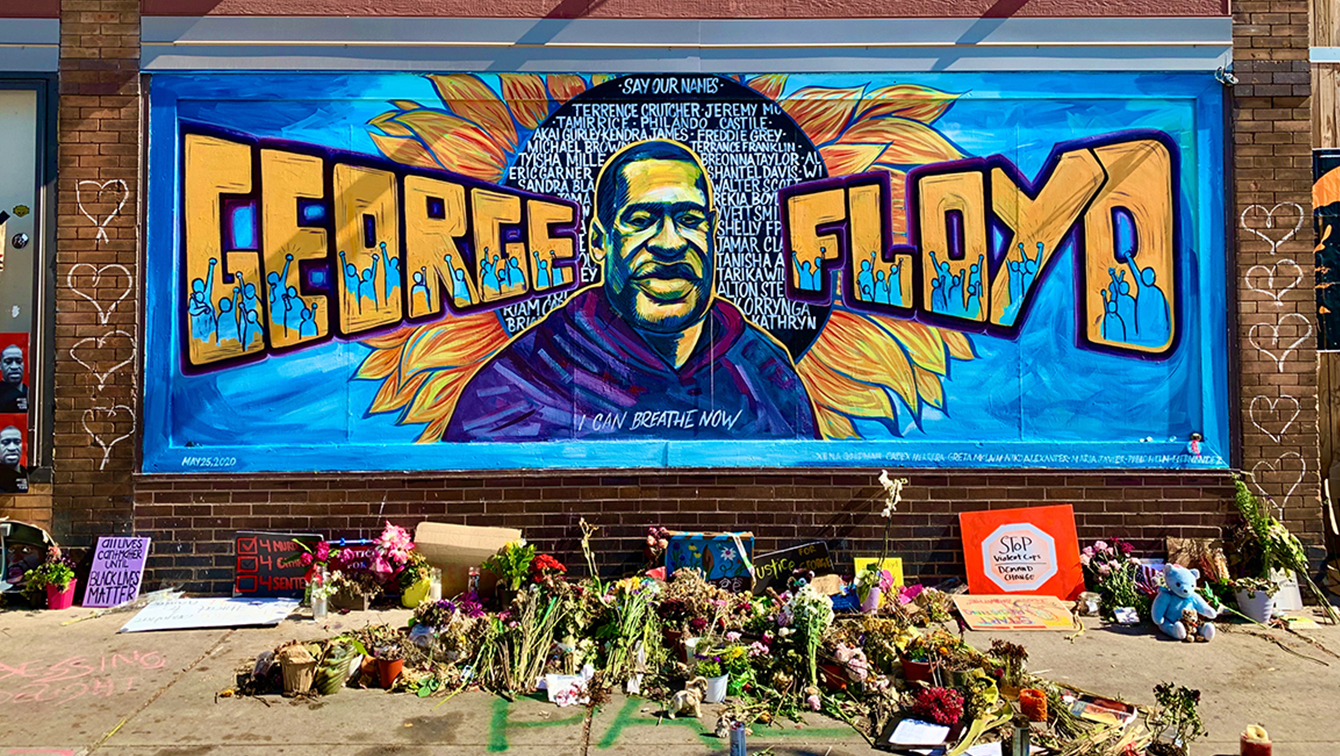
The Catalyzing Impact of George Floyd’s Death on Criminal Justice Reform

By: Matt Davis

Community Engagement Racial and Ethnic Disparities Young Adults July 12, 2021

More than a year since the murder of George Floyd in Minneapolis, how have community leaders, organizers, and activists continued to champion criminal justice reform and call for action to stop continued police violence? What has been the impact on them, and what types of reforms have had the most impact, locally? What changes would they like to see implemented in the future? And how does all this fit in with the MacArthur Foundation’s Safety and Justice Challenge (SJC) and its goal of reducing jail populations across America?

Ashley Goldon, a fellow with JustLeadership USA, is a member of the Steering Committee for a new cohort of SJC cities and counties that will deepen their efforts to eliminate racial disparities in their justice system. She is also in the process of gathering support to qualify as a licensed social worker and points out that the profession of social work identified mass incarceration as a priority problem more than a decade ago.

“George Floyd’s death was a catalyzing moment,” she said. “But I still don’t think people really grasp the true weight of racism and its effects on society. By that I mean how deep the issue runs. Even with our justice reform efforts, I still think people miss how it’s connected to racism, and that’s just incredible.”

It is a theme echoed across the activist landscape—that cries of racial injustice are not new, but that many in the movement for criminal justice reform continue to underestimate the importance of racial equity. Nevertheless, George Floyd’s death did shift that consciousness slightly, people said.

“There’s a clear reality that racial injustice in the criminal justice system has been going on longer than a year or so,” said Keith Smalls, a community representative on the Charleston County Criminal Justice Coordinating Council. “But what’s shifted in the year since George Floyd’s death is that our White neighbors have also got on board and said we need change to happen, particularly where law enforcement is concerned. When you look at the crowds protesting it’s not just Black people. It’s White allies too. And that has made a difference.”

Mr. Smalls said criminal justice reform will not be credible until more people who have experience of incarceration are brought to the decision-making table. But he expressed hope that senior executives at corporations across America are lending their weight to calls for change at the policy level.

“What we’re saying is no longer falling on deaf ears,” he said.

Jose Bernal is with the Ella Baker Center, and a longstanding community leader in San Francisco. He was the SJC representative on San Francisco’s Reentry Council, where he was part of the movement that successfully worked for the closure of a seismically unfit jail facility, 850 Bryant Street, in 2020. Mr. Bernal was incarcerated at the jail just under a decade ago and spent most of his time in San Francisco’s jail system in an isolation cell behind Plexiglas, under constant bright lights.

“The conditions of confinement I experienced never helped me in any way,” he said. “Instead, they just made my desire to end my own life stronger. I’m only alive today because my family always came to visit me and didn’t give up on me.”

The COVID-19 pandemic, coupled with Mr. Floyd’s death, brought about “a reckoning,” he said, which was a factor in the closure of the jail. San Francisco’s Board of Supervisors had been talking about closing 850 Bryant since 1996. But for some of the supervisors voting for the closure, the reckoning was a factor in their support. Fifty percent of San Francisco’s incarcerated population are Black people, even though they make up fewer than five percent of the city and county’s population. “We still have a long way to go,” Mr. Bernal said. “But facilities like 850 Bryant are symbols of an era of mass incarceration we must get out of. We can’t erase our history, but we can create our future, and our elected officials have the power to lead us forward.”

In other jurisdictions too, elected officials have found support for reforms. Portland City Council in Oregon voted in 2020 to cut $15 million from the Police Bureau, eliminating 84 positions. One city council member described the budget as a “moral document.” Multnomah County, in which Portland is located, is an SJC site.

“We are at the cusp of meaningful change,” said Portland’s former Assistant Police Chief Kevin Modica, who recently retired. At the police bureau he was a member of the Multnomah County SJC cohort, and he is now an outspoken advocate for police reform. He continues to work on the mission of reducing racial and ethnic disparities in the criminal justice system, particularly at the initial point of contact, which is usually through contact with the police.

“The profession of peace keeping must evolve if it is to serve the public in the best way, considering some of the toughest circumstances,” he said. “We need to reconstitute an agency at the right size, that is right-minded, and for the benefit of the whole community.”

In Cook County, Kim Davis-Ambrose works in the county president’s office for the Justice Advisory Council. She has been working with community advocates and consultants at Everyday Democracy to take the county through a dialogue to change process.

“People feel as though the justice system is a more sophisticated form of slavery,” she said. “They feel like it’s a money-making system, especially with the privatization of the prisons. And when you look at the police in terms of the inequities and injustices and how it has always been, their code of silence, how they overpoliced their communities, and how the accountability and the transparency [do] not exist, that’s hard. People feel the public defenders are not working with them. They feel like if you are arrested and have a criminal background, that never goes away. And most importantly, they talk a lot about how hard it will be to fix things, and how there is a lack of hope.”

It’s important not to deny or sugarcoat these feelings. But by taking people through an intentional process, Ms. Davis-Ambrose said they at least feel listened to, and begin to recognize the opportunity for change.

In New Orleans, Sade Dumas runs the Orleans Parish Prison Reform Coalition, and has seen the jail population reduced from thousands to 774 in her time in the city. Her organization was started in 2004 by a diverse, grassroots group of people with the shared goal of shrinking the size of the main New Orleans jail and improving conditions of confinement inside. It includes community activists, lawyers, service providers, formerly incarcerated people, and their family members.

Born in the majority Black and marginalized Lower Ninth Ward, which was devastated by poorly maintained levees that broke during Hurricane Katrina, Ms. Dumas remembers neighbors calling the police in her youth, and the police simply not showing up, just as rescue was slow to arrive for Black families stuck on their rooftops in the wake of the broken levees.

“It means the idea of defunding the police has a different connotation for me, because I grew up in an area where the police weren’t showing up even when they were technically funded,” she said.

Ms. Dumas said that the year since Mr. Floyd’s death has brought positive changes in the city—in particular, further reductions in the jail population—but that the changes continue to be gradual. A new, more progressive district attorney, Jason Williams, has promised to deliver change, she said. But at the same time, the local sheriff responsible for running the Orleans Parish Prison is pushing for an 89-bed psychiatric jail as part of the facility.

“We know that people living with mental illness do not belong in the jail,” she said. “And yet the sheriff has been pushing to house more of them, every step of the way. And the community is fighting him on this. People with mental health challenges leave that place worse off if they leave at all.”

On the state policy level, the 2020 racial justice protests have had an impact, but they have also meant it is important to tread carefully around the issue of race with state legislators to get policy passed, said Will Snowden, director of the New Orleans Office of the Vera Institute of Justice.

What I would share is the conversation about race in the South is still very polarizing,” he said. “So even when I go to the state capitol to talk about any legislation that we might be supporting, I have to do this calculus. Do I stay true to what the data tells me in terms of how there are disparities largely representing overrepresentation of Black men in our criminal legal system? Or do I talk about some other things and make race equality my second or my third point? I think I’m going to turn some of the legislators off.”

George Floyd’s death and the subsequent protests have brought a lot of attention and focus to policing in America, Mr. Snowden said. But “there is a polarizing effect that I think has been created from the movement that was inspired after George Floyd.”

Mr. Snowden said the polarization is “not necessarily a bad thing,” but that it “adds to the calculus that I have to do in my policy work.”

Thanks to the advocacy of Vera and others, including impacted people with the Voice of the Experienced, Governor of Louisiana John Bel Edwards just signed a bill into law restoring jury rights to people with felony convictions. Vera first tried to get the bill passed in 2019 when Mr. Snowden was talking more about race with legislators.

“I did talk about race, and the reaction that we got was a teachable moment,” Mr. Snowden said. “Because when we bought it up in 2021, we didn’t talk about race in terms of the benefits. We talked about how when people are returning home from prison, they paid their debt to society. They’re concerned about safety just as much as everyone else. And so, they should have the right to serve on a jury to vote in favor or against their fellow community member, just in the same way they vote for their judges and their state representatives. If we want people to reenter into our communities, restoring those rights as a part of that process is a priority.”

This time around, Mr. Snowden points out, the most important thing for his work is that the bill passed.

Dialogue and collaboration between community members and law enforcement leadership can still have positive impacts. Erik Bringswhite is a Native American activist in Pennington County, South Dakota, another SJC site. He serves on the local criminal justice coordinating group with law enforcement leadership and is focused on helping to reduce racial disparities and improve equity.

“When I first came on board, it was as a community member, and I had very little faith, or trust, or belief in the system,” he said. “But I’ve got to say that in personalizing and looking beyond the title of the person, like the sheriff, the chief judge, or the state’s attorney, and just having this human interaction and discussion, these guys have convinced me of their sincerity and the genuine efforts to really, really change the things that are not working for the community. That is huge.”

State of Delaware

Action Areas Behavioral Health Community Engagement Reentry

Last Updated

Background & Approach

The State of Delaware aimed to better support people with mental illness preparing to leave Delaware Department of Correction (DDOC) facilities. Three events were held to reach stakeholders including the Delaware Department of Correction, Delaware State Agencies, community providers, and community members. These events helped community members and providers understand the behavioral health intake and assessment process and clinical care provided in prison. The events also helped equip community providers to work with justice-involved people who have behavioral health conditions, and enhanced collaboration between community services providers, contracted DOC reentry staff, and Probation and Parole officers.

The State of Delaware continues to engage with the Safety and Justice Challenge Network to rethink and redesign its criminal justice system so that it is more fair, just, and equitable for all.

*Delaware has a unified correctional system, with no distinction between prisons and jails, and no county or city jails.

Lead Agency

Delaware Criminal Justice Council

Contact Information

valarie.tickle@delaware.gov
302-577-8713

Partners

Delaware Department of Correction, Delaware Department of Human Services (DHSS, DSAMH), Partnership in Reentry Coalition of Delaware

Follow @DECorrection

Blog Posts