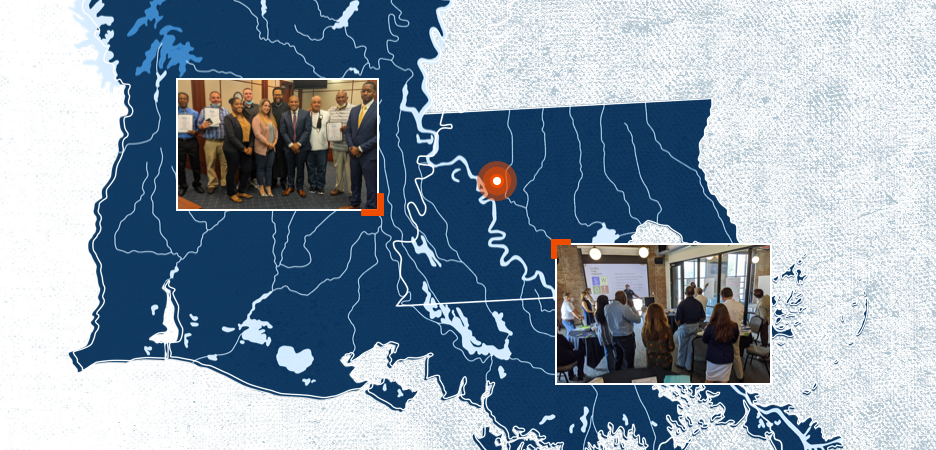
East Baton Rouge Parish, LA

Change in Jail Population 25%

Action Areas Collaboration Community Engagement Diversion Racial and Ethnic Disparities

Last Updated

Background

In East Baton Rouge Parish, there is an over-reliance on incarceration for low-risk, nonviolent offenders.

At any given time, approximately 20% of the people in East Baton Rouge’s jail population have been identified as having a serious mental illness.

In 2017, the average length of stay for a person awaiting trial in the jail was 53.1 days.

The misuse of the jail takes an especially heavy toll on people of color. As of 2021, Black and Hispanic people made up 80% of the jail population, on average; they comprise just 45.9% of the local population.

Overuse of detention causes disruption in the stability of arrestees’ families and communities; it leads to higher re-arrest rates; and produces poor case outcomes with more back-end incarceration.

Strategies

Since joining the Safety and Justice Challenge, East Baton Rouge Parish has advanced a number of strategies to rethink and redesign its criminal justice system to make it more fair, just, and equitable for all.

01

DIVERSION TO SERVICES

The parish created a Pre-Trial Diversion and Recovery Program to identify people with behavioral health needs who could be placed in treatment in the community instead of waiting in the jail pretrial. Once an individual is approved for the program, they are released from jail and given a tailored case plan. The person graduates from the program when they complete the case plan The District Attorney can then dismiss their charges.

02

EXPEDITED ARRAIGNMENT

Under the District Attorney’s guidance and with the cooperation of the Police Department, Clerk of Court, the Public Defender, and the courts, the District Attorney began an Expedited Arraignment initiative, to bill most misdemeanor and felony charges within seven days of a person’s arrest.

03

RAPID CASE ASSESSMENT

Prior to the Safety and Justice Challenge, a defendant’s first appearance in front of a judge (known as Call Out) consisted of only the defendant and the judge, and typically resulted in a bond and a future court date being set. A new Rapid Case Assessment Team initiative paired a dedicated public defender and prosecutor at Call Out, providing a more meaningful first appearance and giving the defendant a far better chance at resolving the case early or getting a reduced bond.

04

SYSTEM & COMMUNITY COLLABORATION

Because the justice system is complex, the Criminal Justice Coordinating Council (CJCC) was formed to look at reform as a whole and from a deep perspective. A diverse group of justice, municipal and community leaders came together to improve a wide array of policies and procedures within the justice system. The pillars of the CJCC are to promote inclusion, collaboration, and equity throughout the justice system.

Results

As a result of the strategies above, East Baton Rouge Parish has made progress towards its goal of rethinking and redesigning its criminal justice system. Overall, East Baton Rouge has been able to reduce its jail population while keeping the community safe.

Quartery ADP for East Baton Rouge (2018-2025)

25.2% from baseline

More Results

Between 2018 and June 2021, the Pre-Trial Diversion and Recovery Program has conducted 211 assessments, admitted 153 total participants. Of the total participants, 48 have graduated, and only 14.5% have been rearrested. Additionally, the Pre-Trial team has been able to open new modes of communication, establishing a consistent point of contact for resource connection to the District Attorney’s and Public Defender’s Offices, which wasn’t available before the program began.

As a result of the Expedited Arraignment program, the time it takes the District Attorney to bill a case has been reduced from approximately 8 weeks to 10 days, as of January 2020, which has had a direct effect on lowering the average daily population and the average length of stay at the Parish Prison. There has also been a significant decline in Failure to Appear rates since Expedited Arraignment began.

As a result of the new Rapid Case Assessment Team initiative, individuals had a far better chance at resolving the case early or getting a reduced bond at Call Out. In fact, between the launch of the Rapid Case Assessment team (RCAT) in July through December 2020, defendants at Call Out in Baton Rouge City Court had an 83% case resolution rate. In comparison, the case resolution rate of defendants prior to the implementation of RCAT at Call Out was nearly zero.

The Criminal Justice Coordinating Council (CJCC) formed as a nonprofit organization in January 2019. Since then, the CJCC has selected a board of directors which include the heads of all the major justice agencies in EBR, the Mayor-President’s Office, and community organizations. The results of which have led to increased cross-agency communication and collaboration, unified effort towards reforming justice policies and programs, and enhanced conversations regarding disparities within the local justice system.
Remaining Challenges

East Baton Rouge Parish is focused on addressing its remaining challenges in its local justice system.

While East Baton Rouge has seen a significant decrease (47% on average) in the jail population since joining the Safety and Justice Challenge, it has proven more difficult to realize similar success in reducing racial and ethnic disparities. Looking ahead, East Baton Rouge will be focusing more directly on reducing racial and ethnic disparities at critical points in the criminal justice process, using a lens of equity and inclusion.

East Baton Rouge plans to focus on the data from current initiatives to find and correct disparities, while also working in partnership with people who have lived experience in the criminal justice system.

Finally, the COVID-19 pandemic has had a significant impact on every aspect of the parish’s local justice system and continues to uniquely affect those incarcerated in local jails. The foundation of collaborative, data-driven strategies, including the necessary structures and collaboration from local stakeholders that are in place to support these strategies, has set the parish up well to respond to the pandemic swiftly and effectively.

Lead Agency

Criminal Justice Coordinating Council

Contact Information

Christopher Csonka
ccsonka@ebrcjcc.org

Partners

19th Judicial District Court, Baton Rouge City Court, East Baton Rouge Juvenile Court, Baton Rouge Police Department, East Baton Rouge Sheriff's Office, 19th Judicial District Attorney’s Office, Office of the Public Defender for East Baton Rouge Parish, City of Baton Rouge/East Baton Rouge Parish Mayor's Office, City Prosecutor’s Office, Baton Rouge Area Foundation (BRAF)

Follow @ebrcjcc

Blog Posts

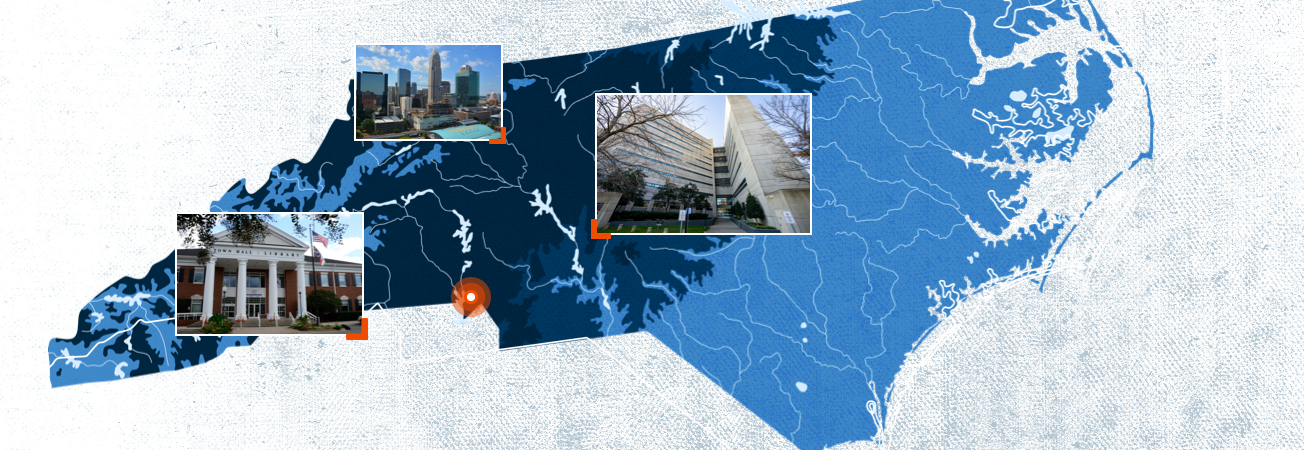
Mecklenburg County, NC

Change in Jail Population 48%

Action Areas Bail Community Engagement Racial and Ethnic Disparities

Last Updated

Background

Prior to joining the Safety and Justice Challenge, Mecklenburg County had successfully implemented several evidence-based practices to improve its justice system, such as using risk to inform the setting of release condition decisions, rather than relying on charge. This resulted in a significant jail population reduction, however there was still an unnecessary use of the local jail.

Too often, a jail stay depended on a person’s ability to pay money bail. Although the county increased the use of non-financial release conditions, jail stays still too often depended on a person’s ability to pay.

Pretrial status inmates and length of stay were main drivers of the jail population. In 2019, the pretrial jail population was 63% of the total average daily population.

People of color were overrepresented in the jail. In 2019, despite making up approximately 46% of the local population, Black and Hispanic people made up 78% of the jail population.

Strategies

Since joining the Safety and Justice Challenge, Mecklenburg County has advanced a number of strategies to rethink and redesign its criminal justice system so that it is more fair, just and equitable for all.

01

BAIL REFORM

The county implemented changes to its bail policy in March 2019 by removing the monetary bail schedule and creating a non-financial Release Conditions Matrix. This resulted in more individuals safely released from jail while awaiting trial. In addition, the county established a more informed and uniform bail setting process resulting in more meaningful first appearance hearings for individuals.

02

ENHANCED PRETRIAL SERVICES

The county enhanced pretrial services by strengthening system efficiencies through a streamlined case processing management plan. It is also developing specialized pretrial supervision teams to better serve clients at higher risk of pretrial failure.

03

COMMUNITY ENGAGEMENT

The county launched a Community Engagement Task Group including 10 community members. The goal of the Task Group is to ensure community members can meaningfully engage and participate in the development of policy and practice changes in the justice system, under the guidance of the Criminal Justice Advisory Group.

04

CENTERING RACIAL EQUITY

The county partnered with the W. Haywood Burns Institute to analyze criminal justice system data to identify and inform policy and practice changes to eliminate racial and ethnic disparities in the justice system. County stakeholders also created and delivered Implicit Bias Training for Justice Professionals to improve system actors’ understanding of the intersection of race and the justice system.

Results

As a result of the strategies above, Mecklenburg County has made progress towards its goal of rethinking and redesigning its criminal justice system.

Quartery ADP for Mecklenburg County (2016-2025)

47.8% from baseline

More Results

There have been significant pretrial justice system improvements in the county. For example, first appearance courtrooms are now headed by a small number of trained judges, which allows for uniformity in how release and detain decisions are made. The county also established a bail policy leadership group that is staffed by an analyst and meets monthly to review outcome data.

In addition, the Criminal Justice Services (CJS) Pretrial Supervision Unit is poised to launch two specialized caseloads focused on clients who are at higher risk of pretrial failure. An assessment done by the Center for Court Innovation has provided the CJS Pretrial Supervision Unit with a set of recommendations concerning best practices around procedural justice. The Unit is working to incorporate those suggestions.

The development of the Community Engagement Task Group drew significant interest from both the local justice partners and the larger community, who are all committed to collaborating around the development of policy and practice changes in the justice system so that it is more fair, just, and equitable for all. Nearly 100 community members applied to participate in the Task Group, and 10 applicants were selected in March 2021.

By the end of Summer 2021, all county justice agencies will have implemented the Implicit Bias Training for Justice Professionals.

Remaining Challenges

Mecklenburg County is focused on addressing its remaining challenges in its local justice system.

An analysis of local criminal justice data by the W. Haywood Burns Institute identified bookings and early release decisions as the two decision points in the justice system most impacted by racial and ethnic disparities. The Community Engagement Task Group will plan to review the racial and ethnic disparities data analysis and provide feedback on policy and practice changes that will help to eliminate existing disparities in the local system.

The county is seeing an uptick in violent crime, including homicide, which has placed an emphasis on identifying dangerous individuals that are legally eligible for pretrial detention and detaining them, and appropriately supervising others while they await disposition of their case.

Last, the COVID-19 pandemic has had a significant impact on every aspect of the county’s local justice system. The foundation of collaborative, data-driven strategies, including the necessary structures and collaboration from local stakeholders that are in place to support these strategies, has set the county up well to respond to the pandemic swiftly and effectively. The county is focused on sustaining the work underway as part of the Safety and Justice Challenge in order to continue to support the work of reducing the local jail population and eliminating racial and ethnic disparities.

Lead Agency

Mecklenburg County Criminal Justice Services

Contact Information

Kasia Kijanczuk
Criminal Justice Planning Manager
Katarzyna.Kijanczuk@mecklenburgcountync.gov

Partners

Mecklenburg County Manager's Office, Clerk of Superior Court, Office of District Court Judges, Chief Magistrate's Office, District Attorney's Office, Public Defender's Office, North Carolina Department of Public Safety Community Corrections 26th Judicial District, Mecklenburg County Sheriff's Office, Charlotte Mecklenburg Police Department, Law enforcement agencies in Huntersville, Pineville, Cornelius, Davidson, Matthews, and Mint Hill, Community Support Services (CSS), New Options for Violent Actions (NOVA)

Follow @MeckCounty

Blog Posts

Research Report

Diversion Prosecutors Racial and Ethnic Disparities July 27, 2021

Race and Prosecutorial Diversion, What We Know and What Can Be Done

Florida International University

Diversion is increasingly used by prosecutors in the United States. As an alternative to formal prosecution, diversion programs provide opportunities to avoid conviction, address substance use and mental health needs, and maintain employment and community ties. However, the diversion process can be a source of racial and ethnic disparities. Who gets diverted and who completes diversion successfully has a lot to do with income. Irrespective of skin color, poor individuals are disadvantaged for a variety of reasons, ranging from the quality of legal advice to hefty fees. While we acknowledge that diversion differences can stem from socioeconomic factors, this report focuses specifically on how race and ethnicity influence diversion decisions.

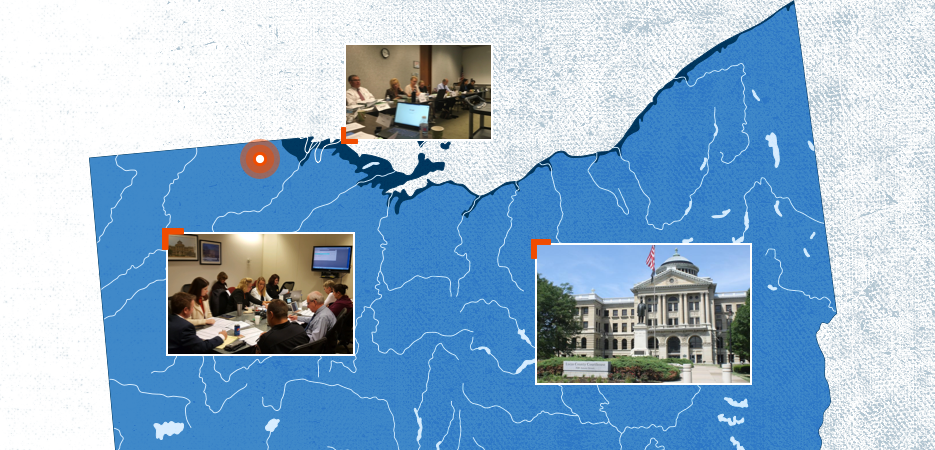
Lucas County, OH

Change in Jail Population 41%

Action Areas Courts Diversion Racial and Ethnic Disparities

Last Updated

Background

As of 2014, more than half of the people released from Lucas County’s jail have behavioral health needs. People charged with low-level offenses represent 25% of people in jail. Nearly a third of Lucas County’s jail population are being held because of technical violations of probation (snapshot, 2015).

Overall, Black people are vastly overrepresented in the jail—making up 19% of the general county population but serving 58% of custodial arrests over the last five years (2010 – 2014). Black people also make up 57% of people held in jail for the three most common misdemeanor charges.

Many people waiting in Lucas County jails for long stays are affected both by the available pretrial release options and the speed of case processing.

Strategies

Lucas County has advanced a number of strategies to rethink and redesign its criminal justice system so that it is more fair, just, and equitable for all.

01

TRAININGS FOR SYSTEM ACTORS

Lucas County implemented increased training for criminal justice system actors focused on procedural justice, implicit bias, crisis intervention, and de-escalation.

02

ROUTINE POPULATION REVIEW

The county collaborates to effectively manage the jail population. Specifically, a Population Review Team consisting of representatives across the criminal justice system meets weekly to review the jail population to identify people whose cases can be resolved or who can be released from jail without risk to the community.

03

EXPEDITED CASE PROCESSING

The county expedites case processing through the work of the Population Review Team and increased use of technology, which has led to faster case dispositions and jail releases. The county has also created a case processing taskforce to help identify more opportunities for improvement.

04

DIVERSION TO SERVICES

The Toledo Municipal Court diversion program, built with assistance from the Center for Court Innovation, targets people who have mental health or substance use issues and provides them with an alternative to jail. The program also connects participants to voluntary, community-based services.

05

REDUCING RACIAL DISPARITIES

The county formed a Community Engagement Workgroup focused on engaging local community members and anchor institutions in targeted neighborhoods to provide insight and guidance on criminal justice reform strategies, including ways to advance racial equity. The Workgroup is also helping to guide microgrant investments in community-driven projects.

06

COMMUNITY CORRECTIONS

Chief Probation Officers from the county’s five probation departments meet regularly to share evidence-informed practices and coordinate trainings. The departments also began sharing urinalysis results in 2017. In late 2020, Reentry on the First Day was launched, with a goal of reducing the length of stay of people sentenced to jail and advocating for early releases.

07

OPPORTUNITY PROJECT

Social workers embedded in the public defender's office interview clients at their first court appearance in order to connect or re-connect them with specific social services upon release.

Results

As a result of the strategies above, Lucas County has made progress towards its goal of rethinking and redesigning its criminal justice system—effectively reducing the jail population, while continuing to maintain public safety.

Quartery ADP for Lucas County (2016-2025)

41.1% from baseline

More Results

The county has learned that communication and collaboration are key to any reform strategy. System actors, including judges, law enforcement, public defenders, community members, and many others, have come together to work on making the local justice system fairer and more equitable.

As a result of the Community Engagement Workgroup’s work, a series of community listening conversations in late 2020 created a space for community members to share valued input on proposed criminal justice reform strategies. Within the system, court and law enforcement are participating in procedural justice trainings to learn ways to improve relationships with the public through increased transparency and understanding of legal processes. Over 600 employees have been trained so far.

From 2016 – 2020, the Population Review Team has reviewed and recommended release in 669 cases, and as a result, saved people an overall 4,325 days spent in jail.

The Toledo Municipal Court diversion program was able to effectively support people who often cycle in and out of the jail with alternatives to incarceration. Since 2018, 2,044 people have been referred to the program and 1,053 of them have completed the program. The program is being evaluated by the Harvard Access to Justice Lab.

Remaining Challenges

Lucas County is focused on addressing its remaining challenges in its local justice system.

Lucas County has more work to do in further reducing its jail population and racial and ethnic disparities in the justice system. An analysis of racial and ethnic disparities will be completed to inform further strategies to reduce racial and ethnic disparities. Additionally, Lucas County is focusing on expanding its continuum of services for individuals with behavioral health needs involved in the criminal justice system.

In addition, the COVID-19 pandemic has had a significant impact on every aspect of the county’s local justice system and continues to uniquely affect those incarcerated in local jails. The foundation of collaborative, data-driven strategies, including the necessary structures and collaboration from local stakeholders that are in place to support these strategies, has set the county up well to respond to the pandemic swiftly and effectively.

Lead Agency

Lucas County Board of Commissioners

Contact Information

Holly Matthews
holly.matthews@noris.org

Partners

Lucas County Board of Commissioners, Lucas County Court of Common Pleas, Lucas County Sheriff's Office, Lucas County Prosecutor’s Office, Toledo Municipal Court, Toledo Police Department, Correctional Treatment Facility, Criminal Justice Coordinating Council, Toledo Legal Aid Society, Lucas County Mental Health & Recovery Services Board

Follow @CJCCToledo

Blog Posts

Multnomah County, OR

Change in Jail Population 21%

Action Areas Community Engagement Probation Racial and Ethnic Disparities

Last Updated

Background

Multnomah County has seen significant reductions in jail use, but work remains to be done. Over-reliance on jail continues to impact the most marginalized community members, including people of color, people with mental health issues and/or substance use disorders, and people who are unhoused or have limited incomes. Multnomah County is committed to continuing efforts to reduce its reliance on incarceration and address systemic inequities in the criminal justice system.

According to a 2019 report by the W. Haywood Burns Institute, prevalent and persistent racial disparities impact communities of color at every decision point in Multnomah County’s public safety system. Those disparities combined with system inefficiencies in the County’s pretrial system — a critical point in a defendant’s right to due process — create undue harm.

Strategies

Multnomah County advanced several strategies to rethink and redesign its criminal justice system so that it is more fair, just and equitable for all.

01

PRETRIAL SYSTEM OVERHAUL

In 2020, Multnomah County launched an initiative to overhaul the pretrial system and implement a system that is more risk-based and maximizes pretrial release. This includes implementing the Public Safety Assessment (PSA), rethinking the County’s approach to pretrial monitoring and improving the arraignment process. The County is approaching this process with emphasis on transparency, collaboration, and racial equity.

02

RACIAL & ETHNIC DISPARITIES

Reducing racial and ethnic disparities has been a focus of the County’s core strategies. The efforts, which include opening the Diane Wade House, a transitional house for justice-involved Black women, and using data to identify disparities, are a testament to partners’ determination to succeed. The County plans to launch a subcommittee comprised equally of community members and policymakers to address disparities throughout the criminal legal system.

03

AMPLIFYING COMMUNITY VOICES

Multnomah County launched a Community Advisory Board (CAB) to help guide the planning and oversight of the Diane Wade House. The CAB has played a vital role in the future visioning of the program. The County is currently identifying opportunities to amplify community voices in all other reform efforts, including work to overhaul the pretrial system and through Transforming Justice focus groups.

04

SUSTAINING COVID-RELATED POLICIES

The COVID-19 pandemic presented opportunities for policy change to reduce the transmission of disease and over-reliance on jail. Some of these changes include increased use of summons in lieu of booking, changes in booking policy, limiting the use of sanctions for technical violations of probation conditions and increased use of remote court hearings. Moving forward, Multnomah County will continue to evaluate the sustainability of these policy changes.

05

PROBATION SANCTIONS

Sanction practice changes for people on parole and probation have played a significant role in the reduction of local jail use. The policy, implemented within Multnomah County’s Department of Community Justice in 2016, requires parole and probation officers to limit the use of jail sanctions for technical violations such as failure to abide by a parole and probation officer’s directive. This change has not only reduced county jail use, but is consistent with evidence-based practices on the effectiveness of long-term sanctions in behavior change.

Results

As a result of the strategies above, Multnomah County has made progress toward its goal of rethinking and redesigning its criminal justice system.

Quartery ADP for Multnomah County (2016-2025)

21% from baseline

More Results

The County has seen significant reductions in the local jail population due to swift action from policymakers to reduce the spread of COVID-19 among adults in custody, as well as a continued interest in sustaining policies to maintain a low jail population. Additionally, local policymakers are committed to moving toward a risk-based pretrial system, which will increase the number of individuals released pretrial and further the County’s goals of reducing its reliance on jail. Since the beginning of the county’s participation in the Safety and Justice Challenge, there has been a significant reduction in the jail population while keeping the community safe.

Also, in recognition of the immense collateral consequences and economic disadvantage people on supervision already face, Multnomah County eliminated parole and probation fees within the County’s Department of Community Justice. Supervision fees place incredible financial pressure on individuals who are exiting the criminal justice system, a disproportionate number of whom come from Black, Indigenous, and other communities of color. The move includes elimination of community service fees, urinalysis fees, and any other administrative fee collected from people involved in the justice system.

Remaining Challenges

Multnomah County is committed to addressing its remaining challenges to ensure the local justice system is fair, just, and equitable for all.

In an effort to launch a broad systemic conversation about inequities embedded in the criminal legal system, the Local Public Safety Coordinating Council’s (LPSCC) January 2020 What Works conference highlighted the need to redefine the jurisdiction’s entire approach to criminal justice and intentionally put equity at the center. In response, LPSCC launched a multi-year Transforming Justice process to develop, align and implement strategies for system change by engaging criminal system leaders, health/housing system leaders, elected officials, service providers, victims of crime, community members, and individuals with lived experience to ask hard questions and, together, reimagine the future of justice policy. An inclusive steering committee of people with diverse backgrounds and professions was formed in May 2021 to direct this work, under the guidance of outside facilitators identified through a competitive procurement process.

Finally, the COVID-19 pandemic has had a significant impact on every aspect of the County’s local justice system and continues to uniquely affect those incarcerated in jails. The foundation of collaborative, data-driven strategies — including the necessary structures and collaboration from local stakeholders that are in place to support these strategies — set the County up to respond to the pandemic swiftly and effectively.

Action from policymakers to reduce the spread of COVID-19 among adults in custody led to significant reductions in the local jail population and, moving forward, a continued interest in sustaining the policies to maintain a low population. Further, the challenges of the pandemic, paired with local and national calls for racial justice and reckoning, are powerful motivators to substantially change the way the local criminal justice system functions.

Lead Agency

Multnomah County Local Public Safety Coordinating Council

Contact Information

Abbey Stamp
abbey.stamp@multco.us

Follow us:

Blog Posts