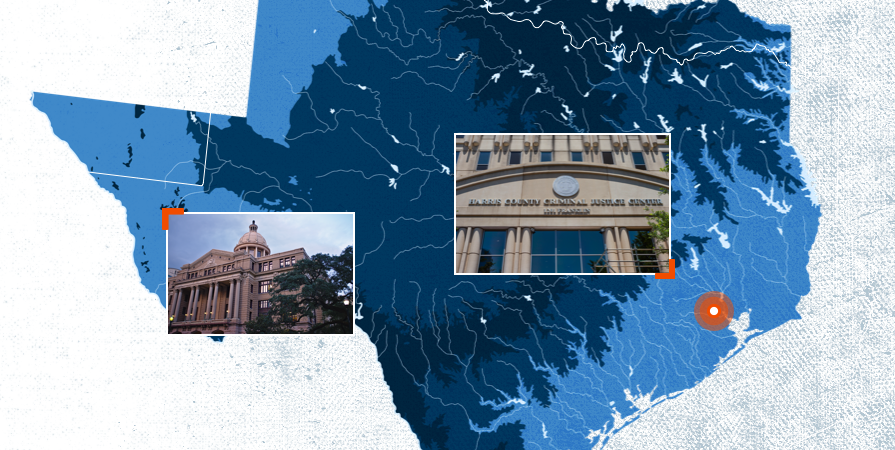
Harris County, TX

Change in Jail Population 3%

Action Areas Community Engagement Courts Racial and Ethnic Disparities

Last Updated

Background

Harris County operates one of the largest jails in the U.S.

At the time of joining the Safety and Justice Challenge, 20% of pretrial detainees in Harris County were charged with low-level, nonviolent felony offenses, such as drug possession and theft, and often posed little to no risk to public safety. People of color were and continue to be over-represented in the jail. When Harris County joined the Challenge, 51% of people in jail for low-level, nonviolent felony offenses were Black people, and 21% were Hispanic.

Nearly 70% of offenders who were placed in pretrial detention and charged with a low-level, nonviolent felony ended up reoffending and cycling back through jail.

Twenty-nine percent of individuals held in Harris County for a misdemeanor had a documented mental illness.

Strategies

Harris County advanced a number of strategies to rethink and redesign its criminal justice system so that it is more fair, just, and equitable for all.

01

RACIAL EQUITY COMMITTEE

To support the county’s efforts to eliminate racial and ethnic disparities in the justice system, the Racial and Ethnic Equity Standing Committee was launched. The committee consists of thirteen community representatives and four government officials. It is focused on improving education and transparency, developing interventions to reduce disparities, and advancing best practices.

02

COMMUNITY ENGAGEMENT

Harris County created two new staff positions to strengthen racial and ethnic equity and community engagement. These positions have implemented micro-grants to community-based organizations with the goal of achieving public safety through the community’s own solutions and services.

03

IMPROVED CASE PROCESSING

In 2016, the county implemented a Responsive Interventions for Change (RIC) docket that focuses on individuals charged with low-level felony drug possession offenses. The RIC docket diverts individuals from jail to community-based services in lieu of conviction and offers deferment from imprisonment for individuals with a lengthy non-violent criminal history.

04

PRETRIAL RELEASE

Harris Countyadded assistant public defenders to represent people at their initial appearance in Probable Cause Court for the purposes of a bail hearing. The county criminal courts at law and the criminal district courts implemented General Order Bonds (unsecured) to reduce the overreliance on money bail on certain offenses and speed up how quickly people can be released back into the community. In courtrooms, judges used public safety assessment risk tool to maximize safe pretrial releases.

05

DEDICATED STAFF

A new position was created within the Sheriff's office—the In Custody Population Manager—who helps identify individuals who could be good candidates for release, either because they pose a low risk to the community or because they’re in a vulnerable population. The manager has started to speed up various processes, like parole interviews and hearings, as well as the release process in partnership with Pretrial Services.

Results

As a result of the strategies above, Harris County has made progress towards its goal of rethinking and redesigning its criminal justice system.

Quartery ADP for Harris County (2016-2026)

3.5% from baseline

More Results

Due to improvements made to pretrial services, the county experienced a massive 593% growth in the number of individuals placed on pretrial supervision. Before having access to supervision and the appropriate interventions, nearly 70 percent of offenders placed in detention and charged with a low-level, nonviolent felony reoffended and cycled back through jail.

This drop in recidivism was due to the risk assessment tool successfully implemented by the Harris County Courts, as well as the new Responsive Interventions for Change (RIC) docket. Since October 2016, over 21,000 cases have been filed in the docket. Specifically, between October 2016 and early 2021, the county diverted 6,125 (85%) people to supervision and treatment, with only 15% of cases ending in conviction and incarceration. The RIC Docket completely reversed sentencing disposition from four years earlier when 79% of defendants charged with a state jail felony chose incarceration over diversion to supervision and treatment.

Finally, Harris County has taken multiple steps in working toward racial equity in its justice system. In addition to re-instituting the Racial and Ethnic Equity Standing Committee and establishing a micro-grant program to support community-based organizations, a new Racial Equity Index was built, which, upon completion, will be a dashboard open to the community and the public.

Remaining Challenges

Harris County is focused on addressing its remaining challenges in its local justice system.

The county has faced several crises over the past few years with major impacts on the criminal justice system. Its biggest challenge remains trying to sustain a jail population reduction while dealing with the criminal case backlog created when courthouses were closed during Hurricane Harvey, followed by the limited capacity for dockets due to Covid-19. The courts are working to address the backlog, with three emergency response dockets for pre-trial hearings, three emergency response dockets for jury trials that focus on the oldest and most serious cases, and continue to operate jury assembly operations and voir dire at NRG Arena that follow CDC and public health guidelines. Justice Administration Department and the Office of Management and Budget Department are working with stakeholders to identify additional strategies and resources needed to address the backlog.

People of color also continue to be over-represented in the justice system. To expand on the work underway, the county is in the process of searching for new community engagement opportunities and will be moving forward with a comprehensive study of racial and ethnic disparities in the justice system.

Lead Agency

Harris County Justice Administration Department

Contact Information

Stephanie Armand
Stephanie.Armand@jad.hctx.net

Brandi Ebanks Copes
Brandi.EbanksCopes@jad.hctx.net

Partners

Harris County Criminal Justice Coordinating Council, Harris County Sheriff's Office, Harris County District Attorney's Office, Harris County Public Defender's Office, Harris County District Clerk's Office, Harris County Administrative Office of the District Courts and Criminal District Courts, Harris County Community Supervisions and Corrections Department, Harris County Pretrial Services, Office of Court Management and County Criminal Courts at Law, Office of Management and Budget Department

Follow @HCJAD1

Blog Posts

Spokane County, WA

Change in Jail Population 16%

Action Areas Data Analysis Racial and Ethnic Disparities

Last Updated

Background

When joining the Safety and Justice Challenge, Spokane County, in eastern Washington State, set two major goals: reduce the number of people in its jails and meaningfully address the racial inequities that persist throughout the justice system. Stakeholders recognized over-reliance on incarceration, especially at the pretrial stage, destabilizes people, families, and communities.

At the time, the county jail’s average daily population had increased significantly since 2000, operating at “critical status” almost daily due to overcrowding. Growing rates of pretrial detention, high rates of failure-to-appear, and increasing lengths of stay contributed. Operating the jail in critical status used more than a quarter of the county’s budget. Between May 2018 and April 2019, approximately 70% of the jail population was pretrial status and 17% of people booked into jail were there because of warrants related to missing their court dates.

The misuse and overuse of the jail takes an especially heavy toll on people of color. In 2019, jail incarceration rates were 13 times higher for Black residents than white residents and six times higher for Native Americans. Black, Native American, and Latinx/Hispanic people also have longer lengths of stay in jail.

Strategies

Since joining the Safety and Justice Challenge, Spokane County has advanced strategies to shift the criminal justice system so that it is more efficient, just, and transparent.

01

COMMUNITY INVESTMENT AND ENGAGEMENT

Initially, Spokane County invested in system-based interventions like implementing a pretrial risk assessment tool. Now, the region has transitioned to investing in the power of individuals and community-based supports, such as providing cell phones to low-income individuals facing charges, offering free transportation to court-related appointments, and supporting community-based solutions through microgrants.

02

REDUCING FAILURE-TO-APPEAR RATES

In 2019, the County Public Defender’s Office launched Uptrust, a text-based court date reminder system. During the COVID-19 pandemic, the county created a free, publicly available Criminal Justice Information Hotline to help community members get information about their cases, so they do not inadvertently miss a court or legal obligation. Hotline staff also make reminder phone calls for people with District Court cases.

03

IMPROVED DATA ANALYSIS

To ensure all reforms in the justice system, including those to eliminate racial and ethnic disparities, were based on rigorous data, the county employed a full-time data analyst and launched a public jail data dashboard. One goal of the dashboard is to enhance transparency about the justice system within the community. The county plans to integrate additional data from other branches of the legal system to the dashboard.

04

DIVERSION TO MENTAL HEALTH SERVICES

The jail runs a program in which mental health staff identify incarcerated defendants who could benefit from community-based treatment, and when all parties agree, connect them to services. Similarly, a social worker in the Office of Pretrial Services reviews people in jail on bond who could benefit from treatment and collaborates with the court to reduce or eliminate bond to ensure release so they can engage in services.

05

ADDRESSING RACIAL DISPARITIES

More than 325 government actors and community members attended implicit bias trainings. Five separate agencies participated in half-day racial equity trainings conducted by JustLead Washington. The county is also developing an equity impact assessment that criminal justice system actors can use during planning phases that will help mitigate unintended inequities.

Results

Since the start of the Safety and Justice Challenge, Spokane County has been able to reduce its jail population significantly.

Quartery ADP for Spokane County (2016-2026)

16.4% from baseline

More Results

As of January 2020, 489 people were released from jail to engage in community-based mental health services. In addition, during the COVID-19 pandemic, staff supporting the Criminal Justice Information Hotline made over 20,000 calls during the first year of the Hotline to share reminders for people with District Court cases.

Through community partnerships and input, a series of explainer videos about different parts of the criminal legal system, and new strategies to spur community investment, the County continues to build upon its efforts for meaningful community engagement, particularly with those directly impacted by the system.

Remaining Challenges

Despite progress, Spokane County is focused on addressing its remaining challenges in its local justice system.

The county’s failure to appear rate, while lower, continues to drive jail incarceration. And while new data provides more information on ethnic and racial disparities in the jail system, these inequities still must be addressed.

Last, the COVID-19 pandemic has had a significant impact on every aspect of the county’s local justice system and continues to uniquely affect those incarcerated in local jails. The foundation of collaborative, data-driven strategies, including the necessary structures and collaboration from local stakeholders that are in place to support these strategies, has set the county up well to respond to the pandemic swiftly and effectively. Looking ahead to a post-pandemic future, Spokane County is looking at how to make these policies sustainable.

Lead Agency

Spokane County Office of Law and Justice

Blog Posts

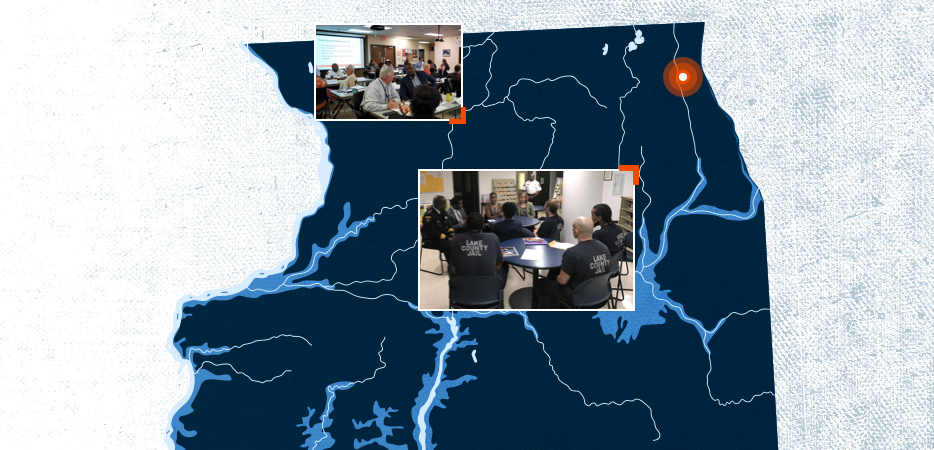
Lake County, IL

Change in Jail Population 1%

Action Areas Behavioral Health Collaboration Community Engagement Racial and Ethnic Disparities

Last Updated

Background

Lake County joined the Safety and Justice Challenge to help reduce incarceration rates for individuals with low-risk, non-violent charges, and to address racial and ethnic disparities in the criminal justice system. The reliance on detention in jail disrupts the stability of individuals, their families, and the community at large while also leading to higher re-arrest rates and worse case outcomes with more back-end incarceration.

According to several independent analyses, individuals being detained pretrial and people with unmet behavioral health needs were primary drivers of the Lake County jail population. In 2017, 80% of people in jail were detained pretrial with an average length of stay of 19 days and only 5% of the jail population remained in custody for less than 3 days. A May 2018 snapshot revealed that 44% of the jail population in custody had cash bonds over $50,000.

An additional independent analysis of 2018 jail admissions indicated that Black adults were 8.5 times more likely than white adults to be admitted to jail, while Latino adults were 1.9 times more likely than white adults to be admitted to jail. Similarly, an analysis of 2019 jail admissions indicate Black people made up 35% of jail admissions and only 7% of the Lake County population.

Lake County stakeholders, convened by the Sheriff’s Office, collectively decided it was time to take action and address pretrial detention, behavioral health needs contributing to system involvement, and racial and ethnic disparities.

Strategies

Since joining the Safety and Justice Challenge, Lake County has advanced a number of strategies to rethink and redesign its criminal justice system so that it is more fair, just, and equitable for all.

01

THE LIVING ROOM WELLNESS CENTER

In 2021, Lake launched a police drop-off center to divert people in mental health/co-occurring substance use crisis from the criminal justice system. The Wellness Center builds on a previous strategy to provide a warm handoff for people exiting jail, as a way to provide upstream diversion options that had been missing. It will serve as a hub for community partners to increase health, equity, and health literacy.

02

COAST

COAST (Crisis Outreach and Support Team) expands an existing mobile co-responder program that dispatches a social worker and sheriff’s deputy to follow up with individuals who encountered law enforcement while suffering mental health/substance use crises. Co-responders can provide a warm handoff to the Wellness Center for linkage to services and continue to follow up with clients for 60-90 days.

03

PRETRIAL RELEASE DECISION-MAKING

The county improved pretrial decision-making by providing more comprehensive information at the first court appearance, including a completed assessment and pretrial services report. The goal is to provide a risk assessment on 75% of people appearing in bond court. This strategy also includes a program to provide court date reminders to increase court appearance rates.

04

EQUITY TEAM

Lake County began addressing racial and ethnic disparities in the justice system by first collecting data to better understand the challenges and inform their approach. An Equity Team of community members and system actors was created to begin developing a plan to reduce disparities, incorporate community voices, and increase trust and communication between the justice system and the community.

05

CRIMINAL JUSTICE COMMUNITY COUNCIL (CJCC)

The CJCC was formed in 2019 and includes community members and system actors who collaboratively review data trends in the jail population and work to identify areas for potential system intervention (e.g., pretrial reform, domestic violence, overdoses). The CJCC meets quarterly, shifting to virtual meetings during the COVID-19 pandemic.

06

DATA DASHBOARDS

Lake County has been working to increase data capacity and transparency. In response to feedback from the CJCC, the Sheriff’s Office launched a public-facing jail data dashboard that includes admissions and release data broken down by categories such as race and ethnicity, gender, age, and offense type. The State’s Attorney’s Office is also working to build a public-facing dashboard.

Results

Lake County has made progress towards its goal of improving the criminal justice system, particularly in the areas of reducing the jail population during the COVID-19 pandemic, improving pretrial release decision-making, addressing community engagement and equity, and creating and enhancing behavioral health treatment options.

Quartery ADP for Lake County (2018-2026)

1.3% from baseline

More Results

Lake County achieved a modest reduction in their average daily jail population as they began implementing their SJC strategies. The initial planning and implementation work paved the way for a quick system response to the COVID-19 pandemic in Spring 2020 and sustained efforts into 2021. Since the pandemic began, Lake County has maintained an average monthly ADP around 18% below their baseline.

In order to look outside the system to the community impacts, Lake County partnered with community researchers to conduct preliminary outreach and learn about the issues most important to the community. This initial effort prompted the Lake County Equity Team to look deeper at data to identify potential intervention points in the pretrial phase. The Team decided to explore existing data around failures to appear for court hearings and has partnered with researchers to learn more about the reasons why people don’t appear, in order to identify potential policy and practices changes that best support hearing attendance.

Participation in the Safety and Justice Challenge also increased collaboration and connection between criminal justice system actors and the community in Lake County’s efforts to rethink its justice system.

Lake County recognized it was critical to meet people’s behavioral health needs to help them avoid more system involvement or keep them out of the system entirely. To that end, Lake County worked tirelessly to launch the Living Room Wellness Center and expand the COAST program.

The Wellness Center will be open 24/7 with clinical staff available, many of whom have lived experience with the justice system, and will serve as both a walk-in facility and police-drop off for crisis intervention services. It is an exciting program that centers the justice-involved person and seeks to provide a holistic approach. The COAST program is also expanding to include a peer support specialist who works with the social worker and sheriff’s deputy to provide follow up support after a person has an opioid overdose or is in a mental health crisis and has a law enforcement encounter.

A critical component to the future success of the Wellness Center was crisis intervention team (CIT) training for Sheriff’s deputies. Between 2018 and 2021, 99% of deputies were trained in CIT to best position officers to effectively communicate and de-escalate situations with individuals in crisis.

Remaining Challenges

There are always challenges when implementing system reform efforts and Lake County is focused on meeting the challenges head on. Criminal justice system partners will continue to address concerns about how best to keep the community safe, while valuing every person’s rights and human dignity.

Additionally, while the jail population declined under COVID-19, the pandemic continues to have a significant impact on every aspect of the county’s local justice system and uniquely affects incarcerated people. Through their SJC work, Lake has laid a foundation of collaborative, data-driven strategies, including the necessary internal infrastructure and local stakeholders supportive of the work, and positioned the county to respond to the pandemic swiftly and effectively.

Moving forward, Lake County will continue to emphasize the importance of improving data capacity and transparency to inform future system improvements and implement best practices that reduce the jail population while working towards eliminating systematic racial and ethnic disparities.

Lead Agency

Lake County Sheriff’s Office

Contact Information

Anthony Vega
AVega@lakecountyil.gov

Partners

Lake County Sheriff's Office, Lake County State's Attorney's Office, 19th Judicial Circuit Court & Adult Probation/Pretrial Division, Lake County Public Defender, Lake County Health Department, Nicasa Behavior Health Services, and the Healthcare Foundation of Northern Lake County, Lake County Workforce Development, Independence Center, and Northern Illinois Recovery Community Organization (NIRCO)

Follow @LakeCoILSheriff

Blog Posts

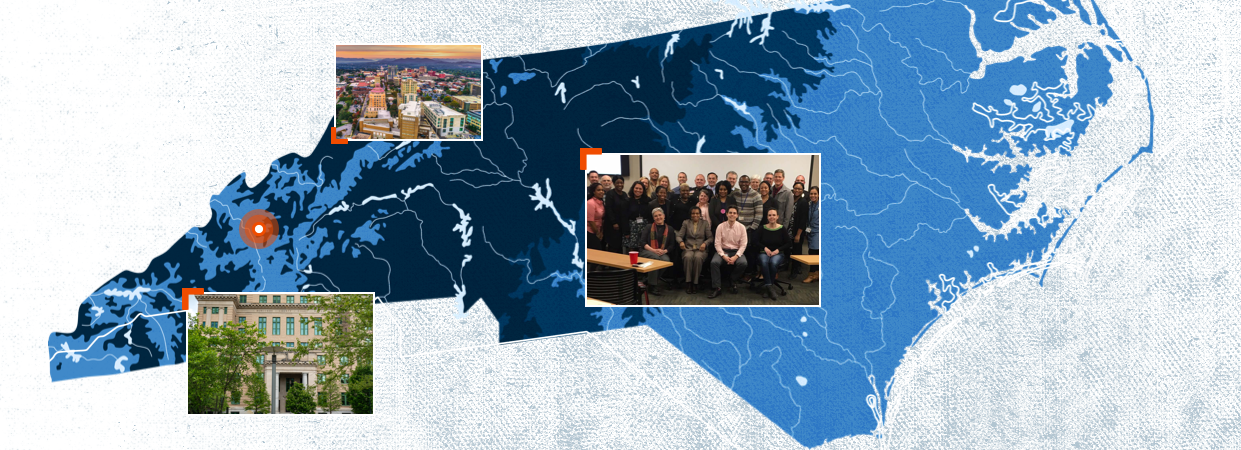
Buncombe County, NC

Change in Jail Population 18%

Action Areas Community Engagement Courts Data Analysis Diversion Racial and Ethnic Disparities

Last Updated

Background

Over the past decade, the Buncombe County jail population has fluctuated, but when the county joined the Safety and Justice Challenge in 2018, the jail population had grown to historically high levels. At that point, the data suggested that the percentage of females in the jail would rise so high that by 2020, the facility would be over capacity.

While there were a range of reasons that people have been detained in the jail, the main drivers of the jail population were pretrial defendants and the length of stay. Between 2015 and 2018, the pretrial population grew nearly 15%, from just over 300 to 350 people awaiting trial.

Detention continued to disrupt the lives of people’s families and communities. It led to higher re-arrest rates and produced worse case outcomes, including people cycling in and out of jail. A high percentage of people in jail had an identified mental health issue, and these individuals often experienced longer stays in pretrial detention. The impact of jail was placing a particularly heavy toll on Black, Indigenous, Latinx, and other people of color.

Strategies

Since joining the Safety and Justice Challenge, Buncombe County has advanced a number of strategies to rethink and redesign its criminal justice system so that it is more fair, just and equitable for all.

01

ENHANCING PRETRIAL RELEASE

The county continues to enhance strategies for pretrial release, including pursuing diversion options, especially for people with substance use disorders; introducing a structured risk assessment to inform magistrates’ pretrial release decisions; and maintaining the use of non-financial release conditions and focusing on safely releasing individuals charged with non-violent offenses.

02

IMPROVING CASE PROCESSING

The county continues to increase efficiencies in case processing in several ways: creating a Jail Review Team and expanding its focus to include criteria for unsecured bonds and parameters for detention; reviewing cases for early release of people who have received jail sentences and identifying non-jail alternatives for certain charges; and increasing early access to defense counsel.

03

INCREASING COMMUNITY ENGAGEMENT

The Community Engagement Workgroup held a series of listening sessions to create space for community members to share experiences and concerns and generate solutions. Looking ahead, the workgroup will provide education on the justice system, collaborate with community members to develop interventions that address community safety and drivers of incarceration; and partner with community groups on events.

04

BUILDING COLLABORATIVE RACIAL EQUITY

To advance racial equity in its justice system, the county has hired a coordinator to champion collaborative racial equity work; is expanding data analysis and the review of policies and practices using the local Racial Equity Workgroup’s equity tool; continues to train stakeholders; and partners with community members to discuss challenges and co-design solutions and interventions.

05

ADVANCING COMMUNITY SAFETY & VIOLENCE PREVENTION

The county launched a new initiative in 2020 to work with community partners to identify strategies to address violence and work towards community healing, through investing in community-led initiatives and engaging stakeholders in developing a collaborative and coordinated plan to prevent and respond to community violence.

Results

As a result of the strategies above, Buncombe County has made progress towards its goal of rethinking and redesigning its criminal justice system. Specifically, the county has been able to safely reduce its jail population. In 2020, there was an increase in the number of people charged with lower level offenses released without having to pay bail/bond, and these individuals had decreased recidivism rates compared with similar releases in 2019.

Quartery ADP for Buncombe County (2018-2026)

17.9% from baseline

More Results

Key to the success of the county’s Safety and Justice Challenge work to date has been the creation of the Community Engagement Workgroup (CEW). Community interest in advancing change in the justice system has been high and progress has been made to increase public involvement in this work. The county has increased the representation of community members across workgroups and on councils, intentionally engaging people impacted by the justice system. As of May 2021, the CEW had hosted nine engagement events reaching over 500 participants. As a result of community engagement efforts, the information from these conversations was shared with other workgroups in the justice system and informed the inclusion of the county’s community safety and violence prevention strategy.

To better embed racial equity in efforts to transform the justice system, the Racial Equity Workgroup (REW) has held over 15 educational and training opportunities, both internally and with broader justice system stakeholders and partners. The REW has analyzed disparities across justice system decision points, developed strategies to incorporate a focus on equity, and laid the foundation for the County’s proclamation of Racism as a Public Safety Emergency. The REW developed a Racial Equity Tool to identify policies and practices contributing to inequities, and is designing a local equity curriculum for justice system partners.

Collaboration between the county’s behavioral health and criminal justice partners has focused on screening people in jail for diversion to treatment and supporting planning for re-entry into the community. More specifically, the county was able to enhance its Familiar Faces program for individuals with complex needs to reduce arrests and increase collaboration across service providers. Between January 2020 and January 2021, the Familiar Faces program coordinated care of 15 individuals and clients saw a 45% reduction in arrests and reported increased collaboration across service providers. From July 2020 to March 2021, more than 100 clients were released from jail to treatment through the diversion program for substance use.

With the addition of a re-entry case manager in October 2020, 28 individuals were able to receive additional case management support upon release. Of these clients, 86% engaged in more community-based mental health treatment; 75% were able to establish and maintain stable housing; 75% reported abstinence from and/or a decrease in substance use; and 93% did not experience rearrest within the reporting period.

Finally, thanks to the support of the Safety and Justice Challenge network, strong collaboration in the criminal justice system to-date, and community partners working toward the goal of safely reducing the jail population, the county was able to respond quickly during the COVID-19 pandemic and simultaneously protect public health and public safety.

Remaining Challenges

Buncombe County is focused on addressing its remaining challenges in its local justice system.

While the county has seen progress with safely decreasing its jail population, the proportion of Black people in jail reached its highest levels in July 2020, which was also the point where the jail population was at its lowest level. Moving forward, the county is focusing on root causes of inequities, including investing in and growing the new community safety and violence prevention initiative.

In addition, the limitations of the state-based court reminder system have been a consistent challenge as the county has worked to improve access to reliable court reminders and reduce failures to appear in court. There has also been confusion around who is expected to appear in court during the pandemic. To address this, the county is working to try to coordinate messaging across court partners to communicate with the public about expectations related to appearing in court during the pandemic.

Lead Agency

Buncombe County

Contact Information

Tiffany Iheanacho or Hannah Legerton

Partners

There are two groups through which community leaders and organizations engage with reform strategies.

First is the Justice Resource Advisory Council (JRAC), which is comprised of District and Superior Court Judges, Clerk of Court, Magistrate, District Attorney, City Manager, City Mayor, Public and Private Defense, Law Enforcement, Bureau of Identification, Pretrial Services, Community Corrections, Juvenile Justice, Behavioral Health Managed Care Organization, representatives from the Office of the County Manager and Board of Commissioners, and Community Members.

Second is the Community Engagement Workgroup, which was established after the county received its first SJC Implementation award. The role of this group has been to infuse community voices and perspectives throughout the work of reducing jail population and racial disparities. CEW is comprised of a range of individuals, including people with lived experience and representatives from organizations providing direct support to people involved in the justice system.

Follow @buncombeGov

Blog Posts

Missoula County, MT

Change in Jail Population 14%

Action Areas Collaboration Data Analysis Racial and Ethnic Disparities

Last Updated

Background

In Missoula County, people being held pretrial and people with behavioral health needs in the jail have been key drivers of the jail population. In addition, a significant portion of the jail population are individuals who failed to appear for court, violated probation, or had their bond revoked.

In 2017, the jail pretrial population alone was 34.4%. During the same year, 64% of all low and low moderate-risk defendants remained detained beyond three days, spending an average of 12.6 days in jail.

Because of insufficient support and services, people who have untreated mental health and substance use issues too often cycle in and out of jail instead of getting the treatment they need.

In addition, people of color, particularly Native Americans, have been disproportionately arrested and incarcerated.

Finally, siloed criminal justice data systems have made it difficult to use data to identify systems-level issues and drive decision-making. Limited coordination between the criminal justice system and social services has also created significant frustration and barriers for those who need help from both.

Strategies

Since joining the Safety and Justice Challenge, Missoula County has advanced a number of strategies to rethink and redesign its criminal justice system so that it is more fair, just, and equitable for all.

01

INTERAGENCY COLLABORATION

The county created and implemented a Criminal Justice Coordinating Council, a formal committee made up of key criminal justice system stakeholders who are either elected or senior-level policymakers. These stakeholders meet regularly to discuss criminal justice reforms.

02

ENHANCED DATA

The county enhanced data collection and analysis across the criminal justice system. This included funding a data analyst specialist to create data reports and data dashboards and evaluating criminal justice policy and program initiatives underway in the county.

03

ELIMINATING RACIAL DISPARITIES

The county is working to reduce lengths of stay for people of color by funding a peer support specialist to assist Indigenous defendants in navigating the criminal justice system and to reduce failures to appear for court and probation violations. Jail data is also monitored to identify areas for improvement and needed resources.

04

IMPROVED CASE PROCESSING

To reduce short-term jail admissions and average length of stay for people charged with non-violent crimes, the county implemented case processing efficiencies in the Justice and District Court to reduce time for people from their initial appearance in court to arraignment. In addition, the county adopted an objective pretrial risk assessment tool to assist release decisions to resolve criminal cases quickly and fairly.

05

TIMELY SUBSTANCE USE EVALUATIONS

The county worked to offer more timely chemical dependency evaluations through the Office of the Public Defender to reduce time in custody and increase referrals to diversion opportunities.

06

PRE-ARREST DIVERSION

Using the findings of the sequential mapping exercise, the county piloted a mobile crisis team to respond to non-emergency calls for service that involved homelessness, behavioral health issues, and societal welfare concerns. The mobile crisis team includes an EMT and a mental health professional who work with local service providers to provide care that redirects individuals in crisis away from the justice system.

Results

As a result of the strategies above, Missoula County has made progress towards its goal of rethinking and redesigning its criminal justice system.

Quartery ADP for Missoula County (2018-2026)

14.3% from baseline

More Results

As a result of effective pretrial strategies, misdemeanor-level average daily jail population has been reduced by over 50% while misdemeanor-level admissions have been reduced by over 60%.

The county has increased supportive services and material supports to justice involved individuals. For example, justice-involved individuals represented by the Office of the Public Defender and requiring a chemical dependency evaluation typically receive one within 10-12 days, with a shorter timeframe for in-custody defendants.

As a result of increased efficiencies in case processing, on average, time from initial appearance in Missoula County Justice Court to arraignment in Missoula County District Court has been reduced by one week.

There is productive collaboration among key stakeholders, including judges, law enforcement, public defenders, community members, and many others, who support the county’s efforts to make the local justice system fairer and more equitable. Key stakeholders are routinely seeking data to inform their understanding of the local justice system, and data is playing an increasingly prominent role in decision-making.

The county has also created deep relationships with individuals, community groups, and elected officials who are engaged in conversations and decision-making related to the local justice system. The creation of the Criminal Justice Coordinating Council has also resulted in a significant increase in the participation of community partners in tackling justice system problems.

In the wake of the national protests and reckoning for the murder of George Floyd in Minnesota, Missoula community members are increasingly engaged in understanding racial and ethnic disparities present in the judicial system. Their activism led to the Missoula City Council and Missoula County Commissioners to provide critical funding to the development of a Mobile Crisis Unit—a non-law enforcement responder team for people dealing with mental health and substance use related crisis situations.
Remaining Challenges

Missoula County is focused on addressing its remaining challenges in its local justice system.

COVID-19 has highlighted the significant need for supportive services and effective community supervision resources in Missoula County, as it dramatically changed the composition of the jail population and underscored the overrepresentation of Native Americans in the jail. As a result, the county’s strategies have been updated to respond to both long-standing and newly identified challenges.

To address the long-standing and new challenges, Missoula County is moving forward with a number of strategies. These include creating a community-supported release program; expanding the use of court hearing reminders; funding a dually-licensed social worker to conduct chemical dependency and mental health evaluations for Probation and Parole; improving trust in and reliability of the Public Safety Assessment; ensuring conditions of release imposed correspond to the appropriate risk level; improving the pretrial supervision drug testing policy to support success of supervised individuals; funding a Native American Peer Support Specialist within the Office of the Public Defender; creating a dashboard focusing on identifying specific racial and ethnic disparities at key decision points in the justice system; and reviewing and ensuring that criminal justice policies are equitable from paper to practice.

Lead Agency

Missoula County Community Justice Department

Contact Information

Chelsea Wittmann
cwittmann@missoulacounty.us

Partners

Missoula County Board of County Commissioners, City of Missoula, Office of the Mayor, Missoula City Council, Fourth Judicial District Court, Missoula County Justice Court, City of Missoula Municipal Court, Missoula County Sheriff's Office, City of Missoula Police Department, Missoula County Attorney's Office, City of Missoula Attorney's Office, Office of the State Public Defender - Missoula Office, Montana Department of Corrections Probation and Parole – Missoula Office, Missoula Correctional Services

Blog Posts