Why Are Jails Still Failing to Accurately Track Race and Ethnicity?

By: Nancy Rodriguez

Data Analysis Incarceration Trends Racial and Ethnic Disparities October 15, 2021

Hispanic Heritage month is an important time to reflect on Hispanic Heritage generally, including how far we still have to go to ensure equitable inclusion and access to justice. One aspect of this is to understand the overrepresentation of and disparate outcomes for people of color, including Latino/Latina/Latinx folks involved in the criminal legal system. Accurate data is needed for that.

Yet, remarkably, we do not know how many Hispanic and Latino people are arrested or how many are incarcerated in the United States because we are not collecting the data. Research by the Urban Institute shows 40 states report race in arrest records, but only 15 report ethnicities.

Counting or failing to count Latinos in our crime metrics has impacts far beyond this specific group of people. Failing to count Latinos means they are often captured as White people in the data. In addition to obscuring the impact of policies on Latinos, this failure obscures disparities between White and Black people in the system.

Without accurate representation we are limiting our chances of advancing racial equity, which is increasingly acknowledged as a key part of legitimate and sustainable strategies to reduce incarceration in the United States.

Self-Identification of Ethnicity Matters

Nineteen percent of America’s population identifies as Hispanic or Latino, but it is important to note that this population is not monolithic. It is a diverse and multiracial group. It encompasses an array of cultures, life circumstances, and regions of the world, including Cuba, Mexico, Puerto Rico, South and Central America, and the Dominican Republic. In the criminal justice system and elsewhere, it is important to identify people in the way they self-identify. Recently more people are using the term Latinx, and it is important to use the term for people who self-identify as such. Research by Pew Research Center shows that only about three percent of Hispanics use the term, countrywide. Sixty-one percent prefer the term Hispanic, and about a third prefer Latino.

Excluding Latinos from Criminal Justice Data Perpetuates Bias

Most states do not track race and ethnicity in a systematic way within local justice systems. The research shows that only one state, Alaska, tracks race and ethnicity consistently across all aspects of its prison population including parole and probation. Other states may be tracking this information but are not reporting on it publicly. This leaves Latinos largely invisible in data-driven discussions about reform. Data informs public policy and excluding Latinos from data collection excludes them from criminal justice policy discussions.

Perhaps most shockingly, states with large Latino populations do not necessarily keep better data. Most jurisdictions rely on arresting officers to classify the race or ethnicity of a person when they are arrested. If officers do not ask a person how they self-identify, bias in race and ethnicity can arise. For example, individuals who are light-skinned may be classified as White, and darker-skinned individuals will be classified as Black. Until about 1980, almost every jurisdiction categorized Latino people as White.

There is much room for improvement in how we categorize people. Because we know that front-end decisions impact subsequent decisions, accurately classifying people in the early stages of system involvement is key.

The MacArthur Foundation’s Safety and Justice Challenge is working to reduce jail populations across America. It focuses significant attention on people who languish in jail before trial, who have been arrested on low-level crimes who are not a danger to their communities, and who cannot afford the cost of cash bail. As a result, people working together in cities and counties participating in the Safety and Justice Challenge are in a good position to influence change that leads to improved metrics on race and ethnicity. This represents a significant opportunity to further racial equity.

Organizing For Change in a Multiracial Society

I have heard often from people working to change the way Latinos are treated in the justice system that it is particularly difficult for us to organize when we are not accurately counted. Indeed, most people remain surprised when they hear the depth of this inconsistency. System actors often rely on existing, incomplete data infrastructure to collect and monitor data. This includes the limited classification for capturing race and ethnicity. There are still tremendous variations between agencies, states, and systems.

It is encouraging to see some SJC cities and counties be proactive in improving their data infrastructure to reflect the population they serve. In the end, we cannot measure the impact of reforms geared toward reducing disparities and inequalities if we do not have a mechanism that accurately counts people. The tracking of race and ethnicity across justice systems needs to change with the times.

The Overrepresentation of Indigenous People in America’s Jails: What Needs to Change?

By: Matt Davis

Human Toll of Jail Incarceration Trends Racial and Ethnic Disparities October 8, 2021

October 11, 2021, marks Indigenous Peoples’ Day—a tradition first instituted in Berkeley, California, in 1992 as a counter-celebration to the 500th anniversary of Christopher Columbus’s arrival in the Americas and the federal holiday honoring him. The goal of Indigenous Peoples’ Day is to recenter Indigenous people’s stories, celebrating their culture and history, and to highlight the grave impact that Columbus and colonialism had on them.

This year, the MacArthur Foundation’s Safety and Justice Challenge (SJC) is using the day to highlight the overrepresentation of Indigenous people in jails across the country while we are also actively pursuing solutions. Some estimates suggest that Indigenous people are jailed at twice the rate of White people in the U.S. We spoke to Indigenous people working to reform local criminal justice systems through SJC to explore how we can all work to reduce Indigenous populations in jails.

Carolyn Olson works in the state attorney’s office in Pennington County in South Dakota. She identifies as biracial, Indigenous (from the Anishinaabe Monacan, and Eastern Band Cherokee tribes) and White, and serves as the local SJC community liaison attorney. Census takers estimate that the Native American population of Pennington County is between 10 and 25 percent, but the jail population in Pennington County is 55 percent Indigenous.

“It’s unacceptable, the disparity,” Carolyn said. “It’s way too high.”

Carolyn spent 18 years working as a prosecutor in Pennington County and has seen how Indigenous people are disproportionately impacted by the criminal justice system there. Now Carolyn is spending her time connecting system-impacted Indigenous individuals with existing and emerging Indigenous resources in the area, so that they can better access services to help them heal, overcome addiction and trauma, and stay out of jail.

Carolyn has worked with an Indigenous-focused group called I. Am. Legacy which was founded by Erik and Morgan Bringswhite to build trust in the county and on neighboring tribal reservations. I. Am. Legacy offers culturally relevant programming for people who are involved with the criminal justice system—particularly those who might have encountered law enforcement because of an underlying behavioral health issue, like substance abuse disorders. I. Am. Legacy helps people reconnect with their culture as part of their work to overcome trauma and the root sources of their substance abuse disorder. In addition, Carolyn has also built bridges with criminal justice system programs, law enforcement, as well as other Indigenous-rooted services.

“As a Native person working in the criminal justice system for so long, I really do think systemic racism plays a big role in the way the system was set up and operates,” Carolyn said. “The volume of cases coming through the system means that hardworking, well-intentioned people don’t have time to reflect on why things are happening. The work I’ve been doing is to get people to see that historical trauma impacts Indigenous people who go through the system and work to overcome things like substance abuse disorders. The goal is to connect people to culturally rooted services to overcome some of that, and it’s starting to have an impact.”

Char Green-Maximo recently left her position as the SJC community engagement coordinator in Minnehaha County, South Dakota, to join South Dakota Urban Indian Health, which provides culturally based mental health and substance use treatment, mentoring, arts programs, and other services to Indigenous people. “Judges are referring people to the services, and they are starting to have an impact,” Char said.

Originally from Fort Peck, Montana, Char is from the Nakoda and Dakota tribes. She has an older brother who spent time incarcerated, and while she knew about the overrepresentation of Indigenous people in prisons and jails, she did not realize the impact on people’s lives until she visited him.

“I went to see him, and I always knew the rates of imprisonment for Indigenous men were high, but that was the first time I saw so many Native men together,” she said. “And it was just mind-blowing. I went from reading a number to seeing the people, and it was just a whole different thing. It’s just a lot to take in when you consider the families impacted.”

Char meets often with law enforcement in the county as part of her work. While there has been an occasional Indigenous person in the police department, and there is one Indigenous judge, locally, most people working in law enforcement and the criminal justice system are White.

“They see the overrepresentation of Indigenous people, but it’s hard to soak it in, because most of them didn’t grow up by reservations or around the Native American population, so they don’t know anybody, personally, like that,” Char said. “The only time they’re interacting with Indigenous people is when they’re arresting them. I think sustained training for law enforcement would help them understand the deeper issues that contribute to some of the issues. And I don’t mean a two-day training but ongoing work. These issues often traumatize people as children and take time and training to understand over a long period as you see the behaviors coming out in response to stimuli.”

“They want to recruit more Indigenous officers, but it’s about forming more authentic relationships in those communities earlier so that people know you more and trust you more,” she added.

In Missoula County, Montana, county participating in SJC, Dr. Desiree Fox and Dr. Ciara Hansen are clinical psychologists who are working on an upcoming paper with support from the MacArthur Foundation about the overincarceration of Native Americans. They worked with the Confederated Salish and Kootenai Tribes—of which Desiree is a member—on a project designed to facilitate successful return to the reservation community for Indigenous people who had been incarcerated.

“People were coming back to the reservation and facing sentencing conditions that were impossible to meet,” said Ciara. “People were going back to prison at disproportionate and alarming rates for things like not being able to line up anger management training. It’s impossible to access that training when you’re living on a reservation.”

Ciara and Desiree collaborated with the managing attorney at the Confederated Salish and Kootenai Tribal defender’s office to develop a tribal reentry program based on the “holistic defense” program developed by attorney Robin Steinberg, the founder and former executive director of the Bronx Defenders in New York. Under the holistic defense model, public defenders work in interdisciplinary teams that include social workers, mental health professionals, and others, to address not only a client’s criminal case, but also its causes and wider consequences not just for the individual accused of a crime, but for their families and wider circle. For example, if a person is sent to jail and spends time away from their family, unable to be a parent or work to earn money for the family, then when they return, the consequences can be severe. Likewise, it is possible that a person committed a crime because of a behavioral health issue that can be treated.

In response, Ciara and Desiree began to develop new risk assessment tools that were more sensitive to the physical, social and cultural needs of Indigenous people.

“The typical mainstream predictors for recidivism are not the same as they are for Indigenous people,” said Desiree. “For example, the court system might increase your risk because of where you grew up or how you grew up. And now you’re automatically considered an increased risk of recidivism because you grew up on a reservation. That inherent bias discriminates against Indigenous people in a way that is out of control.”

“While we were doing the program, we realized that all of the risk assessments that were being used to provide insight about the conditions people need in their sentencing were not based on Native populations,” Ciara said.

“Systemic biases in America’s government and legal systems are rooted in historic genocide perpetrated against Native people,” said Dr. Selso Villegas. He is a member of Pima County, Arizona’s Collaborative Community, part of the local SJC’s work. He is also a member of the Tohono O’odham Nation and the Executive Director of the Nation’s Department of Water Resources. Selso thinks that mainstream America believes its in their best interest to not acknowledge the struggles undergone by Native people, perhaps thinking it is better to ignore it rather than deal with it.

“We’re invisible to people because that’s the way many in society want it,” he said. “Not too many people have Native friends. We know we’re not a priority to Pima County. We are sort of a nuisance. For example, my grandson, who has been diagnosed with Fetal Alcohol Disorders, has not had rehabilitation or behavioral training recommended to the Court. He is doing time for the addictions of his parents. We also understand that tribal needs are an afterthought in local, state, and federal government operations.”

Selso recently participated in a wellness day focused on mental health and self-care sponsored by two local tribes. He set up a booth to talk to people about how to go to court to expunge outstanding warrants, the majority being failure to appear warrants. He signed up over 30 tribal members and talked to over 100 people about taking advantage of the Pima County Court program.

“For a short amount of time, we got some people to believe that they had a chance in the legal system,” he said. “And that’s good. I felt like I was contributing to the cause because it will keep at least a hundred people out of jail.”

Selso wants to remind people that Native people may have been forgotten by many, but that Native people take great pride in this country. “It is our home too,” he said. “We are the first Americans.”

Renee Bourque, a citizen of the Mvskoke Nation from Oklahoma, is the Director of the Victim Assistance to Support Tribes (VAST) Center at the National Center for Victims of Crime, a strategic ally of the Safety and Justice Challenge. VAST provides technical assistance and training on Indigenous issues to tribal governments and victims’ service agencies, but also to any federal, state, or non-governmental agency that serves Indigenous people. The initiative’s staff are Indigenous by intention so that they can build relationships across the criminal justice system and Indigenous partners.

Renee attributes historical and generational trauma perpetuated against Indigenous people as a root cause of overrepresentation in the justice system.

“I’ve been working with crime victims in Indian Country for 20 years, and it is so evident that hurt people hurt people,” Renee said. “It’s not uncommon in Indian Country for you to serve a victim one week and then in a couple of months, that person may be the offender, and you might be serving the same family.”

She points to news stories coming out of Canada about the murder of Indigenous children at boarding schools and says it is a moment to build awareness of the harms perpetrated on Indigenous people across North America. Secretary for the Interior Deb Haaland has launched an investigation into the lasting effects of the more than 350 government-funded Indian boarding schools in the United States. The remains of 10 Native American and Alaska Native children were recently returned home to their communities from the Carlisle Indian Industrial School in Pennsylvania.

The school’s chilling motto, like many boarding schools across the United States for Indigenous youth attempting to “Americanize” them, was to “kill the Indian, save the man.”

“Most Americans also don’t realize that there are 574 tribal nations in the United States, with 229 in Alaska, and the rest in the lower 48,” Renee said. Each one is an individual sovereign nation with their own codes, laws, courts, traditions, language, and treaties with the U.S. government.

“We each have a different creation story,” Renee said. “We’re all different. And I think the biggest misnomer is that ‘Indigenous people’ all get lumped into one group. But tribal affiliation for each group is important. It’s most important to me to identify as a ‘Mvskoke’ woman, for example. There’s still so much education that needs to be done.”

Aside from a deeper understanding of the complexity facing Indigenous people in the U.S., the most important thing on October 11, Renee said, is for people across the country to understand the history of these issues.

“It’s only by understanding our history and treatment of our people that we may move forward,” she said. “The treaties must be honored, so that we may honor our ancestors and continue to grow and prosper as the first peoples of this land. We are still here!”
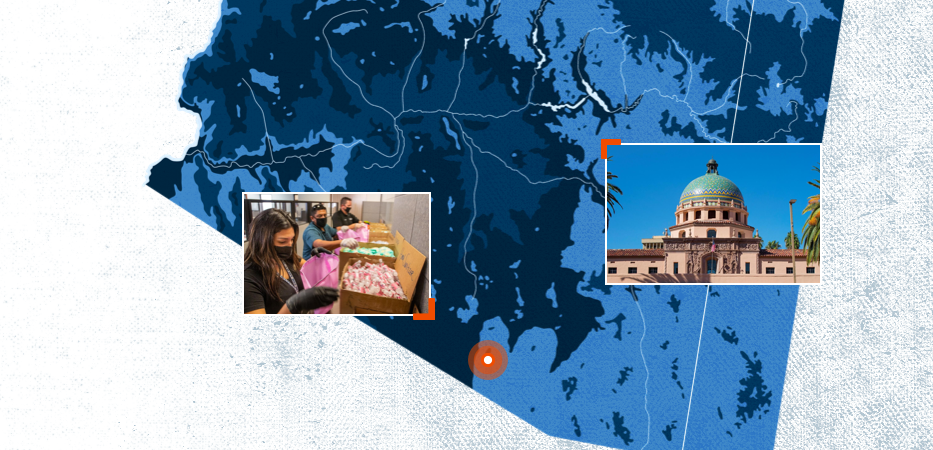
Pima County, AZ

Change in Jail Population 8%

Action Areas Collaboration Community Engagement Diversion Racial and Ethnic Disparities

Last Updated

Background

In 2014, the Pima County Adult Detention Center was nearing capacity. The county grappled with the decision to either build a new and bigger jail or find ways to safely reduce the jail population. With local jail expenditures amounting to roughly $66 million a year, this crisis had a direct impact on taxpayers.

Snapshots of Pima County’s jail population in 2011-2014 showed that more than 80% of people in the jail were typically being held while awaiting trial. The main drivers of the pretrial jail population, based on 2014 data, include warrants for failures to appear in court (93% of which related to underlying misdemeanor charges), misdemeanor charges like shoplifting and DUIs, and lower-level felony charges, such as possession/use of a dangerous or narcotic drug, possession of drug paraphernalia and aggravated criminal damage.

The 2014 data also showed that people of color were over-incarcerated in the county jail. Specifically, 9.6% of Black people were being held pretrial, compared with 3.3% of the county’s total population. In addition, 40.7% of Hispanic people were being held pretrial, compared with 35% of the county’s total population.

An impact was also felt by the county’s tribal communities. Native Americans made up only 2.4% of the county’s total population, but they represented 6.75% of the pretrial population, and 8% of those held in jail on failure to appear charges.

Finally, in 2014, mental illness and substance use affected an estimated 60% of the jail population in Pima County.

Strategies

Since joining the Safety and Justice Challenge, Pima County has advanced a number of strategies to rethink and redesign its criminal justice system so that it is more fair, just and equitable for all.

01

PRE-ARREST DEFLECTION

This pre-arrest deflection effort is a strategy chosen after a review of jail data showed that the Tucson Police Department accounted for nearly half of the total bookings in the Pima County jail. Instead of incarceration, the pre-arrest deflection strategy redirects individuals with substance abuse and/or mental health issues to community treatment resources.

02

EXPANDED PRETRIAL SERVICES

Pretrial Services expanded to include a substance abuse caseload, in addition to its established behavioral health caseload.

03

IMPROVED PROBATION PRACTICES

The Adult Probation Department of the Superior Court in Pima County changed its model to recommending jail stays for probation violations only as a final resort, after exhausting every other possible option to continue community supervision. Pima County Probation now accomplishes more to ensure successful community supervision and avoid probation revocations.

04

JAIL POPULATION REVIEW

The Jail Population Review Committee identifies people with felony charges who pose little risk to public safety and may be safely released from the jail while awaiting appearances before the Court. Thirty members meet weekly and represent county and city agencies, community treatment providers, peer networks, supportive housing providers, and community members. Case management strategies are identified and recommended.

05

STEPS DIVERSION PROGRAM

Supportive Treatment and Engagement Programs (STEPS) is a felony diversion program that launched in 2021. STEPS is a new pre-charging drug court program, aimed at offering participants an opportunity to connect with substance abuse treatment rather than cycle in and out of jail. STEPS has the potential to divert an estimated 500-700 pretrial defendants per year from criminal case processing.

06

COMMUNITY ENGAGEMENT

The county pledged to engage the community in reimagining its justice system. This included holding Tribal Listening Sessions; developing a trauma-informed mentorship program for young Black males; and creating a robust Community Collaborative comprised of justice systems leadership with community representatives to collectively transform the justice system.

Results

As a result of the strategies above, Pima County has made progress towards its goal of rethinking and redesigning its criminal justice system.

Quartery ADP for Pima County (2016-2026)

7.9% from baseline

More Results

From March 2019 to March 2021, over 1,200 individuals awaiting court appearances for felony charges were released through the efforts of the Jail Population Review Committee, either via modified conditions of release and community supervision or to residential housing or treatment. These releases equate to over 42,000 jail days reduced at a cost of $127.20 per bed day, adding up to savings in detention costs and a reduced average daily jail population.

Pima County Superior Court’s Enhanced Supervision program helped save an estimated 4,633 jail bed days for individuals in the first and second quarters of Fiscal Year 2020-2021, through more robust staffing and case management.

Pima County Adult Probation Department released their “Probation Strategy CQI Dashboard” for FY 2020-2021, demonstrating a variety of successes as a result of their strategies. Among those include a significant reduction in the numbers of Petitions to Revoke (PTR) filed. Fewer PTR’s filed result in fewer persons arrested on a probation violation warrant and booked into the county jail. Rather than file a PTR, probation officers work harder to reengage probationers and find solutions to barriers to success.

The county’s data collection and analysis efforts have improved with the placement of additional staff, providing data to the Tucson Police Department, a dedicated Data Coordinator for the Justice Services Department, and the Jail Population Coordinator. For example, the data analyst at the Tucson Police Department helped produce interactive data dashboards on a variety of topics including use of force, reported crimes, arrests, traffic collisions, traffic enforcement, and police activity, which will inform future strategies to improve practices within the justice system.

At the onset of the COVID-19 pandemic and due to staffing reductions, the county’s Community Collaborative group fell into a hiatus. The county revived this dynamic group in February 2021 and the focus shifted to seeking out the perspectives and recommendations from members, rather than providing information to members. The Community Collaborative developed an action plan with interrelated areas of work aimed at deepening the county’s connection to the broader community, particularly people who have been historically overrepresented in the justice system.

Remaining Challenges

Pima County is focused on addressing remaining challenges in its local justice system.

While progress has been made, issues of differing database systems, coding systems, and privacy persist, which makes data sharing among the stakeholders challenging.

Enhanced caseloads in Pretrial Services have not made much of a dent in lowering the jail population. The impact of judicial autonomy and decision-making was not factored in considerations of justice reform. When judges are unwilling to consider release recommendations, the best plans for reform can become stalled. Further, if courts do not collect data on judicial decisions, efforts to reduce racial, ethnic, and even income disparities become even more difficult to address.

The pandemic slowed Pima County’s Racial and Ethnic Disparities and Disproportionalities program. At the end of February 2021, the Community Collaborative began meeting monthly and reestablished its Racial Equity Community Action Team, a subcommittee whose purpose is to develop and implement a plan to engage the community through a series of Community Dialogues that will collaborate and coordinate with community organizers, identify gaps, and lead to policy recommendations to the County’s Board of Supervisors.

In order to sustainably support long-term strategies to reduce racial and ethnic disparities and disproportionalities in the justice system, while ensuring community voice and experience is incorporated into all Pima County’s justice reform work, Justice Services has hired a Community Engagement and Equity Specialist. This position, funded with General Funds, will lead the Community Collaborative, future Listening Sessions, and work to incorporate data-driven decision making into trauma-informed policy and programming.

Justice Services also contracted with a Tribal Engagement Specialist (member of the Tohono O’Odham Nation) to lead a series of Listening Sessions with two local tribes. Due to both shutdowns related to the pandemic, as well as cultural stigmas associated with discussing justice system involvement, the sessions struggled to yield results. Pima plans to revisit this strategy once pandemic restrictions are lifted, with future guidance from local experts who can inform a culturally-competent approach.

Last, the COVID-19 pandemic has had a significant impact on every aspect of the county’s local justice system and continues to uniquely affect those incarcerated in local jails. The foundation of collaborative, data-driven strategies, including the necessary structures and collaboration from local stakeholders that are in place to support these strategies, has set the county up well to respond to the pandemic swiftly and effectively.

Lead Agency

Pima County Administrator’s Office

Contact Information

Kate Vesely
kate.vesely@pima.gov

Mayra Ramos
Mayra.Ramos@pima.gov

Partners

Pima County Attorney’s Office, Pima County Public Defense Services, Pima County Sheriff’s Department – Adult Detention Complex, Pima County Superior Court, Pima County Adult Probation, Pima County Pretrial Services, Tucson City Court, City of Tucson Public Defender’s Office, City of Tucson Prosecutor’s Office, Tucson Police Department

Follow @PCSafetyJustice

Blog Posts

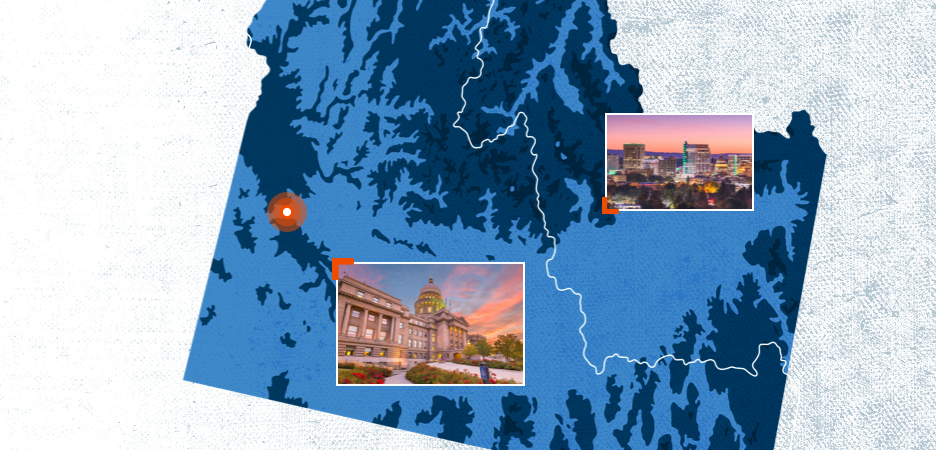
Ada County, ID

Change in Jail Population 9%

Action Areas Community Engagement Courts Racial and Ethnic Disparities

Last Updated

Background

Ada County joined the Safety and Justice Challenge to better understand its jail population and to implement impactful, data-informed changes across the system to reduce the jail population and disparities.

At the time, there was over-reliance on incarceration for lower-risk, non-violent offenders in the jail. The biggest contributors to the jail population were pretrial detainees, accounting for well over 50 percent of the overall population, as well as length of stay. The average length of stay for low- and low-moderate-risk defendants was 56 days.

This overuse of detention caused disruption to the stability of arrestees’ families and communities, and led to higher re-arrest rates.

Strategies

Ada County advanced a number of strategies to rethink and redesign its criminal justice system so that it is more fair, just, and equitable for all.

01

IMPROVED CASE PROCESSING

To improve case processing, the county implemented additional “second look” practices through collaborative efforts by the jail population review team, which includes system stakeholders who meet on a regular basis to discuss case types that drive the jail population and determine potential cases for safe release; reducing timelines for pre-sentence investigations; and speeding up the processing of parole violations.

02

EXPANDED PRETRIAL SERVICES

The county expanded its use of evidence-based risk assessments to help judges measure risk to the community. This helped judges make more informed decisions regarding pretrial release, instead of relying solely on a cash bail system.

03

COMMUNITY ENGAGEMENT

The county facilitated direct, honest conversations with members of its community about their experiences. It also studied relevant arrest and booking data to understand racial disparities in jails. Moving forward, the county is working to engage with the community to develop effective and sustainable solutions to make the justice system more fair and equitable.

04

COURT NOTIFICATIONS

The county created a new text, email and call-based notification system to allow the Ada County Clerk of Courts staff to send alerts to people with upcoming court dates and ultimately, reduce failure to appear rates in court.

05

BEHAVIORAL HEALTH CRISIS CENTER

The State of Idaho opened a new Behavioral Community Crisis Center in Boise to provide support for people suffering from mental illness or substance use issues, a disproportionately high population in the jail. Ada County continues to work closely with the State of Idaho to ensure that the center will be able to serve as many citizens who need it as possible.

Results

As a result of the strategies above, Ada County has made progress towards its goal of rethinking and redesigning its criminal justice system.

Quartery ADP for Ada County (2016-2026)

9.2% from baseline

More Results

Initially, the county struggled to achieve a meaningful decrease in the jail population. The jail facility was continuously over capacity and was burdened by a large state inmate population. Relentless and rapid local population growth as well as limited resources for pre-arrest support, intervention and diversion were also significant factors.

But when the COVID-19 pandemic hit, the strategies that were in place as a result of the Safety and Justice Challenge set the county up to respond quickly and meaningfully to the crisis. COVID-19 posed a serious health risk to the community, people being held in the jail, and staff. To reduce unnecessary exposure and transmission in our jail, the county was able to quickly and dramatically reduce the population to allow for proper distancing and quarantine space. Fortunately, the county had strong, collaborative relationships in place and was able to work with partner law enforcement agencies, public defenders, prosecutors, and the Department of Correction to reduce the jail population swiftly while maintaining community safety and protecting public health. The county continues to review its efforts to ensure that they are having the impact desired.

Beyond the jail reduction, the county also improved the Pretrial unit, by expanding the staffing and adopting the new pretrial assessment tool. The Pretrial program helped many avoid a return to jail after being released safely into the community.

For example, one man was charged with a Felony DUI when he was working as a full-time chef. Being released before his trial allowed him to keep working. During his sentencing hearing, the judge told him because he did well on Pretrial, he would not be serving time in prison. The Defendant now owns his own restaurant and food truck, and just recently opened a second location.

Remaining Challenges

Ada County is focused on addressing its remaining challenges in its local justice system.

Rapid local population growth — and corresponding jail population growth that follows — continues to be a challenge. While the county was able to safely reduce the jail population during the pandemic, the difficulties the jail faced pre-pandemic have not gone away. With all jury trials starting up again after being delayed, the county expects there to be some backup with people who have been in the jail long-term, until the courts can catch up. The COVID-19 pandemic did show what was possible with buy-in from law enforcement, prosecutors, and the District Court.

Another challenge will be continuing the system-wide commitment to the reduction of the jail population without the threat of a once-in-a-lifetime pandemic. The county is developing strategies and collecting data to show partners how crime rates have not gone up as the jail population has decreased, so the work can be sustained after the pandemic.

Overall, the county has learned that meaningful and lasting change is going to be a marathon. Ada County will continue to work towards achieving a more equitable, efficient, and safe system.

Lead Agency

Ada County Sheriff’s Office

Contact Information

Kristen MacLeod
Ada County Sheriff’s Office Criminal Justice Coordinator/Safety + Justice Grant Manager
kmacleod@adacounty.id.gov

Partners

Ada County Clerk's Office, Idaho 4th Judicial District judges and magistrate judges, Idaho Department of Correction, local law enforcement agencies, Ada County Prosecutor's Office, Ada County Public Defender, Ada County Trial Court Administrator, Ada County Commissioners, Boise City/Ada County Housing Authority, Boise State University, community leaders and service organizations, Idaho Commission of Pardons and Parole, Idaho Department of Health & Welfare, mental health professionals, Pathways of Idaho Community Crisis Center, Idaho Black History Museum, state legislators

Follow @AdaCoSheriff

Blog Posts

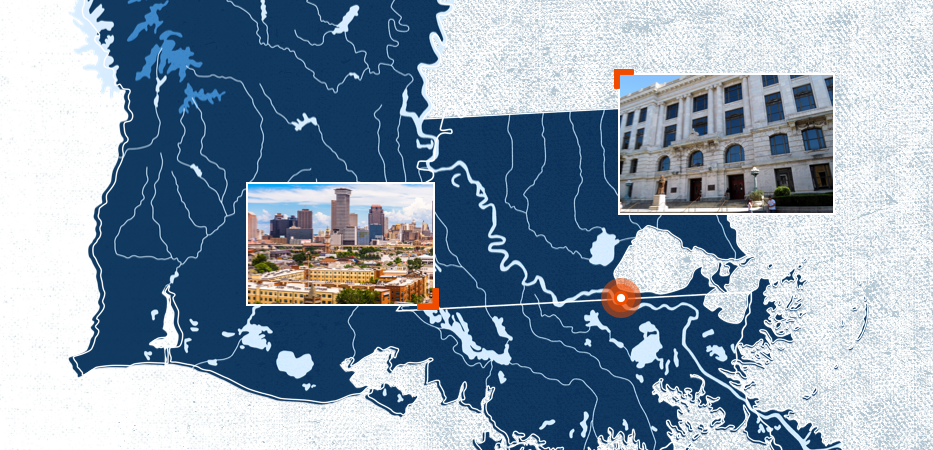
New Orleans, LA

Change in Jail Population 24%

Action Areas Community Engagement Diversion Racial and Ethnic Disparities

Last Updated

Background

When the City of New Orleans joined the Safety and Justice Challenge in 2015, the city incarcerated nearly twice as many people each year as the national average and had a jail population of over 1,500.

Most people jailed (89%) in New Orleans were awaiting a disposition, meaning they had not been tried or convicted of a crime, and thus, constitutionally, were still considered innocent.

People of color were over-incarcerated in the jail. Black men were arrested at twice the rate of white men, while black women were arrested at 1.6 times the rate of white women. This racial disparity is carried over into who gets detained in the jail, where Black men (15-64 years old) comprised 88% of the jail population but only made up 19% of the total New Orleans population.

One of the biggest drivers of disparities in the New Orleans jail population concerned an individual’s ability to pay bail, and in Louisiana money bail is required for every charge upon arrest. Many people were incarcerated because they are poor, not because they pose a risk to the community.

Roughly 30% of the jail population were people with mental health issues and nearly 15% of the population reported a substance use disorder.

Strategies

Since joining the Safety and Justice Challenge, New Orleans has advanced several strategies to rethink and redesign their criminal justice system so that it is fairer, just, and equitable for all.

01

ACCESS TO DEFENSE COUNSEL

The Public Defender at First Appearance Initiative helps ensure that low and low-moderate risk defendants are not detained because of inability to pay. Research shows that judges are more likely to release defendants on their own recognizance and are more likely to reduce bonds to an attainable amount when defense counsel are present at first appearance. The initiative is supported by two attorneys and client advocates.

02

IMPROVED PRETRIAL SERVICES

Pretrial Services allow courts to make sound decisions to release people from jail while awaiting trial, without putting public safety at risk. The initiative includes the implementation of a Public Safety Assessment and expanding the use of Release on Recognizance. Also, the Community Supported Release initiative supports people with services (i.e., child care) to eliminate barriers that impact court date attendance.

03

COMMUNITY ENGAGEMENT

The Community Advisory Group (CAG) consists of 28 community members who are committed to holding criminal justice agencies accountable. The CAG members generously volunteer their time and effort to collaborate with public agencies and officials. Members include residents from across the city, social and legal professionals, university faculty members, victims of crime, and individuals with lived experience.

04

DIVERSION TO SERVICES

New Orleans’ Law Enforcement Assisted Diversion (LEAD) provides local police officers with the resources and support to divert an individual with mental illness, substance use, or social challenges, at the point of arrest to intensive case management and community-based treatment options. LEAD aims to reduce the recidivism of individuals with mental and substance use disorders. It will be expanding city-wide.

05

CENTERING RACIAL EQUITY

New Orleans’ approach to reducing ethnic and racial disparities within its justice system is three-fold: Use research best practices; conduct data collection and analysis on disparities using a decision point analysis and interactive data dashboards; and establish an Ethnic & Racial Disparity Working Group (see below).

06

RACIAL DISPARITY WORKING GROUP

The Ethnic and Racial Disparity Working Group sets specific, measurable, and achievable goals to reduce justice system involvement for people of color. The group includes half government agency and half community members. It analyzes disparities across the justice system; develops or adjusts strategies to bring a stronger equity lens; develops goals for reducing racial disparities; and evaluates impacts of the work.

Results

As a result of the strategies above, as well as other key strategies such as increased discretion for law enforcement to issue citations and the decriminalization of minor drug offenses, New Orleans has made progress towards its goal of rethinking and redesigning its criminal justice system, exceeding the population reduction targets it set out to achieve.

Quartery ADP for New Orleans (2016-2026)

23.6% from baseline

More Results

The Sandy Krasnoff Criminal Justice Council, the Jail Population Management Subcommittee and the City Council’s Criminal Justice Committee have been actively leading initiatives that have manifested system change in New Orleans to date. Stakeholder buy-in has been instrumental in successful implementation of many of the Safety and Justice Challenge reforms.

New Orleans’ Average Daily Population in the jail has been further impacted by initiatives to reduce the average length of stay for low-risk felony defendants, increase the use of Release on Recognizance (RORs), facilitate risk-based decision making, invest in first appearance advocacy, and conduct bond reviews. This strategy led to a 40% increase in RORs for lower-risk defendants at first appearance, and a 47% increase in the proportion of lower-risk defendants released within three days.

Remaining Challenges

New Orleans is focused on addressing its remaining challenges in its local justice system.

In New Orleans, COVID-19 brought many challenges, while also illuminating and creating an environment that encouraged further and more inventive and adaptive system reform. During the pandemic, the New Orleans jail population dropped to historic lows, which demonstrated that incarceration could be successfully minimized, and without sacrificing public safety.

The strategies have shifted as the pandemic has progressed. The pretrial services program enrolled more individuals, most individuals successfully completed the prosecutorial diversion program, and the 2021 Diversion Program expanded eligibility criteria to divert more people. The public defenders and criminal court judges continue to work to ensure that more individuals are released on no- or low-bond amounts, and stakeholders have regularly met on a monthly basis to continue to respond to new challenges, such as court case backlogs due to COVID-19 prohibiting jury trials.

The city’s challenge now is to sustain positive measures beyond the immediate crisis.

Lead Agency

Office of Criminal Justice Coordination

Contact Information

Commissioner Tenisha Stevens

Partners

New Orleans City Attorney, New Orleans City Council, New Orleans Health Department, New Orleans Municipal & Traffic Court, New Orleans Police Department, Orleans Parish Criminal District Court, Orleans Parish District Attorney, Orleans Parish Sheriff’s Office, Orleans Public Defenders, New Orleans SJC Community Advisory Group, Mayor’s Office Human Rights and Equity, Vera Institute of Justice's New Orleans, Operation Restoration, Foundation for Louisiana, Total Community Action, First 72Plus

Blog Posts