How Cities Are Transforming Public Safety at the Local Level

By: Kirby Gaherty

Community Engagement Racial and Ethnic Disparities Victims March 23, 2021

The deaths of Black residents at the hands of law enforcement led to national unrest and protests in over 2,000 cities across America in 2020.

The losses of George Floyd, Breonna Taylor, Elijah McClain—and years before, of Philando Castile, Walter Scott, Freddie Gray and far too many others—led this country to a reckoning: public safety needs a re-imagining, a transformation.

The movement away from traditional law enforcement response requires leadership and a true commitment to engage community. At the National League of Cities this moment reinforced the need and importance of the voices of local elected officials, many of whom are at the forefront of this work. The commitments of these officials, in collaboration with residents, spark city movement toward equity-driven public safety systems.

For mayors and councilmembers to speak about engaging communities is only natural because they are elected by and represent their residents. Many local leaders have recognized the gravity of this moment and the importance of addressing residents’ concerns. This gravity means that their words, and the actions that follow, carry great weight and responsibility.

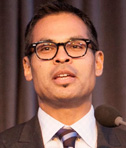
In January, NLC’s Re-Imagining Public Safety Task Force convened for the first time as an organized response to these needs. The group, co-chaired by Mayor Ras Baraka of Newark, New Jersey, and David Holt of Oklahoma City, Oklahoma, is made up of more than 20 mayors and councilmembers from across the country.

Representative of various perspectives, the Task Force’s goal is to amplify city-led initiatives that center community in public safety efforts. Several of the Task Force Members represent regions that are also working toward jail reduction and reduced disparities through the Safety and Justice challenge—providing a strong primer in transforming systems.

“This work demands a hard look at each community’s vision for public safety, accountability, and the opportunity for residents to not only to be consulted about desired outcomes but also to fully own the process of reimagining public safety,” said co-chair, Mayor David Holt.

“The trauma and pain experienced by residents due to systemic disinvestment in communities specifically in Black and Brown communities, must be addressed holistically and through transformations that start at the local level,” said co-chair, Mayor Ras Baraka.

City innovations are serving as an inspiration and conversation starter for the Task Force. Some examples include:

Community & Resident Engagement

  • At the center of national attention, the Minneapolis City Council has pushed to dismantle their police department and re-invent their local public safety system with a community focus.
  • In July 2020, the City of Columbus adopted a set of legislative priorities to reimagine public safety that deeply engaged residents. The three priorities are alternative crisis response, investing in violence prevention, and investing in a better, more accountable public safety division.
  • The City of Oakland created their own Reimagining Public Safety Taskforce to rapidly develop a recommendation for Council consideration to increase community safety through alternative responses to calls for assistance, and investments in programs that address the root causes of violence and crime (such as health services, housing, jobs, etc.).

Violence Reduction and Prevention Strategies

  • Several cities, including Newark, New Jersey and Baltimore, Maryland, have established or expanded their respective Offices of Violence Prevention and Trauma Recovery and Neighborhood Safety and Engagement. These offices prioritize holistic approaches to addressing community trauma, violence prevention and reduction.
  • In Washington D.C. Cure the Streets (CTS) is a public safety pilot program working to reduce gun violence in the District. CTS uses a data-driven, public-health approach to treat violence as a disease that can be interrupted, treated, and stopped from spreading. Additionally, gun violence was declared a public health crisis by the city.

Accountability  in Law Enforcement & Detention

  • In order to reduce the jail population safely, the City of New Orleans Mayor’s Office developed a strategic plan centered on smart decision-making that ensures public safety while minimizing the use of detention.
  • Residents in Philadelphia approved a ballot measure in 2020 calling for the city to create an independent police oversight commission to replace the existing police advisory body. City leaders are moving forward with steps to implement this voter-approved measure.

Health-Driven Solutions

  • The City of Albuquerque created the Community Safety Department, a civilian response force. Community Safety Responders dispatched via 911 call centers may have backgrounds like social work and doing peer-to peer support, or they may be clinicians, counselors, or similar.
  • Early this year, Los Angeles California announced a Therapeutic Transportation Pilot, a city/county collaboration to better respond to calls for law enforcement when managing mental health crises through a civilian responder model.

As the Task Force comes together around recommendations for municipal leadership, many of these examples and themes will guide its work.

NLC is hopeful that this work, with support from the John D. and Catherine T. MacArthur Foundation’s Safety and Justice Challenge, will guide cities across the country toward equity driven, community-envisioned public safety solutions.

—Kirby Gaherty is Program Manager, Justice Reform & Youth Engagement at the National League of Cities Institute for Youth, Education, and Families


SJC Hosts Twitter Chat on Racial Disparities During Black History Month

By: Matt Davis

Jail Costs Racial and Ethnic Disparities March 4, 2021

Marshall Project Staff Writer Jamiles Lartey hosted a recent Twitter chat on strategies for addressing racial equity in our criminal justice system as part of the Safety and Justice Challenge’s commemoration of Black History Month.

From ending cash bail to empowering impacted communities in criminal justice reform, to replacing police with community response models for crimes better handled without a law enforcement response, the conversation emphasized ways to hold the system more accountable for racial disparities and to reduce them.

A broad group of participants joined the chat from prosecutors to defenders, and from academics to activists. It took place under the hashtag #RethinkJailsChat, and you can review the whole thing by going to Twitter and searching for the hashtag or simply clicking here.

Some attendees included:

@RashadRobinson — Color of Change President Rashad Robinson
@ResLegalDiva — Melba Pierson, Policy Director at the Steven J. Green School of International and Public Affairs at Florida International University
@DrAprylA — Dr. Apryl Alexander, Associate Professor at the University of Denver Grad School
@JustLeadersUSA — Just Leadership USA — a national nonprofit led directly by impacted people
@PhillyDefenders — the Defender Association of Philadelphia
@CUNYISLG — the Institute for State and Local Governance at City University of New York
@JamiraBurley — activist and social impact strategist Jamira Burley
@APAinc —the Association of Prosecuting Attorneys
@NLADA — National Legal Aid and Defender Association
@AA_Consults — Consultant and trainer for education, empowerment and equity, Alexandra Arrington
@AntiRecidivism — The anti-recidivism coalition

Mr. Lartey set the tone by citing sobering recent research on Black imprisonment in the United States.

To open, Mr. Lartey linked to a recent report published by the Institute for State and Local Governance showing that overall booking rates are down, but that racial disparities persist. He asked how we can make criminal justice reform more inclusive.

Color of Change President Rashad Robinson, @RashadRobinson, emphasized the importance of holding key decision makers accountable for how they enable a system “designed to incarcerate BIPOC at higher rates.”

The Defender Association of Philadelphia, @PhillyDefenders, stressed the importance of empowering and encouraging involvement from people in most-impacted communities in criminal justice reform.

The next question focused on a 2018 report from the Prison Policy Initiative that found the “prison penalty” in unemployment disproportionately punishes formerly incarcerated Black men and women, Mr. Lartey asked: “Where are some other places we see this kind of racial disparity play out?”

Responses included disproportionate stops by the police of BIPOC individuals, jail populations, housing and education prospects, all contributing to a “cycle of desperation.”

Next, the discussion moved to focus on civilian responder models. A 2020 study from Police For Reform and the Center for American Progress found that between 33 and 68 percent of police calls for service could be handled without sending an armed officer to the scene.

“Many feel civilian first responders can help reduce overreliance on police & racial disparities in policing + arrests. The “CAHOOTS” program is a popular example,” Mr. Lartey wrote, linking to an article at The Marshall Project on the program in Eugene, Oregon.

He asked: “Do these kinds of civilian responder programs hold promise for reducing the disparate impact of the criminal justice system? What are some other possible solutions you think are worth mentioning?”

There was broad support for such models, and also, a call for deeper investment in the social safety net.
As stated in @MarshallProj’s The System, “rollbacks in the social safety net, growing income inequality & deinstitutionalization of the mentally ill” have all played into our current policing issues. We have to invest in alternative systems of care & support.#RethinkJailsChat https://t.co/ZFl97qVm29

— Association of Prosecuting Attorneys (@APAinc) February 25, 2021

Next, the conversation concluded by pivoting to bail reform, citing a recent report by Loyola University, which found that bail reform measures in Cook County increased the number of people released pretrial & was not associated with any significant change in the rate of criminal activity.

Mr Lartey asked:  What could findings like this mean for the prospect of bolder action on bail moving forward, or the spread of reform efforts? Could more findings like this stem the political backlash that reform efforts often meet?

The question drew an emphatic response:


—Matt Davis is a communications consultant supporting the Safety and Justice Challenge blog.

Research Report

COVID Data Analysis Incarceration Trends Racial and Ethnic Disparities February 9, 2021

Jail Population Trends During Covid-19

The CUNY Institute for State and Local Governance

Throughout 2020, as the extensive impacts of the COVID-19 pandemic became clear, many municipalities—including those participating in the John D. and Catherine T. MacArthur Foundation’s Safety and Justice Challenge (SJC) — implemented emergency measures to reduce their jail populations. This brief describes how those measures influenced jail populations in SJC sites between February and October 2020. Specifically, the charts and explanatory text that follow illustrate how jail populations and racial and ethnic disparities changed during the pandemic’s early months. The brief is divided into three sections: overall trends, trends by race and ethnicity, and disparities.

Research Report

Data Analysis Incarceration Trends Racial and Ethnic Disparities February 9, 2021

Reducing the Misuse and Overuse of Jails in Safety and Justice Challenge Sites

The CUNY Institute for State and Local Governance

Jails are intended to hold people who are awaiting court proceedings and are considered a flight risk or public safety threat. However, today, 75% of people across our nation’s 3,100 local jails are being held for nonviolent offenses, and three out of five are legally presumed innocent. While most people admitted to jail are released within hours or days of their booking, many cannot afford to post bail and may remain behind bars for weeks. Our over-reliance on jails is not only expensive for taxpayers, it also has negative impacts on people who are incarcerated, their families, and communities. A significant proportion of people in jail have a diagnosable substance abuse disorder, a serious mental illness, or both – conditions that can be exacerbated by confinement. Research shows that only a few days in jail can increase the likelihood of a sentence, make such a sentence harsher, and promote future criminal behavior, making jail a gateway to deeper involvement with the criminal justice system. These and other burdens of jail fall disproportionately on communities of color: Black Americans are jailed at five times the rate of Whites. In 2015, the John D. and Catherine T. MacArthur Foundation launched the Safety and Justice Challenge (SJC), a multi-year initiative to reduce populations and racial disparities in American jails. To date, the SJC has provided $217 million to help 51 jurisdictions in 32 states use innovative, collaborative, and evidence-based strategies to create fairer, more effective justice systems. Our report measures the effectiveness of reforms in 14 jurisdictions that have submitted case-level data for analysis from May 2016 to April 2019. It does not reflect the full range of progress in some sites, or the widespread jail population declines that have occurred during the COVID-19 pandemic of 2020.

Additional Downloads

Engaging Community Members in Criminal Justice Reform

Community Engagement Racial and Ethnic Disparities February 8, 2021

We launched the Safety and Justice Challenge (SJC) to stimulate a broad transformation of local criminal justice systems across America. Our goal is to change justice policies and practices in a tangible and measurable way to reduce the routine, reflexive, and almost mechanical overuse of jails contributing to mass incarceration. But we also aim to change criminal justice attitudes and mindsets. We want to change not just the decisions being made, but the way decisions are approached: the values driving them, the interests consulted, the voices heard. Success, as we see it, would mean not just fewer people in local jails. Success would mean local justice systems that have been opened up and truly treat people fairly.

We have had mixed success in making progress towards these goals. Jail population numbers have fallen in the communities we support, and we have good reason to hope that, over time, the practical demonstration that jail usage can be safely reduced will prompt change nationally. But the “opening up” of local justice systems has proved harder.

Most Safety and Justice Challenge communities, even those that now use their jails less, continue to use them disproportionately for people of color, particularly individuals who are Black, Indigenous, and Latinx. Data collected by cities and counties participating in the Safety and Justice Challenge has made this problem more transparent and has helped identify where in the system disparities occur most.

If we believe the system is racist why are we relying on system actors to determine who participates in system reform?

We have found that most judges, prosecutors, defenders, sheriffs, and other justice system partners do not know how to effectively engage community members as equals, be accountable, or share power. We have taken steps to support learning and experimentation in this area, making grants for community engagement activities, and bringing on new technical assistance providers. Still, few of our system partners have found ways to work consistently with community members on an open and equal basis.

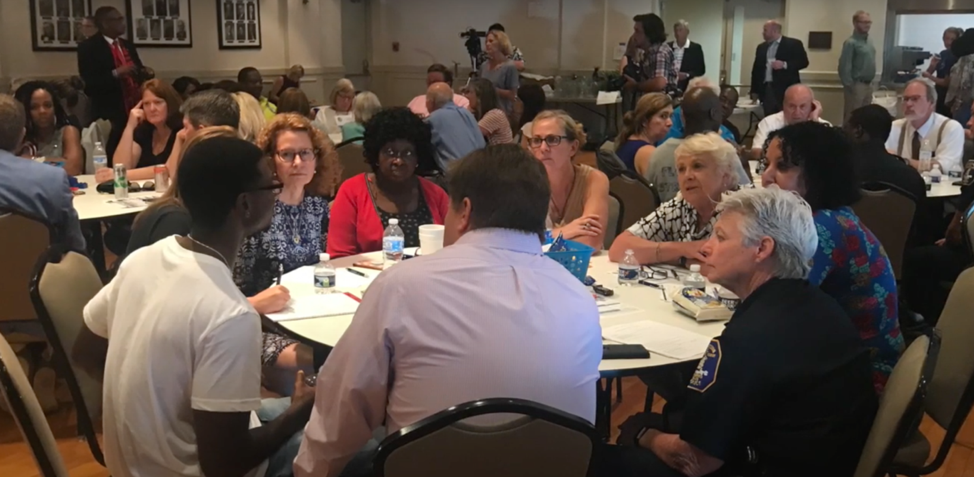
In December, we convened two virtual meetings with a broad array of community advocates and representatives, the majority of whom had direct experience with the criminal justice system, as victims, as formerly incarcerated individuals, or both. The sessions surfaced a wealth of wisdom and experience, and four lessons emerged.

Remember the Importance of Language

“A good first step is language—language is incredibly important,” one of the participants pointed out. “The SJC should start articulating a commitment to ‘eliminate’ disparities instead of ‘reducing’ them.” The other participants agreed.

Our caution and modesty in stating a measurable, accomplishable goal (“reducing”) had landed completely wrong and was perceived as toleration for a certain amount of discrimination and injustice. The meetings reminded us that reform is not enough for many people closest to these issues. “We need to abolish this system, not reform it,” as one of our advisors put it, “and we should say as much.”

Examine How We Make Grants

We were urged to use our grantmaking to rectify power imbalances and exclusion in local criminal justice systems. The Safety and Justice Challenge mainly funds system actors—with non-system community stakeholders receiving support indirectly, if at all. “[But] if we believe the system is racist,” one advisor asked pointedly, “why are we relying on system actors to determine who participates in system reform?”

Another suggested that we “focus on expanding allies to include more grassroots advocates, empower local leadership of grassroots organizations, and form intersectional coalitions of allies with varying specializations to attack the issues from all angles.”

And, we were told, we should be explicit about what we are doing: “Grantees should be required to list key stakeholders on the grant who are Black, formerly incarcerated, or have a proven track record demonstrating their ability to work with the community.”

Equip and Empower Community Leaders

Many of the people attending had direct and painful experiences with the justice system, and all agreed that people who know the most about the problem should lead the search for solutions. “It’s imperative we engage directly impacted communities,” a participant said. But, he added, “A false sense of power is not power; you can put people on committees and invite them to panels, but if you’re not resourcing these efforts, these token efforts are insignificant.”

Think Beyond Criminal Justice

Many of our advisors argued that we should take a much broader view of what constitutes criminal justice reform and how we define safe communities. If we want safe communities, they suggested funding workforce development, partnering with public school systems, or supporting re-entry.

They also urged us to expand our sense of what is possible. “We are trying to get people to radically reimagine,” one advisor said of her work. “My organization has engaged thousands of people in creative practices, and every time we find that when we move into the creative mind space, it breaks us free of this narrow view of what’s possible.”

Next Steps

From these lessons, we plan to rethink the role of community engagement in the Safety and Justice Challenge. To support this goal, we will expand and diversify our formal advisory structure to include people with lived experience, find ways to partner with and invest in community-based organizations and leaders, use our funding to take bolder actions, and be more explicit in our language and goals.

Laurie Garduque is Director, Criminal Justice, at the MacArthur Foundation